Globalization and Social Enterprise: Unholy Marriage?

There is an interesting line which i read in Aseem Srivastava and Ashish Kothari’s timely book on Development, Environment and Globalization issues called as ” Churning the Earth: The Making of a Global India. The line was implying that the huge surge in Microfinance is not because all the poor want to start shops and small ventures but because multilateral financial institutions having a share in the pie. Social Ventures either run on CSR grant funds or on philanthropic donations. Very few social ventures actually break even on selling some service or product. Either way these are all ultimately tied in to the commodity value chain in the neo liberal system.

With the advent of Globalization and Information Communication Technologies, Social Entrepreneurship has been catapulted to the world stage. Social Innovation uses the tools of the market economy with altruistic developmental sector aims and aspires to meet social needs. The same set of folks who criticize the market economy for its ills, do not hesitate to take in their funds to fun their social ventures. The power lies in the hands of the folks who pays for the bills.  So, it is the capitalist who dictates the terms in the socialist sector. 

I am happy if a few livelihoods are improved even it is a unholy match as Chairman Mao once said: A Cat whether Black or White is effective as long as it catches mice. It is the impact that matters. Lets cut the hippocracy and concentrate on the impact. 

Scale or Impact for Social Enterprises: What’s more critical?

Non Profits serve a critical role in lubricating the society’s larger scheme of  vital services which sometimes the government falls short of delivering. They are the part most loathed and least respected for everyone expects people in the Non Profit Sector to do charity. I remember an Old Communist Joke in Russia in this regard; that a supervisor asks the worker, ‘why is’nt he working?’ The worker replies to the supervisor ‘You pretend to pay our salaries, in the same light i pretend to work’ !.  As in the case for all workers, money matters as everyone has got bills to pay at the end of the month. The question which I have raised in the heading of this article is a textbook question for folks following the not for profit space, should we target scale for cost effectiveness and economies of scale or should one stay niche and concentrate on metrics of quality, in other words should a NPO/Social Enterprise stay a boutique investment fund or go public and venture into retail services to borrow a financial services analogy.

I would suggest that the Business Model for Non Profits should be tailored to meet its end goal. It has to driven by its impact and the number of lives it can change. Of course values and altruistic motivations are the catalyst for the founding team of the Non Profit, but the mundane biting realities of daily operations lead people to think about ‘commercial’ jargons such as quantifying impact of the donor dollar and fundraising dilute the soul of the activist within the social entrepreneur. It does not really matter if the non-profit is dependent on grant money or its selling some variety of services to break even. If it serves the need of the community which it serves, then it has done a decent job.


In the hallowed annals of Business Academia, there is a lot of hue and cry about the nature of the Business Model, but a true entrepreneur considers his venture a work in progress and ideas or models in business literature do not hold much weight as the end should justify which ever means he uses.  Whether it is a Gawad Kalinga or a Grameen or a Community Enterprise in our area, it is the impact which matters ultimately. Scale is Sexy for the media to cover, but we have SKS fiasco to ponder upon whenever we think of Scale. Scale at what cost is also an important question to ponder when thinking through such questions.


I would like to wind up this read by suggesting some limitations of scale. I am not against scale if it is required as in scale works wonders in healthcare and financial inclusion. Just think Aravind Eye and Grameen and scale seems to do the magic. But some things are far more effective when dealing with groups at risk, an Old Age Home or a Half Way Home is best operated when a bottom line driven mandate is missing from the equation. But when a business enterprise such as a restaurant chain in Singapore founded by an ex offender employs other ex-offenders, it serves a social end by creating employment opportunities for ex offenders which are usually rare in an Asian context with the bottom-line being taken care of.  The theme of this article is a classic chicken and egg question, and the debate will continue which one will takes on more emphasis, as with all things in life- context matters.


Bollywood goes real

I have been very happy to note that Bollywood films are going realistic in terms of their ending especially in love stories.  Ek Main aur Ek Tu had a serious real ending, the women is older by a year and becomes friends with the guy who falls in love with him; And more importantly the lady stays good friends with the guy who loves her. She likes him because the guy because he is ‘perfectly average’ and not because he is a super stud, a person will a normal guy wont be able to be.

Superheros are good to watch on screen, might not be all that good in real life actually! We go to the movies for escapist Bollywood fare but is refreshing to find the ‘real’ getting space in a manufactured ‘dream’.  Teri Meri Kahani another very contemporary film is just the opposite; the old boy meet girl story with inter-temporal treatment over three geographies. The end storyline is that the boy gets to marry the girl and they live happily ever after. It is a feel good factor when we leave the theater after spending 400 bucks on tickets and popcorn but it is different connect the director makes when we get a taste of reality in an artistic, aesthetic manner.

Cocktail has dealt with relationships in a very progressive manner. A love triangle in which the  super hot party animal Veronica dates the super stud playboy Gautam and Veronica’s Friend Meera from India, whom she is helping out is the third locus in the love triangle. Veronica is madly in love with Gautam and Gautam is in love with the plain jane Meera and Meera eventually succumbs to the charms of Gautam, yes as the film tagline goes – Love is complicated and Relationships are confusing, so are in real life. The best part of the film is the mature handling of the narrative. In one scene where Meera, Veronica and Gautam are sitting across a kitchen table and Gautam says to Veronica: You love me, I love her (pointing to Meera) and the tense situation is diffused in a cordial manner.

The times when audiences will buy sweet endings is passe. Real is the new cool. Bollywood is understanding the pulse of the urbane multiplex going viewer finally.

The Notion of various ‘Cultural Islams’

Islam, unfortunately is one of the most misunderstood religio-cultural frameworks in the world particularly post 9/11 although the it has drifted away from the public eye, the Faith is still grossly misunderstood. As a non Moslem who has been raised in Oman i have been surrounded by Muslim friends through  out my life. I have been fortunate to have resided in three culturally distinct parts of the Muslim World: South Asia, Gulf and South East Asia. What strikes me is that the common foundations of the Faith are shared universally but are practiced very differently in their regions. In the run up to Ramadan or Ramzan in South Asia i would like to contrast how Iftar or the meal at the breaking of the fast is practiced. The meal in the Bahasa speaking world  would be rice based as i have been to an iftar in Singapore and i have been to many an Iftar in Oman- the meals are very different.

A Bohra Muslim Iftar is grounded in a Western Indian Ethos rather than a Middle Eastern one. Magreb Islam is very different from a Mashreq version in its cultural undercurrents. The attempt at monoculturalization of Muslims in the media is gross incorrect.  A Bengali Iftar is Bengali and a Punjabi Iftar is very Lahori! 

The attitude towards music is another aspect where various sub cultures differ. The ‘White’ Arabs of the Levant and the Berbers of the Maghreb has very rich musical traditions such as the Rai tradition. Remember Cheb Mami and Khaled?

Sufism holds music as a central part of meditation. Someone who holds a puritanical view might object but that is plural character of Islam which is not known in the wider world. Indonesian and Malaysian Muslims have been amazing ambassadors of Plural Islam; modern yet moderate.

Not to leave the Turks and Central Asian Muslims, the Muslim World is very diverse as much as the Buddhist, Hindu or Secular Christian nations of the West. The unraveling of the thesis begins….

Discontinuous identities: Our ‘manufactured’ self online

In this age of post idea, consumerist societies that we reside in and i do not wish to sound like i am writing a term paper for a social theory grad course but as an avid social media enthusiast who has been an active participant on social media platforms since 2008, i can accept the emotional cost of creating a self which is not totally you; you wish to be that in your real life but simply cannot hence we try to create an illusionary identity which is not truly us. Hence this identity is discontinuous with our real self in the flesh and blood world. This is troublesome and inconsistent; gives rise to schizophrenic situations. I have this insatiable hunger like any other word artist to be liked. Evolution is good, transformation is necessary but this constant ‘approval addiction’ kills ones own self worth. The likes on facebook and the shares give this need an acknowledgement and a filler up. A Re-tweet from a prominent person who follows you can give you an ego boost.  It is ego play at the end of the day.

The perennial micro-managing of social media profiles has a really damaging effect on self perception. If a certain person does not respond to a message or a tweet, it dents your morale for a flicker of a second. A Cyber Sanyaas or a Digital Fast is so necessary. There is a life beyond virtual existence. There is also a life beyond people approving you.  We need to connect with ‘The Man Inside my Head’ to appropriate Pico Iyer’s latest literary endevour  in this situation.

Which Identity are we comfortable beneath our skin? Think about it.

Scale or Impact for Social Enterprises: Whats more Important?

Non Profits serve a critical role in running society’s delicate machinery of services. They are the part most loathed and least respected for everyone expects people in the Non Profit Sector to do charity. I remember an Old Communist Joke in Russia in this regard; that a supervisor asks the worker, ‘why is’nt he working?’ The worker replies to the supervisor ‘You pretend to pay our salaries, in the same light i pretend to work’ !.  As in the case for all workers, money matters as everyone has got bills to pay at the end of the month. The question which I have raised in the heading of this article is a textbook question for folks following the not for profit space, should we target scale for cost effectiveness and economies of scale or should one stay niche and concentrate on metrics of quality, in other words should a NPO/Social Enterprise stay a boutique investment fund or go public and venture into retail services to borrow a financial services analogy.

I would suggest that the Business Model for Non Profits should meet its end purpose. It has to driven by its impact and the number of lives it can change. Of course values and altruistic motivations are the catalyst for the founding team of the Non Profit, but the mundane biting realities of daily operations lead people to think about ‘commercial’  jargons such as quantifying impact of the donor dollar and fundraising dilute the soul of the activist within the social entrepreneur. It does not really matter if the non profit is on grant money or its selling some variety of services to break even. If it serves the need of the community which it serves, then it has done a decent job.

In Business Academia, there is a lot of hue and cry about the nature of the Business Model, but a true entrepreneur considers his venture a work in progress and ideas or models in business literature do not hold much weight as the end should justify which ever means he uses.  Whether it is a Gawad Kalinga or a Grameen or a Community Enterprise in our area, it is the impact which matters ultimately. Scale is Sexy for the media to cover, but we have SKS fiasco to ponder upon whenever we think of Scale.

Conversations with Cabbies: Episode Two

Yesterday, I had two unique individuals who drove me to a client meeting and back in the ‘Town’ area of Mumbai yesterday. I normally find cab drivers extremely informative and entertaining people to meet. But these two individuals are a writers delight to carve a story out of. The first individual was an Urdu speaking native from the chawls of Mumbai, claimed to be a school mate of ‘World Don- Dawood’ and seemed to eulogize him in many a way. His knowledge of the town area in Mumbai was intense; he took me on a guided journey from showing the oldest shopping centre in Mumbai to Lata Mangeshkar’s Apartment Block and Mukesh Ambani’s one billion dollar home.  He also spoke Arabic as he was a driver in Saudi Arabia for a long time including the 1990 Gulf War. The most surprising aspect was that he was questioning the authenticity of the findings of the 26/11 murder of Hemant Karkare by showing me Cama Hospital. Many other surprising anecdotes such as the a premier padmini taxi in 1978 was priced at Rs 28000! He had to pay Rs 2000 as a bribe to the RTO to get it on road, so Licence Raj!

The second individual was an encyclopedic insight in Sugar cane belt politics in Maharashtra. He analysed Sharad Pawar Saheb’s response in the aftermath of the 1992 bomb blasts quite innovatively. He seemed to support political corruption as a cost for development. The development of the suburbs and satellite townships around Mumbai were according to him a foresight of Pawar Saheb. It was the total legitimization of the Politician-Builder nexus. This is the DNA of Maharashtra politics in my regard.

After two splendid conversations, I realized that we have to learn from the School of Life rather than paper academic qualifications. The examination of life is the real exam. Let learning be unschooled, through cinema, conversations and other forms of art.

The LPG Discourse: Land, Power and Growth

The premise of this article is based on a brilliantly made film ‘Shanghai’ by Dibakar Banerjee  on the Politician, Builder and Civil Society nexus that has fueled the rhetoric behind ‘Development and Growth’. What constitutes Development, is a vital question which has many nuanced shades. What might be development to one might be dis-entitlement to another. Development in the present narrative in the urban context is the establishment of Special Economic Zones, uprooting farmers in favor of Industry and disposing off old homes in exchange for Shopping Malls. Civil Society is also a strand of the elite, an activist professor who is magnetic and teaches social movements at Ivy League school earning USD 120K salary is nothing but reeks of champagne socialism. The Bureaucracy is a supporter of the capitalist class, with vested interests was observed by the good old Marx 150 years back. The Civil Servant and the Activist are bumped off or Purchased in return of an election ticket/overseas posting. Any resistance against ‘Development’ is seen as treason.

This paradigm was accelerated by the Liberalization, Privatization and Globalization discourse  since 1991. Singur, Nandigram and Noida are all classic cases of Land Acquisition gone awry. There needs to be a balance between Development Fundamentalism and Welfare. This murky scene will continue and the poor will suffer at the hands of the powerful. We need to find a solution before social unrest like Singur erupts all over, especially when Red Terror is institutionalized in 1/3rd of India. Think Dantewada and Bastar?

The irrationality of an MBA

Education is utilized as a social elevator by communities all over the world and education has thus resulted in education creating attractive resumes than carving thinking minds. Every era has a flavor for social elevation. It was engineering 40 years back, moved to IT about a decade and a half ago and now it is the era of the grad school business degree. I am talking from a south asian/south east asian pragmatic perspective. Any degree not marketable to an employer is not worth time being ‘invested’. The present World Bank President’s father was a Korean Scientist who asked his son, what does he want to do and he said that he wishes to major in Political Science or Sociology in College and thus came the stark reply that he want his son not only to have the ability to think but also to do. This sentiment is shared by most parents across the developing world.

I started writing when I was a teenager in whichever small platforms i had access to, and wanted to major in history. The proposal was shot down in favor of a more ‘workable’ alternative. I majored in engineering and went on to be an environmental engineer, but have pursued grad school research in sociology and public policy as well. The World Bank President is a Medical Anthropologist with a PhD in Social Anthropology and and is a trained medical doctor. Pragmatism and Passion can go hand in hand.

The rush for grad school is insanity in India, everyone is an MBA degree aspirant or holder. I cannot meet a full techie anymore. IT is more knowledge based service economy oriented. All Engineers can be a beeline for Business School to get a pay hike. Some attend B School fresh out of undergrad. Many of whom i have spoken to, do not understand the fundamental nuances of business and simply wish to join the ‘bandwagon’ through group-think.  A MBA degree is not a panacea, it is a platform for networking and connections as other other grad school option is. A MBA for the sake of a MBA is not smart.

Starting and Managing a non profit will teach one more business skills than an MBA. Most of the MBA text book knowledge can be learnt via business literature. I have not attended B School but have learnt my accounting and corporate finance on my own. Innovation is my pet research area. I dont need a MBA to run my job, i would probably require it more for connections to scale up than for its content. In an emerging growth story with ‘Breakout Nations’ as Ruchir Sharma conveys, we need more hard skills of an engineer, architect and operations guys than media planners and market researchers. We are not a service economy yet, the agri based sector is still our backbone. Real value still comes from Brick and Mortar industries. It  is manufacturing which creates jobs and wealth, the service sector reduces net jobs.

In a recession the fluff economy guys are shown the pink slip first. Lets get our Educational priorities right. Do things that create value and make sense, and not to join the rat race.
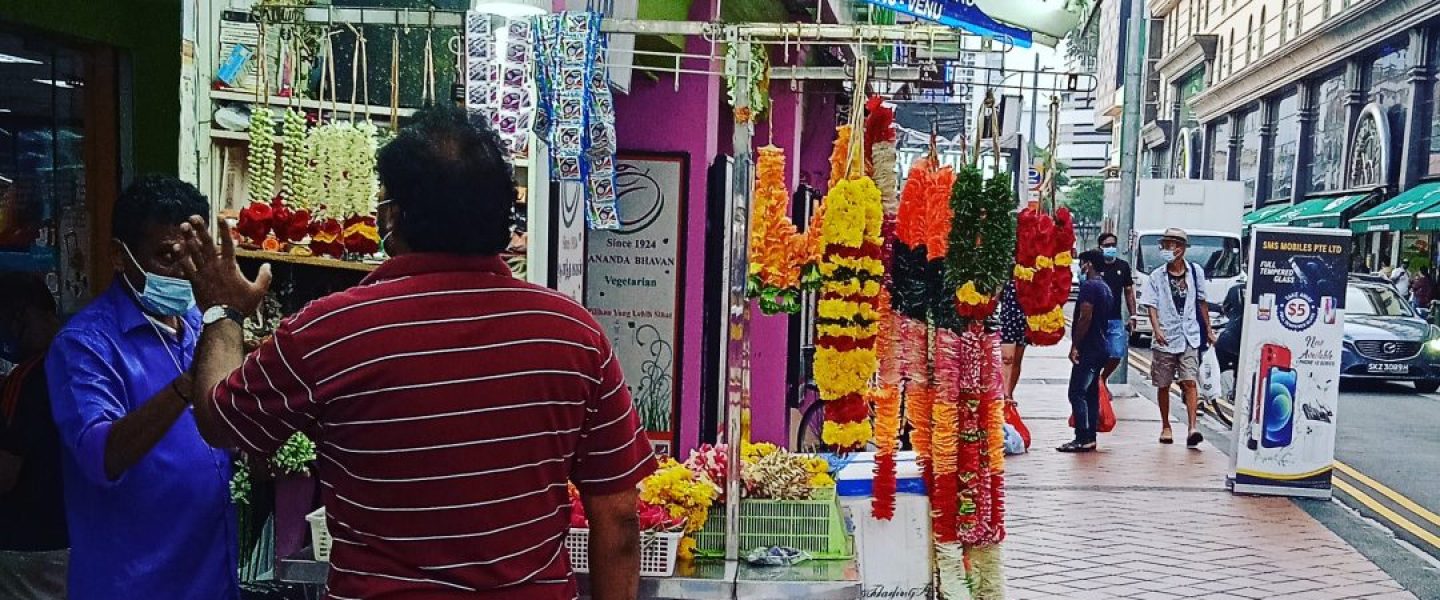
 

Negotiating Plural Identities

The term ‘plural identity was popularized by the great public intellectual Amartya Sen, in his book ‘Identity and Violence’. We have various shades to ourselves. We can be various manifestations of ourselves, and still be us and be nothing at the same time. The human mind has a predetermined inclination to nomenclature everything. I can be a South Asian, a Bengali, a Christian by Faith and a  Muslim by Culture and still have the ethos of the ‘Sanatan Dharma’ in me and still speak Arabic, Malay and Marathi equally at ease. I am still myself, irrespective of these shades and hues, and still be nothing at the same time. Arjun Appadurai in the book ‘Fear of Small Numbers’ elucidates the notion that minorities are manufactured as a totem for the majority community to feel good. Ethnocides are not organic, they are engineered.  A Hutu vs Tutsi Battle in Rwanda or a conflict in the Balkans are a classic example. People are not straight laced to be reduced to mere terms for analysts to play with.

The idea of India is a nationalization of a cultural ethos. In this age of globalization, we have fluid identities- every place that we live in, contributes a spec in to our soul and we transmit a vector of our emotions in to the place as well. A solid identity gives us emotional security, a sense of grounding where we have come from, a heritage to cherish and a compass to measure our lives. The ‘family name’ concept is the foundation of identity. It means not a lot to me frankly as I have been a professional migrant all my self and intend to be so. Diaspora kids like me, have a hard time to negotiate, analyse and place where and what we are actually. I would suggest, that just be what you are and do not bother if you are the right candidate for an arranged marriage match. Good things happen in their own time.

Identities are the foundation of civilizations; nation states derive legitimacy from that. In fact electoral politics has its edifice in the business of identity. We are all tributaries of water joining the Ganga or the Tigris or the Danube, whichever water body, the reader wishes to ‘identify’ my oneself with.