
One of the shortcomings in delivering sustainability across the spectrum is the inability of professionals to cross learn cutting through disciplines. In this vacuum a category of sustainability integrators will emerge would project manage and build bridges as solutions need it.
Call ‘S’ for Context
The aspect of ‘S’ or the community of stakeholders of the business ecosystem enables the sustainability of operations with carbon and beyond. Carbon is quantifiable and can be benchmarked with peers albeit S needs some degree of measurement of impact, social value of initiatives is a good metric, as your consumers (scope one in social terms) is the primary agenda of business.
Some sectors such as resource extraction and manufacturing supply chains will always have a greater focus on social factors than others. Material conditions of businesses are the starting point of any ESG conversation.
People will deliver the emissions transition. Whether to insert the ‘Just’ prefix is dependent on the compliance pressures of the business.
Have the Braggadocio of a Food Blogger.
Wish I had the confidence of a middle-aged fashionista food blogger who barges into a cafe, in a terribly entitled way throwing off air (I am a Food Blogger!), along with an assistant on a Thursday afternoon packed with office goers with no places to sit in.
Being Human.
Somewhere between purity and neatness is life. Treating people with dignity is not being left or right, it is being human.
A Year in Speaking in Review: 2022
The year started with me being interviewed by Al Monitor on Oman’s Environmental Governance in the aftermath of a new Sultan to speaking on a Club House session on the Qatar fracas in June to moderating a couple of leading ESG industry events to sharing on ‘S’ in ESG Supply Chains.
The surprising highlight of the year when I was interviewed by India Narrative on the history of Indian Labour Migration to the Khaleej.
Grateful to all mentors and friends who have offered precious touch points to share and engage my two cents on issues of the day.
Please do let me know if I can share, comment or moderate on ESG, and Labor in the Gulf or SE Asia.
#speaking
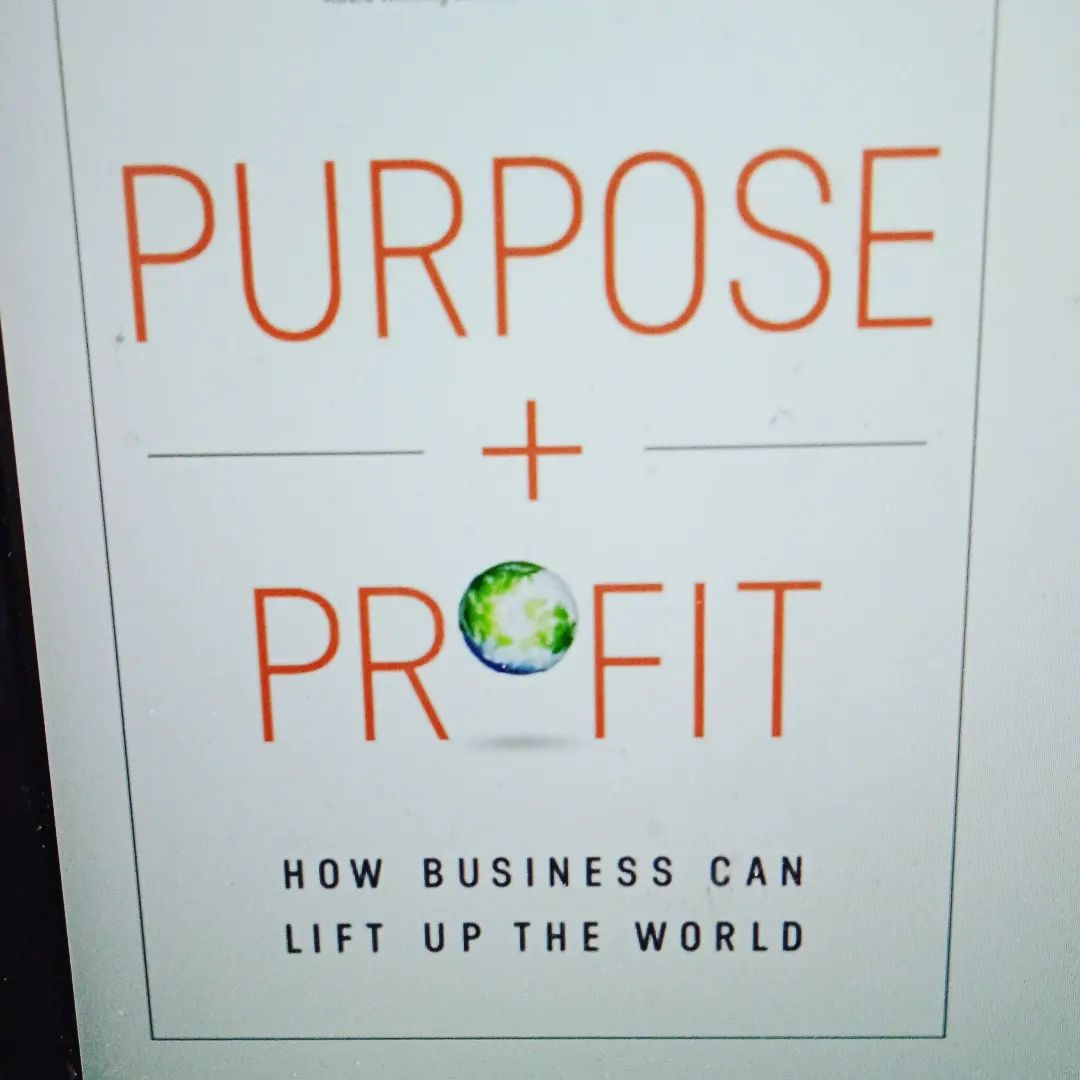
Purpose+Profit: A Book Review
It’s not often that I wolf down a book on ESG during a work week. However, some works of accessible scholarship entail that kind of attention. Profit + Purpose is an intellectual tour de force which provides a ring side view to how sustainability can be operationalized on the ground from a PE Fund focused on SDGs to the B Corp movement.
The author explicitly lays bare the issues with making sustainability happen through projects and that intentions are not enough.
Doing good should not be impossible, it should be the only way to do business. The lens on implementation is refreshing and case studies educate rather than pontificate through high theory.
The writing is direct and is meant for the manager on the frontline of the sustainability trenches.
Must read for all sustainability professionals.
Bandra Shimmers.

The Year of Writing in Review-2022
A ritual that keeps the writer in me accountable, this year has been a time to realize why I write, and it is for impact, to create narratives that aid change. A couple for Tatvita-Analysts and one for IHRB with Adrian Pereira Sir.
Three academic conference acceptances from HKU, Sunway University and Manipal on good topics related to labor. I have also submitted a book chapter currently under review. There were missed deadlines due to geographical transitions and family emergencies which caused stress and a block, which took some time to reflect reconcile and negotiate.
I hope to contribute more to the practitioner-policy literature and hope along the way theory is built from praxis. I thank sponsors, supervisors and mentors who supported me and those pulled the plug on me despite doing everything, however the mosaic of life falls into place, so each tough step is imbued with meaning and purpose. So grateful for the setbacks as those teach us more than the good times.
A special mention to Adrian Pereira Vaibhavi Pingale Guna Subramaniam Junice Yeo for the writing opportunities that I treasure as each feedback loop is a precious learning curve.
I blogged each day this year, and have plenty of ideas on ESG, labor and the human side of the emissions transition to write in the coming year.
In Gratitude.
ESG as Innovation Crucible.
Innovation often emerges at the frayed edges of established disciplines and where there are problems to solve, often at the intersection of both. ESG is a domain ripe for innovation as it is a fast-moving target. The intersectionality’s between the three alphabets and its relationships are not yet explored and fleshed out. Risk is a dynamic entity, and a puritanical approach serves no purpose at best.
S needs context and a provision for thick description of small data is needed, as the just transition will be navigated through human actors with a politics, culture, and a history rather than carbon, which is welcome as a pollutant that impacts air quality over the neighborhood airshed rather than freak extreme weather events.
Disclosures for compliance will make sense if the context is integrated rather than pure numbers, which do not entail much without the operating milieu.
The Risk of Learning.
A crucial part of growth comes with learning and the kind of learning which makes oneself uncomfortable, vulnerable, and open to ridicule as learning is embedded with circuits of knowledge production and performance metrics which is unforgiving.
The inability to learn with dignity and patience stifles innovation and risk taking which prevents growth. Learning and risk-taking go together. Growth is about pushing the envelope.
 Change Thinker