For me writing is sacred, and I enjoy the craft, and I like telling narratives that are muted, erased, and do not neatly fit within the neat contours of the publication model. I have been dismissed by literary agents, academic supervisors and have been told the nastiest of epithets. Yet I write, as when I do I exist as despite attempts to write me off, I am here scribbling on digital feeds, my blog and author research papers. I shall leave behind my own archive.
Climate Lockdown.
The Net Positive Transition has many layers built on the foundation of quality of living (carbon is about clear air too) and thus essential services, something we learnt well during the dreaded lockdowns. We are in a climate lockdown. We face flooding and heat events each year.
Comfort in shopping malls.
Shopping malls are the cathedrals of global capitalism as one finds uniformity and familiarity in common brands.

Jio World Drive in Mumbai is on par with Ion Orchard and Dubai Mall.
It was great to find Bateel Dates here after Dubai Marina and The Wave in Muscat.
Global spaces are comforting for the certain set of values they evoke. Exclusionary yet the target audience needs that very exclusion.
Think Beyond The Baseline
Decarbonization conversations need to account for energy access and food security as carbon tunnel vision is part of the story. Each sector will have its own peculiarities in their respective geographies. The drive for datafication creates the baseline, however local context and requisite allocation of capital is needed for impact.
Smoothen Processes.
Brokers, mediators, facilitators or the quintessential Dalal is a mildly valued negative notion as we presume that systems work as we are rational human actors with no force field to navigate. One of the greatest skills in life is to convince people that helping us is helping themselves or the art of the sale which consultants often preach. We need to convince stakeholders at all levels from the home boss to the work boss.
In low trust societies the figure of the man Friday who will negotiate the quotidian for you so that you can do work normally is a superpower. Countries like Singapore with seamless systems have eliminated the need for such actors, although SME business consultants do exist.
Reminds me of Prof Lisa Björkman ‘s Bombay Brokers, an ethnographic work which shows the role which everyday intermediary actors play.
New Social Contract
Sustainability disclosures reflect the new social contract between companies and society that includes carbon and community. Survival as a species is a new business normal. As society evolves, capitalism evolves as well. #sustainability
The Human Transition.
The Energy Transition is a Human Transition, and unless communities are engaged and even better cared for all technocratic thinking will fall short. There will be variegated geographies of decarbonization, and the context will be key to unlocking impact.
All plans look good in a report, the implementation is where the true transition tale will span out.
#energytransition
Convergence of ESG/ESIA Disclosures
As a dyed in the wool ESG/ESIA (with a lens on S) practitioner I look forward to the convergences between the environmental planning mechanisms and the deluge of disclosure standards that have the potency to overwhelm. ESIA and ESDDs are disclosures within ESG risk frameworks when they are a part of disclosures on MFI websites as a part of transaction transparency.
The old and the emerging need to speak to each other, as good data is actionable data at asset level aggregated to the scale of the global organization.
Climate Impact Approach.
Impact in Climate Innovation requires a bunch of things- a problem to solve deeply and at scale – an understanding of science, finance, law, and culture. The problem is often interdisciplinary scholars and bridge builders operate from a white space with poor institutional backing.
Turkiye In Indian Skies.
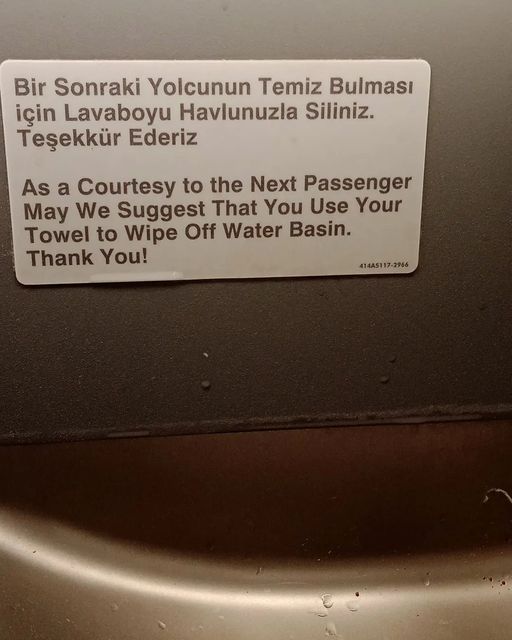
Lovely to hear Turkish in two spice jet flights in a row this week.
The aircraft cabin is a theatre of emotions in a global workspace of airport workers.
Corendon Airlines from Turkey which has taken over Indian carrier spice jet has made the airline as Turkish as possible with a lineup of Turkish cabin crew filling the cabin with melodious notes as they are not able to understand what the passenger is speaking nor do the patrons understand English refracted through an Ottoman palette.
M&As are cultural exchanges and a couple of flights indicate a few months of synergies to be unlocked. A few of the seniors of the cabin crew it seems were having a second career in India and I am glad that we are not the ones that seek a global life.
The airline cabin was a ‘contact zone’ of cultures with the cabin crew struggling with Hindi announcements and promptly switching to the recorded version, an early form of emotionally void automation in the air.
The amount of care the cabin crew had to do with price sensitive patrons is exemplary as the language gap was significant, though they were polished as ever.
 Change Thinker