Scholarship is not a popularity contest. It cannot be equated with Facebook shares and retweets.It takes real hard work to publish a top tier paper. We cannot bring in reality TV metrics into academic life. Outreach and Scholarship are both vital.
Bangladeshi Cabbie Politics in Dubai
In my limited sample size of a few dozen Bangladeshi cabbies spoken to in Dubai via non random purposive sampling, the majority don’t view the Hasina Regime as too progressive. That’s pretty consistent with Bangladeshis in the Gulf being not with AL Politics.
#urbanethnography
#SouthAsiainGulf
Damascus in Dubai: Reconnections through Food
Kafteh. Syrian Restaurant in the Diaspora, Aroos Damascus in Deira, Dubai retains a semblance of a community with a shattered homeland.
No service staff spoke in English, which in a global Dubai is refreshing as this is an an Arab Muslim City, which is conveniently lost in the Tagalog and Urdu or Malayalam cacophony. Language can resist the overarching objectives of meta globalisation.
The old world Arabic charm was there as in a Turkish House in Muscat.


#aroosdamascus
#mydubai
#latergram
Atrophy.
Home is a past
Where atrophied dreams
Seek empty reconciliation
Innocent, reckless aspirations
Who had told you to build castles
In the ethereal web of firing neural networks
Home is where one finds one
Let it be a dream, stunted
At least I am me
For a flicker of a thought
India’s Gulf Policy Flows
India’s Gulf Policy is not run through South Block, thankfully but through the souqs of the port cities, the entrenched Bania/Malayali Diaspora and power networks flowing through Surat, Mundra, Mallapuram, Trivandrum and Borivali and Dahisar in Mumbai.
JNU does not know a thing😊
An Ethnographic Take on Louvre Abu Dhabi
The neoliberal museum is a space of selective cultural consumption where history with a capital H is packaged in to an experience, neatly sorted in to thematic areas. The Louvre Abu Dhabi was on my bucket list since I arrived in the UAE for my latest consulting gig 6 months back. As a weekend historian and full time social researcher, the Louvre Abu Dhabi is a style statement in crafting a new cultural economy for the oil rich emirate. Oozing with luxury and expansive in reach from the ancient to the rather recent, the museum has an international footprint. No expense has been spared to create a world class cultural experience.
From the Chinese to Arab to Indian to Latin American, with a heavy infusion of continental Europe with Louvre’s only international imprint outside Paris the Museum coalesces history into themes and packages the regional into the meta or the universal, it’s key motto.
In this era of divisive politics, the curative philosophy seems right like a ‘right’ balm.
There was an early photography exhibit which was illuminating as a person who does a lot of photography on the street, the gaze of the photographer is violent for communities where the act of image making is documentation in the project of imperial conquest.
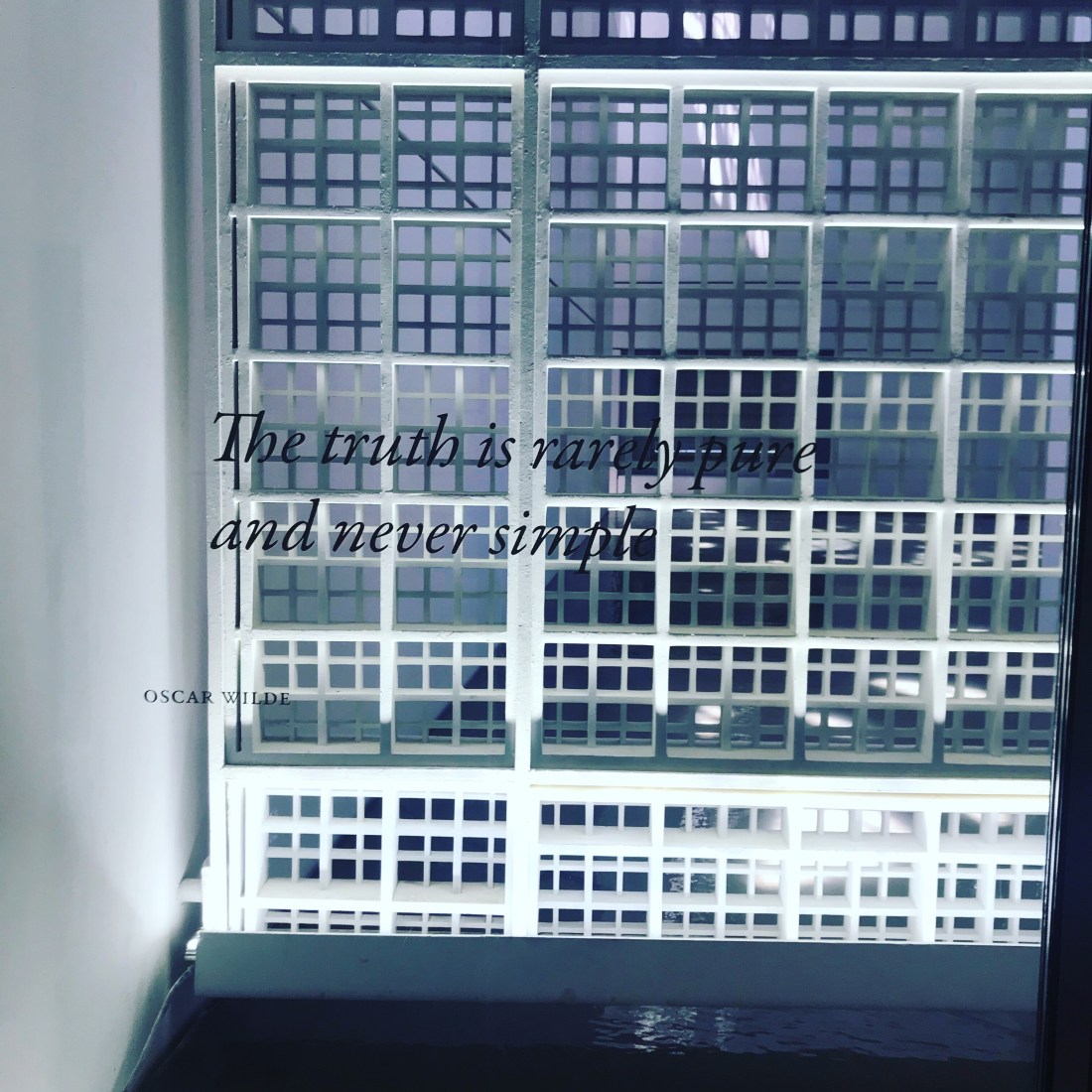
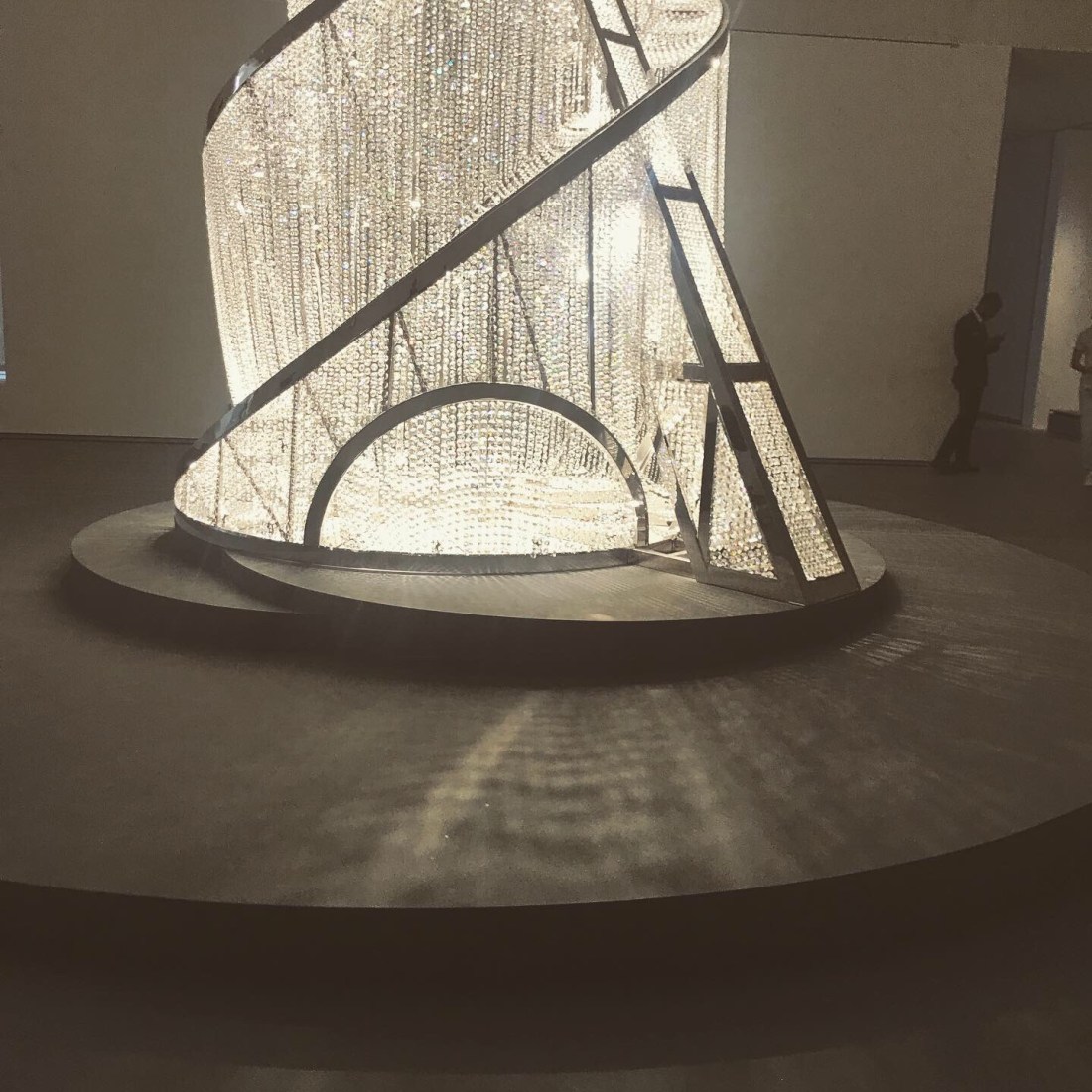
The three photos chosen for this note, are paintings for Jackson Pollock (Black and White Abstractions) and SH Reza (Bindu, 1986) and an installation by Chinese Artist Ai Weiwei which work is distinctly political.
An act of curating the universal is also a well thought out act. The Louvre Abu Dhabi is a site for reaffirming the global project, where the liberal transnational elite sipping Latte from all over the world, find the space comfortable and common- as I felt the experience similar to National Gallery in Singapore or the National Museum in Oman.
#louvremuseumabudhabi


@ Louvre Abu Dhabi
Writing the Gulf.
A key aspect missing in the planning or sociology literature about the Gulf is the absence of the backlane as a typological entity in urban space. The backlanes of the cities have unique sub cultures with informal spaces not listed on Zomato.
I found plenty of eating places run by various communities which are lifelines, captured nowhere. These social interstices are voids within binaries framed by western intellectuals of the past, a future of futurists and a transitional labor force, which is more permanent transient.
Writing about the cities needs to have these archaic frames dismantled and written afresh. Where does Al Hamriya in Muscat and backlane ecosystems of Bur Dubai fit in these writing and photography of these spaces?
#Gulf
Mall Spaces as Community in GCC
In cities like Dubai and Singapore, Malls are more than retail consumption spaces/ they are extended home spaces or community hang out nodes where it is cool, safe and family friendly. Artificial yet organic, contradictions galore.
Malls are extensions of the community or rather is an anchor of the community in the GCC. The commentator siting in London will not know the reality on the ground. Malls are the Gulf Urban Normal.
Practical Climate Resilience Building; Some Thoughts Beyond Adaptation
The financialisation and securitisation of the climate change discourse is the best thing to have happened. People take climate change more seriously. Lifestyle Environmentalism is incremental in nature. Climate Change Resilience is implemented through technology, finance and buy in from communities. And green politics also helps. We need more than tree hugging to save lives and the planet. The planet is an abstract idea, the flooding in the neighbourhood is cognitively more relatable.
The banks and financial sector taking climate change risks as real drivers to their portfolios has been a game changer as the Hindi proverb goes ‘Baap bada naa bhaiya, sabse bada rupaiyya’ which affirms the primacy of cash more than relationships.
Climate change will hit everything we do, some cities have already declared climate emergency. We need bankers to invest more in green infrastructure to save the world.
The Political Economy of Environmental Data
Environmentalists, in the corporate, consulting, civil society, research, regulatory and academic spaces need to understand that scientific data is a social construction. There are many parties in the production of the data on which policy, planning and implementation decisions are taken. The political economy of the environment, with its multiple manifestations in climate change are essentially human decisions, anthropomorphic in academic lingo. How knowledgeable is produced, interpreted and disseminated is key how environmental decisions are placed within the realm of political economy.
Understand how the technical reports are consumed in the decision making ecosystem, as the common refrain is ‘environmental issues are not taken seriously’.
Environment is more than science, fortunately. It is life.

