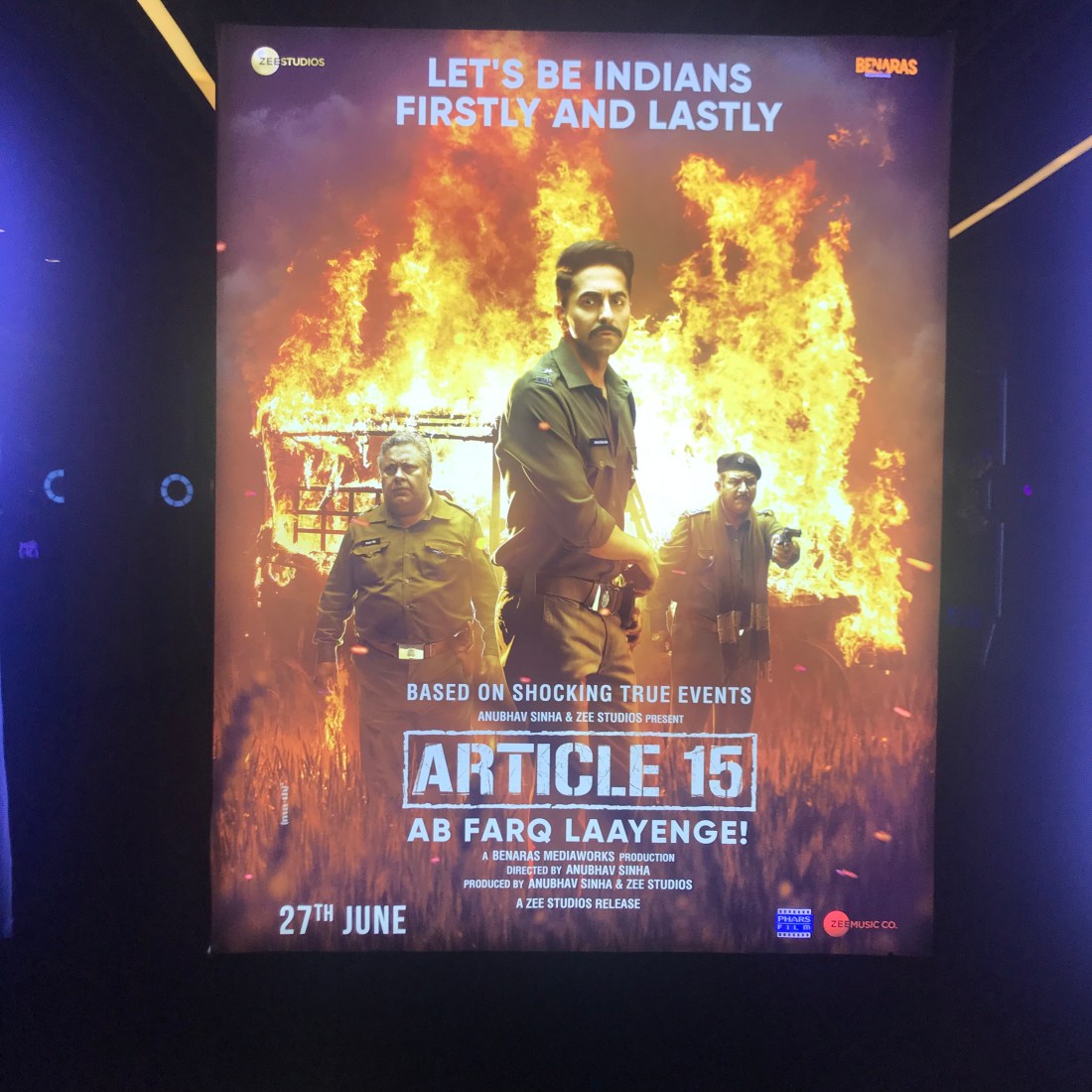
Article 15; A Movie Review

Article 15 is a master class handling a sensitive topic such as entrenched caste discrimination in Northern India. It takes a saviour lens to the topic with a Stephenian Delhi Boy Character taking on caste based power hierarchies in delivering justice to disenfranchised members of subaltern community In Uttar Pradesh.

The film has amazing documentary style cinematography and background score with solid performances. Ayushmann has another winner.

The strength of the film is in its dialogues and screenplay. It shows how many India’s reside in parallel, with Instagram and Watsapp, co-inhibit worlds of caste cauldron and Hindutva consolidation. This particular juxtaposition is the heart of the film. The film has shades of Dibakar directed Shanghai where politics and bureaucratic rot intersections are present.

Good films with a social message do work.

#article15 #changethinker

Possibilities.

If we are stuck in the present

How will the future emerge?

Through the sliding of time

Or the imagination of of the soul?

Creatures of the EMI

When will the ‘I’ emerge

On the Saturday night

Over the ‘Quarter’ and Chakhna

Or the possibilities of a Sunday morning after Church?

The heart should answer

Not the Banker

Migration Research’s Blind Spot- Good Samaritan’s as Last Mile Healthcare Delivery Provision

Migration Governance is back on the research agenda as refugee theatres in Africa, Maghreb, Mediterranean and South East Asia are simmering if not raging. The multilateral institutional activity with IOM, UN, WHO and the Marakkesh Declaration is encouraging with increased focus. The migration trends in the Khaleej are changing with African low wage workers from Cameroon to Kenya replacing Kerala as the manpower exporter. Many interviews with taxi drivers in the emirates have yielded the inference that African manpower is replacing the Pashtun as the preferred taxi driving talent pool. Bangladeshis are hired only as cab drivers in the UAE as there is a work visa embargo on them.
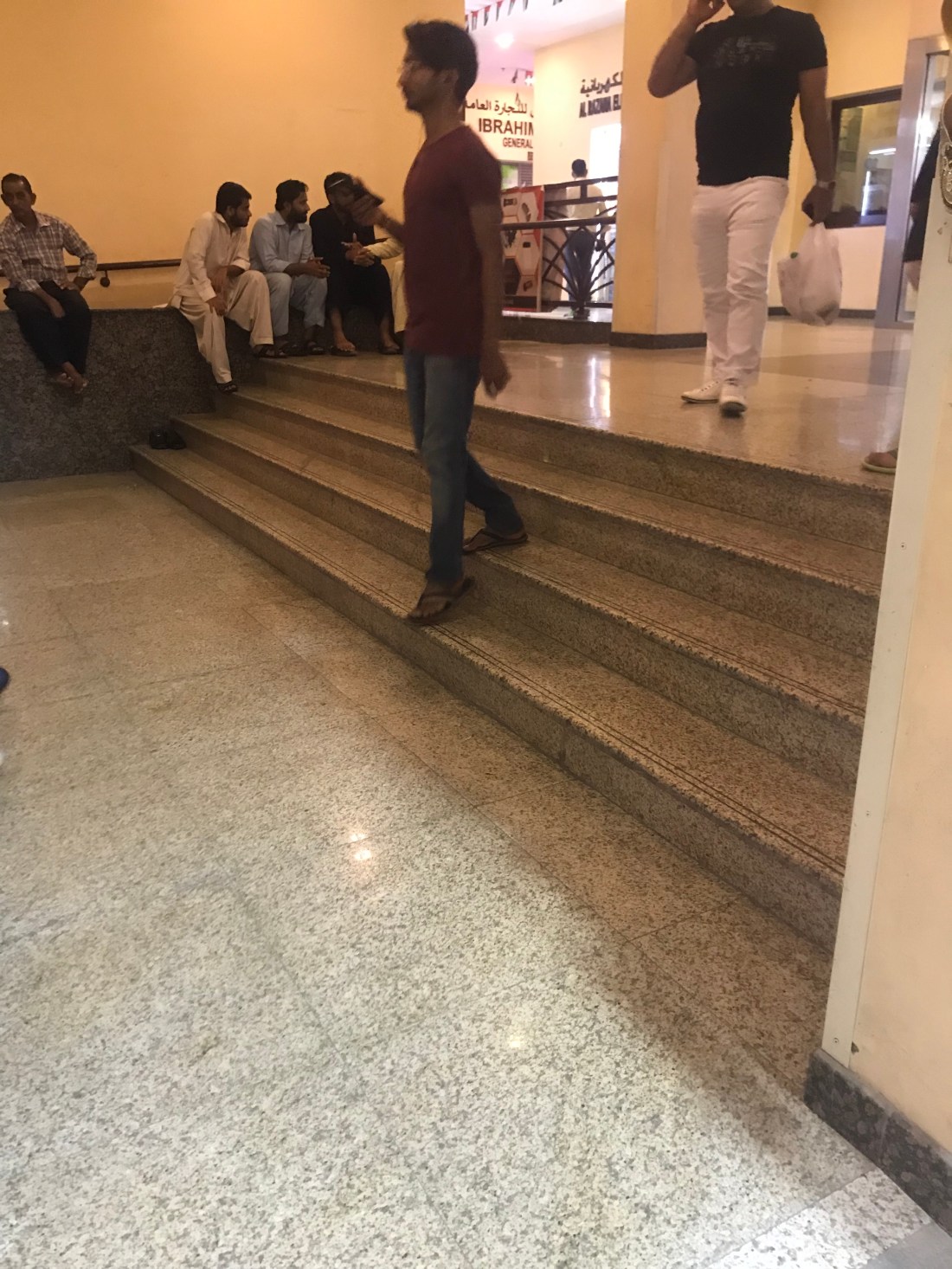
Ethiopian is a sound heard frequently as Nigerian dialects in many areas of Dubai. This is shifting the migrant support networks to the Evangelical Church groups as linguistic community groups have been the on call support of choice for Indians. In the Permanant Transience of the Gulf, support systems are limited to a couple of friends and village groups from back home. The first response to healthcare is panadol (often called Panadol Region) then the company doctor prescribed as per the insurance. This however is also Foucaudian Bio-surveillance as unfit workers are prime targets during restructuring.

Too much academic literature is focused on the causes of migrant issues regarding health, emergency financing and legal access. However very little attention is paid to groups who formally and informally deliver this last mile support.

Good Samaritan Model is often the case when salaries are delayed for months and mouths have to be fed back home. These voices of the Good Samaritans have to be recovered as these support workers in their home away from home. When I was not paid for months in my previous company, my extended family paid my bills as I looked out for my next gig. But not all are as fortunate as me.

Banglar Kantha and Bangladesh Centre Singapore of Veteran Journalist AKM Mohsin in Singapore is one platform for emergency relief.When workers are hospitalised Mohsin Bhai is there for help. He has sent back many dead workers to Dhaka over the past two decades. When diplomatic staff are faltering, the Good Samaritan’s plug the gap.

There needs to be a structured research program interventions around the last mile support organisations for health for migrants including the embassy staff who help. It’s time that the spotlight is shown upon the dark knights of remittance economies in academic and practitioner research.
Happy Turns.

Last month, I was privileged, all thanks to Prof Sanjoy Bhattacharya to speak at WHO-York University seminar of humanitarian emergencies and health in Doha on migration and health outcomes. Attending the talk was Dr Zafar Mirza, Director of Health Systems at EMRO WHO (Middle East/North Africa/Pakistan). He asked me a couple of questions which was an honor to field up.

Little did I know that, three weeks later he would be the Minister of State for Health in Pakistan. Life does indeed take phenomenal turns! Amen!

#Gulf

The Overseas Bangali Academic Hypocrisy

If a fraction of Bengali Academics in overseas universities over the last fifty would have worked for the state in even advisory capacities, the illustrious Bangali would have made his/her state better rather than celebrating Pujo over a weekend in Houston or London or Muscat. We (I am half Bong myself) love everything in absentia, and the nostalgia is limited to an annual tourist trip to Shantiniketan and patronising Mustard in Singapore.

Consulting Edge

Consultants maintain the strategic advantage by these elements: ideas, implementation, network, investing in learning by text and travel and looking out for green shoots where others do not see anything. Be beyond the report as life is one continuum rather than binaries of art and science, analytics and emotion. Think complex adaptive system, every node has a spatiotemporal coordinate, changing at the very sub second and the art is often the context and scientific data is the detail.

Business as Art.

The sad reality is our careers are framed by a HR Manager’s perspective , rather than as a value creator, building IP for the Organisation, akin to what an artist brings on board through innovation in projects. Longevity is seen as a positive rather than project based cvs which millennials are building through gig work.

Knowledge professionals are creative business artists, reframing and reimagining the corporate conversation, one project at a time.