Muscat Diaries : notes from a sabbatical

I was on a sabbatical for a month, travelled from Gurgaon to Mumbai to Pune and then back home to Muscat for the large part of February. This is my first post in 40 days which is a personal record for me. I needed space, a recalibration in my goal posts and a realization that ones personal journey  is unlike any other.  The moment when I landed in Oman, I felt that I am back home. As I  collected my family visit visa,  & felt wonderful when the Omani Immigration Offer stamped the visa on my last bit of vacant real estate on my passport and my heart experience a calm joy when I stepped out of Seeb airport.  The biggest joy is the joy of being home after two years.

I went to my old college days hangouts of Shatti Al Qurum: the English breakfast at D’Arcy’s Kitchen or a drink at Traders Vic@Inter Con, Muscat is still epic. I met old friends and colleagues who helped me realize that in some places time indeed flows albeit at a slower rhythm.  The accelerated rush like feel of a 30 sec ad film as in Mumbai and Singapore had driven in me a post-modern definition of development. The humanity had a slow death in me in the stock marketization ticker like culture that we dwell in.  A stroll across the Muscat Corniche and the traditional Mutrah Market is not the commodification of culture but a model in how traditions and the western model of progress can exist in fairly east equilibrium.   Infrastructure in Muscat is probably grade one undoubtedly.

How we conceptualize modernity determines the shape that development evolves into. Oman has forced me to re-think progress once again.

The biggest take-away was rather strange- Muscat is still Home, and will always be. Shukran Oman. 

‘Tapri’ Tales: Conversations over Cutting Chai

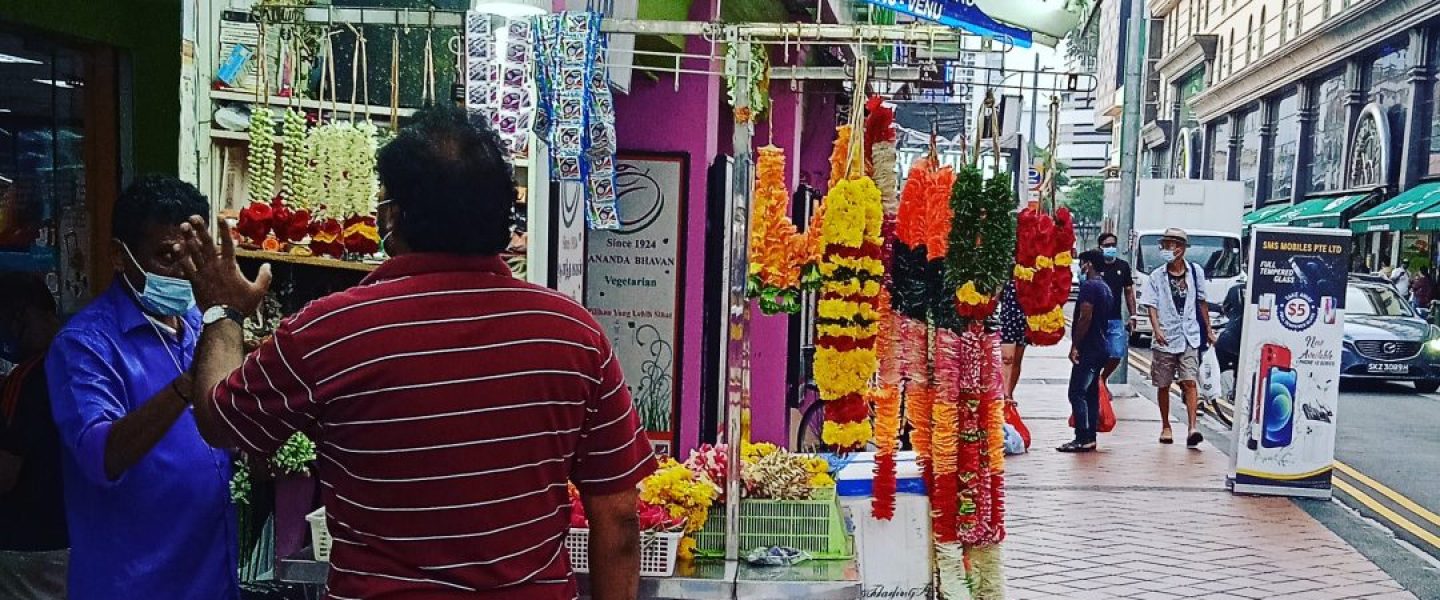
Tapri can be identified as a humble rambled neighborhood corner tea stall which sells you a smoke, biscuits and snacks. Its significance as a locus of community engagement goes beyond the unimpressive physical confines which it depicts.  This urban street corner joint is a great social leveler in which the office boy interacts with the MD as both share a crackle over a smoke, whether it is a chota gold flake or Rothmans (brands are insignificant as it is the nicotine kick that counts, right?). In aping the west, the Glitzy office blocks are non smoking zones, and even the overseas educated snobs are compelled to share the space with mundane workforce cousins of the office complex.  I do not have a negative bias against smoking as I understand that it is a lifestyle choice as much as a drink at a pub on a Saturday evening.

 Office Gossips and petty plans are concocted over a cutting chai in the five minute post lunch walkabout downstairs.  A node of interactions with peers beyond your office floor; a quick eye to eye  glance with the latest eye candy in the block, adds those microseconds of joy to ones dreaded cubicle slavery.

I do not smoke but I have been a passive smoker over the last few years of my life due to my friends who enjoy a drag. I can sense the kick which esteemed bosses have when they substitute their Cappuccino at Costa for a 6 rupees wala cutting chai. 8% of the cost, 8 times more kick with a chota gold flake.  Tapri as they call the significant social institution in Mumbai sells you poha or samosa for breakfast or a quick bite in 15-20 rupees where a normal meal at a registered eatery will set you back by at least 50-70 bucks (kindly excuse the hygiene levels please). For the invisible urban underbelly that keeps our homes, offices and communities functioning at equilibrium- the tapris are a lifeline in these times of inflation and economic uncertainty.

In Delhi and in general the NCR, Tapris offer a lot more on the plate (pun intended) in terms of the fare they serve. It is cold currently in the height of the winter in Delhi, it serves one eggs, maggi and sometimes steamed chicken dumplings (momos) that makes one warm.  It is a mini eatery on wheels in a way.  The tapri owner is a walking talking yellow pages of the services available in the area. Well, sometimes all kinds of services, which a decent boy next door really does not need to know off.

The pulse of a community can be gauged from frequenting the tapri, whether it is the sentiment over Arvind Kejriwal dharna at Rail Bhawan or Katrina Kaif in Malang.  I was pleasantly shocked that the tapri next door sells the Indonesian cigarette Godam Garam and it pretty popular I have unscientifically observed during winter. Although the barely literate tapri owner is aware that it is an ‘imported’ cigarette, it is the embodiment of how globalization has reached the urban classes in India.

The joy of a cutting chai, pani kum or strong tea cannot be equated with the inorganic finesse of a CCD.  Truly a lot more happens over a chai 🙂


Urbanity : tale of a guy next door through globalization

This initiative of words is an attempt to celebrate the ordinariness of a boy next door, to break the myth of the super achiever and to quite revel in the constant stream of consciousness called life. My work also attempts to make sense of the post colonial, post risk world that we reside in with multiple mega forces that impact cities. Urbanization and Globalization are terms which we read or hear from self proclaimed pundits every day but what does it mean to a normal guy  in the cubicle making a living when interacting with the meta structures of global governance. It is my en-devour to operationalize these vague jargon’s through my personal journey via Muscat, Singapore, Mumbai & Gurgaon with other places making a special appearance.  The deeply challenging personal negotiation with my multiple identities is the backdrop, Writing for me is a deeply meditative experience.

  An autobiographical narrative from a first persons perspective will be candid, engaging and straight up. In this season of the Aam Admi, a guy next door shall unravel an intricate web of ideas unearthing cities, communities, breaking down phenomena into meaningful meaning. A story of the city, with all the sacred chaos.
 
Urban Democracy with Digital engagement and Sustainability with all its various nuances will be explored at a individual-society relationship level. In this meaning making initiative, I hope you would join me as i attempt to move beyond conference papers and taking blogging to a next level.  My book will be published online, if i do not find a publisher. Well I am not a Ivy League or IIM alum. Only those folks find publishers in India.


Write a fresh script

Blessed New Year Folks! A Big Thank you to all my friends who have been with me through my writing journey over the last three years. Last Year , which ended yesterday was certainly Baptism by Fire (made me grow up), so many moments of self doubt and fighting inner demons that felt me clean enough to start off on a new slate. But as I reflect, there is one break through idea that comes through.

New paradigms require different operating systems

We encounter challenges, when our inner operating system is not up to the mark vis-à-vis our functional environments. As we are biological systems, we evolve. Evolution is slower when we cling on to the past dearly. The lessons of the past are precious and hold valuable lessons. But establishing the present based on the past is where we use an old processor to run a new system. New scientific research has inferred that our genes evolve as per the social milieu that we inhabit.  Stress and loneliness are factors are common ailments of young professionals.  These two factors impact performance. It is imperative, that the expectation setting is grounded in reality than myth.  Create a new narrative as the story in the head constructs reality.

As the new year starts off on a prayer driven edifice, my  prayer for this year is simple. Find Yourself on the path to realize the true selves that we truly are.

2014, I will be tough on You. Create a future more meaningful than your past.That is our fundamental calling isn’t it?

The Post ‘Sickularism’ Age is finally here

Today Modi rocked Mumbai. Being a Mumbaikar I felt the energy of Bandra Kurla Complex through the airwaves in far away cold Gurgaon. I felt the gap in Left of Centre Politics in India as well. The syntax can be termed as Leadership which is not aloof. The High Command Culture of Lutyens Delhi was breached earlier this month by a civil society activist Kejriwal. Kejriwal’s politics is very much left of centre especially its economic populism. But there is a difference- Kejriwal’s vocabulary consists of a connect with the urban poor. He won the trophy constituency of New Delhi beating Sheila Aunty by a large margin.  The Aam Admi Party is scripting a new narrative for urban metropolitan politics in this country. Accountability, Inclusive Governance, Proactive Leadership are adjective-verbs that are currently appropriated by the Right in India and now by the Aam Admi Party. The ethos of a strong technocratic Developmental State is the edifice of Modi’s Politics. Raman Singh’s Chhattisgarh uses Welfare very effectively too. The core plank of Congress’s Politics is Welfare centric. I am a supporter of Entitlement Legislations as it is often the last resort of the extreme poor.  But Welfare needs a robust infrastructure to deliver value to the costumers. We live in the era of a Client-State Relationship. The legislations have to deliver on the ground. Ofcourse the lessons of governance are iterative, they take time for the results to emerge on the central dashboard of the media monitors.  The loss in Rajasthan has shown that Welfare is not a magic bullet. Strong Leadership matters in the atmosphere of policy paralysis.

Congress’s other political Killer App is secularism. Unfortunately, this is a pejorative word with a negative connotation. This means minority-ism and vote bank politics. The introduction of the communal violence bill is not the reform legislation that’s top priority anyways. The Lok Pal Act is a victory for the civil society and not for Rahul ji as it was a reactive measure. 

Secularism isn’t panacea. The Politics of Pluralism has a wider appeal. Arun Shourie should take a workshop for the friends from the Left. Regional Leaders are strong leaders. A Nitish and a Jayalalitha ji are perceived as leaders who have a mass base unlike a Scindia.

The Liberal Left has to realise that Developmentalism and Strong Leadership is the need of the hour rather  rhetoric on communalism. Modi and Kejriwal are metaphors for clean and development based politics. The Congress needs more Jairam and Pilot than Gehlot and Jogi.

A Pluralism+Development+StrongLeadership approach. Is it that difficult Rahulji?

A Year in Reflection (A Quick One)

#2013Review: Has been a quirky year. The year i moved jobs and cities. Setbacks galore; innovation is a deeply reflective process. I have received more criticism than any other year in my life. Have been a patient of bouts of soul searching many a time and loneliness. Traveled like crazy from Sariska, Rajasthan to Anantapur and Bangalore in January to two months on site in April/May to Sangli in July. A Planning Commission Seminar presentation in January to Al Jazeera Debate Appearance in October to France 24 English gig in November. A whole tour of coastal Tamil Nadu in November too,  to cap it off.  Three trips to Calcutta to add. Arab Street and Vivo City, Singapore, Singapore two times this year to meet the people i care about. Miss you Guys.  Lets hope 2014 enables all to fulfill ones calling professionally, personally and spiritually.  Blessed Festive Season Friends.

Why the Political Start Up called AAP is changing the political narrative in India

The emergence of the Aam Admi Party (AAP) as a viable alternative in the urban political culture of Delhi after the electoral results are out, is akin to nothing short of a small budget documentary film winning an Oscar. The author, director and narrator of the script are the indomitable Arvind Kejriwal  & Co, who trounced the erst while Delhi Chief Minister by a big margin. The party that metamorphosed from the India Against Corruption aka Jan Lok Pal Movement. This break out victory gives AAP the energy to rise above the circumstantial moral authority of the saint from Ralegaon Siddhi- Anna Hazare and the NGO-esque mold. It gives the middle class leadership of AAP the critical to expand to a role to fill in the vacuum of being a proper urban political platform for India. Normal people, next door neighbour type of personalities being elected to assembly is a brilliant thing for representative democracy.  AAP is a political start up from Delhi that has potential for a scale across urban centres.  The biggest fall out, will the re-energising of the urban youth to take interest in participatory democracy. As I read somewhere on Facebook- ‘Greater Kailash gives lessons in Democracy 101 to South Bombay’ captures the energy of the moment. The push to move beyond social media platforms to actually working on the ground is a monumental game changer.

There are more political start ups that are reshaping the terrain of Indian Democracy. The Peace Party, The Welfare Party and AUDF are contesting for the taken for granted Muslim Vote. I welcome the rise of newer players to represent minority communities.  Maharashtra Navnirman Sena may not be new as it has its roots in the five decade old Sena Movement in Mumbai, but it seems the larger than life image of Raj Saheb has enthused the Marathi youth to look beyond the status quo.

The other major political start up of the educated classes in Andhra Pradesh and Karnataka is the Lok Satta Party of Dr. Jayaprakash Narayan, a MLA from Kutapally in Andhra Pradesh. This is again a NGO converted in to a political outfit.  The outfit could potentially be an ally of the AAP in the South, where the linguistic barrier could be a deterrent for expansion.

The Political Start Up is a blend of two factors- a strong personality brand and approachability uncharacteristic of the main political parties. I was a sceptic of the AAP, but its direct approach is an attractive draw.  More Power to the Urban Politics of the AAP.

Regionalism Reloaded : It is time to call it Federalism

I am back from a half month long work sojourn to Coastal Tamil Nadu from Chennai to Kanyakumari with stops at Kumbokonam, Rajapalayam and Madurai. I also had a pit stop at Thiruvananthapuram, which is being swamped by images of Dr Tharoor.  Tamil Nadu was the first state in India to have a regional party administration in 1967 after the failure of the Kamraj Plan to decouple the Congress from the fate of the Nehru-Gandhi Dynasty. They have a history of distinct identity politics even bordering on separatism in the initial years after independence.  The once impactful Congress is a marginal force in Tamil Nadu with a few posters of GK Vasan and P Chidambaram in Kumbokonam were observed (the Late GK Moopanar’s legacy in coastal Tamil Nadu). Everywhere else I could observe Putraichi Selvi Dr. J Jayalalitha’s poster across the state from posters pasted on tea stalls to framed photos in District Collectors Office in Thiruvarur and Thanjavur. DMK still retains a presence in Chennai and Vijaykanth’s DMDK in smaller coastal hamlets in Tirunelveli as far as the initial perception is gauged from.

In this post, I am attempting to reframe the rhetoric on regionalism from one as being a purely identity politics driven vector to one where powerful regional players are driving the discourse on development. The decentralization of political powers to regional satraps has led to evolved, differentiated models of development, Bihar and Tamil Nadu being case in point. Regionalism has a pejorative secessionist ring to it. It is time to re-label it as federal now.

 Nitish has done a remarkable in job in restoring Law & Order and enhancing social infrastructure. International Projects such as plans to launch the Nalanda University is a cornerstone initiative to revive Bihari Pride lost under Lalu’s era of misrurule.

In regional parties, a linguistic or a caste based focus is present which is critical for a bottom up approach. The Grassroots are represented, and orders on internal party or political matters in far away Nagercoil Town in Kanyakumari are not determined from Lutyens Delhi.  Regional forces like AIADMK and DMK or even a MDMK in Rajapalayam, Viruthanagar (Vaiko’s District in Southern Tamil Nadu) have a better understanding of the problems and aspirations of the electorate than the mainstream national players.

Extending this mature Tamil Nadu regionalism metaphor, we have other major regional players in Nitish, Naveen, Mamata, Maya, Pawar, Badals and many other sub regional actors such as Raj Thackeray and Ramadosses. India has had a bitter taste with a freak regional experiment in 1997 with the United Front Experiment. A weak leadership in Deve Gowda and IK Gujral gave India a taste of decision paralysis under a distributed ‘un-leadership’ model.

The politics of regionalism has since matured in the past 16 years. The splintered Janata Parivar has resulted in Lalu, George, Nitish, Mulayam transform in leaders of National repute with a significant mass base.  Regional Parties fight regional parties; a Maya versus Mulayam,  Jagan versus Naidu. The centralised political model of 10, Janpath has resulted in Pawar, Mamata, Jagan to leave the parental fold to lead platforms with regional aspirations. Trinamool Congress is emerging as an eastern regional player to note. The BJP is non-existent in many states in the country.  It is ironic that the BJP in Modi’s Gujarat speaks of evoking a ‘Gujarati Asmita’ or pride. Distinctly regional in character.

  Development is occurring in the states as regional satraps have bargaining power in the centre to bring in funds for Infrastructure Development. Rail Projects in West Bengal were rapid when representatives from the State at the Rail Bhawan occupied it. A J&K based PDP or a National Conference or a one MP Party from Sikkim can have a seat on a federal table of Decision makers which was unthinkable in a single majority administration. This is the power of coalition politics.

The Voice of Neyvelli is now heard in the corridors of power in New Delhi thanks to a more mature federalism . More Power to a Federal Politics.

The Aam Aadmi Party is a Delhi based urban regional outfit. Think about it?

Be an ‘Intra-preneur’

I am not an Entrepreneur, but I like to learn from the tribe of risk-takers who have the ‘audacity of hope’. The zest for life, the killer instincts to close the deal and make things happen are attitudinal traits that every professional should have. Rainmaking and thinking ahead of the curve are pre-requisites for very knowledge worker in todays tumultuous economic climate. Most firms want their employees to bring in ‘work’, create opportunities where there is one.

In Anand Mahindra’s words, Entrepreneurship is a frame of mind. Have a vision and making heaven and earth move to realise it. It is not the scarcity of  capital which restricts people to venture out, it is simply that lack of guts, the tenacity of listening to criticism day in and out, but have the audacity to rough it out. It does not have to be your own business, it can be the division you run, the team you lead or simply proving your detractors in your family and colleagues the real world way:

Prove it. Just Do it.

Have the Entrepreneurial Spirit.  Make things happen. Be Outstanding. Fulfil your Calling.

Beyond ‘Growth-ism’ : unearthing a narrative beyond the bottom line

There is a world beyond the Shenton Way, Bandra-Kurla Complexes and DLF Cyber City’s of the world. There is a peri-urban India and a rural India that might be influenced by its urban cousins due to the dominant, hegemonic discourse crafted by the elite but their world is still rooted in tradition and Asian values.  As ‘Metros have been transformed in to financial products’ in the words the authors of the mightily influential treatise on development sociology in India: ‘Churning the Earth: The Making of Global India’, the role of the City as an overpowering entity is articulated as the village cedes control to the city and farmers lose agency in the process. A farmer with limited resources but most importantly dignity denigrates himself into a commodity in the market when the government or a private developer acquires his land hopefully for a fair compensation package.  The new land acquisition bill makes robust Relief & Rehabilitation provisions for the Project Affected Families. The farmer does not have any other skill set apart from farming and money management is not one of them. It might be a barely literate famer moving from his second hand motor-bike to an Audi the next day, it will not be far way that, he will be a security guard at a shopping mall built on his land holding that he sold off (remember the Bollywood Film Shanghai?).  This might be Jairam’s single largest contribution to the policy landscape of the country.  Might delay projects and escalate costs, but the farmer is at the heart of the story and not the developer. The vulnerable and the marginalised should be the ones protected by the legislative architecture of the State and not act as an agent of the Capitalist classes. The line is often blurred beyond recognition with Industrialists populating both houses of parliament and siting on JPC’s with severe conflicts of interest. Great in one way as they have the ability of project execution but in another fashion take away the essence of grassroots commoner.

The semantics of the rhetoric of Mint Street unfortunately influences corporatized media boardrooms and sometimes North Block.  Umair Haque, who writes a popular column in the HBS Blogs website recently wrote a hard hitting post on the ills of American Capitalism in what he captures as ‘Capitalist-Stan’. American Capitalism was known for its ability as a power social escalator for the mobility it used to provide for all irrespective of ones birth. Opportunity equality was the byword. In the present times, the cliques of the ‘Lords of Finance’ on Wall Street rule the finance arena, influencing public policy that a former Goldman Sachs CEO becomes the treasury secretary under Bush ’43.  No wonder they are the highest campaign contributors to Presidential/Senate contests in the USA. Obama is no exception too.  The decrease in social mobility in hyper charged globalised capitalism is not surprising as ‘only the folks with the correct connections and skill sets’ are able to crack the ivory towers oops the glass tinted buildings of Central Business Districts of Global Econohubs.  It’s the same situation in India, as only 20% of engineering graduates being potentially employable. Many of the younger engineers I know cannot compose a proper mail in business English. English is the Lingua Franca is the Modern World of commerce. This is a pre-requisite as problem solving is in engineering. If you cannot communicate, then you do not know your stuff, if you cannot express.

‘Market-ism’ being the central ideological construct of the bankers and the capitalist classes has led to ‘Growth-ism’. This Growth-ism has led to the culture of the bottom-line and ‘Quarter se Quarter Tak’ (from one quarterly results reporting to the other) ethos.

Take the long term view, because concrete value cannot be created overnight. Mohenjadaro as Rome was not built in a day. Capitalism includes economic growth, and market is a vehicle for channelize the ‘animal spirits’ to create wealth.  But capitalism is also about meritocracy and wealth creation. More importantly its about pursuing ones calling in the sentiments of Weber.

 Growth-ism stands for parochial wealth creation unfortunately now days. When wealth is created, it is distributed for welfare of the poor, so that they can a more playing field can be created. This element is sadly missing from the conversation. I was on an Al Jazeera International’s show – ‘The Stream’ on the 9th of October 2013, speaking on an esteemed panel on the Food Security Bill. I spoke in favour of the bill that a welfare legislation is a public policy innovation and is a start, might be flawed but is a start.  A policy pundit, a very knowledgeable Think Tank honcho and friend shouted me down espousing his beliefs in ‘Market-ism’.  Market is a great slave but a terrible master; my friends from Dalal Street should understand.