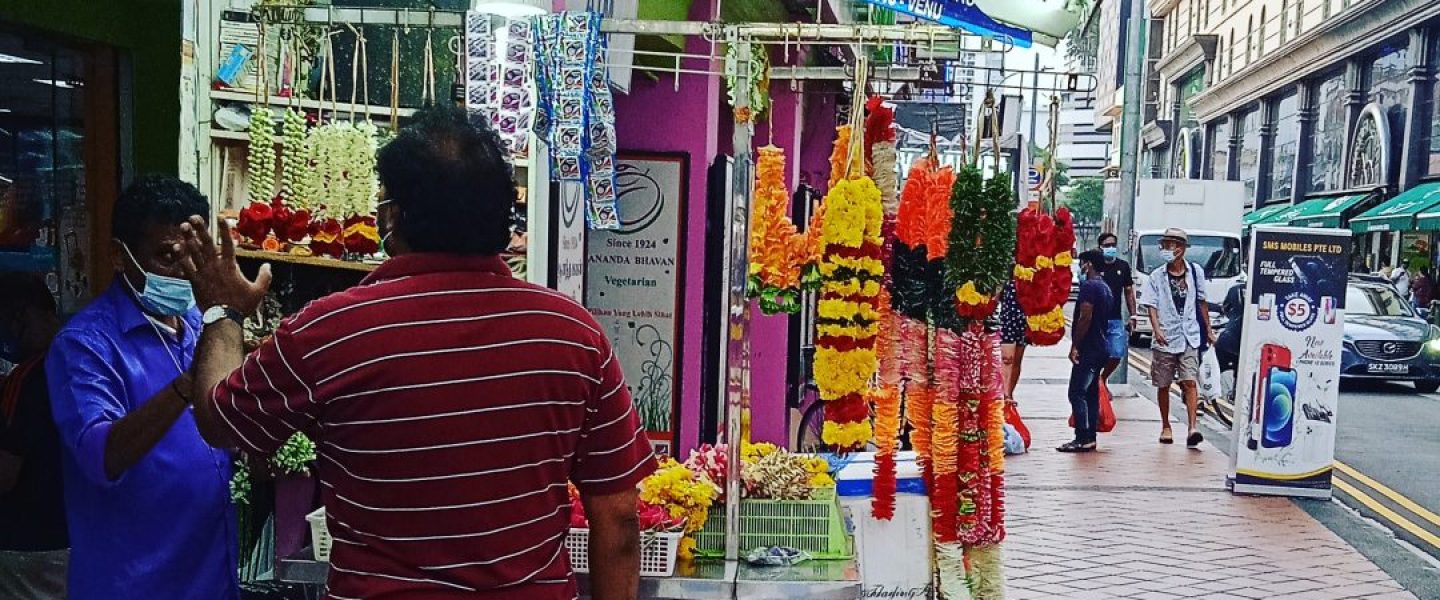
One month of mayhem. The push towards the digital economy is happening as a mode of survival. Reflexive rather than proactive. The dabbawala took bank transfer this month. This was a watershed moment for me. The digital economy has a surveillance and a panopticon lens. Inclusion has a mainstreaming effect. The narrative frame is of the ’emancipatory’ spirit. Critical thinking needed, to unravel the various layers of this techno deterministic move. Overall, the common man is so helpless reacting to various top down policy interventions as a clueless lost kid at the train station.
Category: Uncategorized
My take on Demonetization on a BBC World Panel Discussion
This is the first video in six years on this blog! My panel discussion on Demonetization yesterday evening (28th November 2016) on BBC World Flagship Program ‘The Global’. Some plain speaking to puncture the holes of a technocratic dominant discourse where cashless and digital are operative syntax. The common man matters who is in queue for hours as well not only investors in e wallets. Yes, ‘The minor inconvenience’ is not minor. The official BBC video clip helps.
Interview on Forbes on the Demonitization Crisis
I was interviewed by Forbes on the demonetization crisis in India. Here is the link;
Coping with Political Disruption: Time to build new vocabularies of resilience
This has been a truly unprecedented week for global democracy with Mr. Trump being elected as the president of the US, when no one apart from Micheal Moore out of all folks, gave him a shred of hope to win. Like, Brexit, earlier this year, the intelligentsia was overwhelmed with the disruption from a population who saw no use of global mobility of their passports while they get by on food stamps. While the liberal elite might snigger at the thought of Nigel Farage or Donald Trump, they certainly have a pulse on the ground. Donald Trump being the charismatic salesman, understood the latent requirements of the consumer.
I have been digesting the volumes of post mortem analysis of the Trump victory, that seeks to be an effort into semiotic reading of the events of the week. The Route 128 or Palo Alto tech tribe might be jittery at the prospect of a vision of a man they do not endorse, but often as i have written, the tech industry does not understand the dynamics on the ground with people who have lost jobs overseas and the old way of living with added automation in shop floor work. The banker on wall street with high frequency algorithmic trades is often disconnected with the margins of cosmopolitanism and that ignorance will cost the tech and finance sectors dearly. The vote against global elites is loud and clear, that the economic realities are far more salient. Realities are embedded in everyday lived experience and are always micro in character. Society is three skipped meals from a revolt, as the old saying goes. More anthropologists should study the impact of tech disruption on brick and mortar communities to gain a thorough understanding of the impending events.
Times of disruption call for a new aesthetic vocabulary of understanding the present while building empathy, execution and inclusive leadership to re-imagine a future in which subaltern voices shall count. There is a Black Lives Matter and Occupy Wall Street, and there is a different politics which might feel that this present politics of dissent is not enough. The internationalist politics of the left has been inadequate to account for the grievances of the inner cities. In India, Bengaluru, the technology capital of India faced water riots over sharing of the resource with neighboring state of Tamil Nadu shutting down the city for days as on the ground contacts had shared real time experiences. In India, the parliamentary left has been decimated part from Kerala and Tripura with the mantle of anti-globalization politics with the regional players including the Aam Aadmi Party.
We live in a world which is constantly evolving, and business has to adapt with the local political realities of the day. Time to integrate PESTLE analysis in to business continuity risk assessments then and listen and cater to the needs of the community, and not just the token CSR event. Time has come to rethink the lexicon in which we think.
Identity and Migration
Long before the refugee and the humanitarian crisis of the post Arab Spring countries demasking the so called empowered politics of the EU nations and the U.S.; the Indian Subcontinent had one in 1947, where millions died and mass migration occurred due to region based partition- Punjab and Bengal was severed. Identities were fortified into the refugee class ‘Bangal’ and the untouched landed ‘Ghoti’ in West Bengal.
This useless binary is still used to map ones antecedents. In short, migrants and their generations have to bear its scars long after the survival, as the identity affair is subconscious. Identity is used as a weapon to demoralize the migrant.

Ground Zero: Sacred Ground no more
Fifteen years back, the world as we know changed; in rhetoric and reality, binaries were created and institutionalized between ‘with us or against us’ Last one and a half decades of wars, revolutions, springs, summers and ultimately the winter of 2016 resulting in post truth Trump and War Hawk Hillary and millions of deaths. Refugee crisis is a symptom of that process. It all started on this fateful day. Ground Zero is now a memorial and a shopping mall plus office space once again, as sacred ground is not enough as there is money to be made from memorial tours and otherwise. Hope seems a sales pitch. #911
Small Voices Matter: Social Change at the Margins
Small Voices aka Soloprenuers are an important pivot in making our communities more vibrant as group think is avoided and their risk appetite in curating a world towards normative ends is greater. Scale as a narrative is over hyped. We, in the private sector are driven by the animal spirits of growth ensconced in the ever evolving construct of modernity. The growth narrative is hinged on scale; big numbers and steep percentages and the media seems to be enchanted with them, rarely questioning the real impact in the ground.
Community activists are often a lone breed. They are driven by by a passion which chars them. The small, feeble voices which they echo, is often ridiculed by fellow members as spending personal resources on activist causes which might not bear fruit. The apt example is of the migration NGO’s in Singapore and Malaysia, or even the initiatives focused on transient domestic workers in India, who travel from one end of the country to the other to eek out a living. These social ventures are focused on empowerment, advocacy and giving a voice which shatter mainstream media narratives such as Bangladeshi construction worker poets in Singapore. But, the focus population is transient, and help from these community activists might be a measure of last resort to the target community. These community activists are often hidden, silently toiling away at the margins helping these subaltern communities. Where does the impact assessment paradigm of grants based funding help in improving the ecosystem, as most soloprenuers are self or crowd funded, and often do not have the bandwidth to even apply for grants such as a young Singaporean woman trying to help women Rohingya refugees with skills training in Malaysia or couple of friends trying to light up villages in North East India . Institution building takes resources, and a dedicated team. Small voices often work with volunteer consultants and well wishers who dedicate their time and money behind a cause in the form of an event or two, but a protracted conversation on social change needs a distinct fire in the belly which these small voices have, often banging their heads against a wall. But, they still continue working with every new member of their partner community such as Mr AKM Mohsin of Banglar Kantha-Dibashram in Singapore, working with Bangladeshi blue collared migrants for over two decades.
These community activists work in marginalized communities on specific issues, and depend on social media as a free loud speaker to bring these important voices whether the auto driver or the house help in Delhi or the Baul practitioner in rural Bengal. This however, does not discount the materiality of the requirements of running a program on social change, only that scale is often not the solution and that resources are an aid, not a silver bullet.
Impact is catalyzed one conversation at a time, and does not need a grant application to be written.
Conversations with Cabbies: Delhi Edition
Just met a super courteous elderly Sikh man Sukhdev Singhji in Nehru Place after our biannual health screening, who drove us home. He broke bread with Sir Ben Kingsley during the making of Gandhi and Satyajit Ray during ‘Shatranj ke Khiladi’ as he worked for the producer of these films. He drove for 8.5 years on behalf of the Embassy of Western Sahara. We were discussing Polisario Movement and Magrebi Colonial Politics driven by phosphorus during the 15 minute drive. Some days do make me wonder about the sheer wealth of understanding academic life outside the ivory tower of Commercialization. 
Bhatt on Bollywood
Mahesh Bhatt to Karan Thapar in an India Today TV Interview: ‘We make two kinds of films; to comfort the jolted, and to jolt the comforted- for the jolted it is an ice pack and painkiller, and for the rich, pain is an aphrodisiac’ in response to a question on whether cinema is for changing the world.
And
‘We are not in the truth peddling business, we are in the illusion manufacturing business’
No one articulates it better than Mr Bhatt; the provocateur exemplar.
Reimagining Azadi: Making it matter
Happy Azadi Day India. May we reimagine the way we look after marginalized communities from Bastar to Bombay as we turn 70. It seems too many folks are squeezed in the middle and on the margins. The business of democracy is an imperfect transaction, and we seem to be operating on an auto pilot mode, the energy to change the drift of the discourse on inclusive growth and buy in is missing big time. The nationalist rhetoric has to move from the Times Now Studios to the actual project delivery in the micro politics of everyday life. Let’s talk more with humility with our community members to improve livelihoods wherever we are.
The future does not lie in a utopian city overseas for the middle class, or the urban centre for the poor, it lies where we are. Aspirations need to be actualized in order for a real Idea of India to matter from the text to experience. Let India be prosperous and peaceful for the year ahead from Imphal to Anantnag. Bharat Mata Ki Jai!

