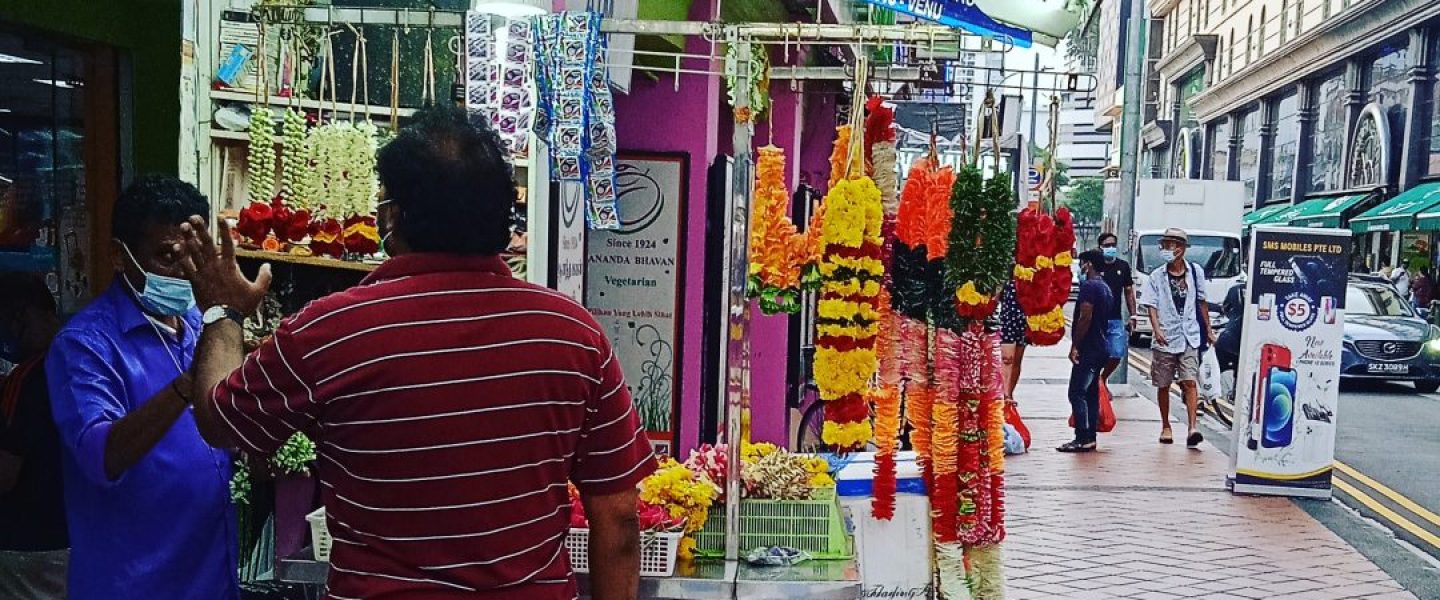
Capturing Oral Histories of the Gulf: Narratives of Development

Histories in the Gulf are hardly bottom up as state led/dominated discourses lead the landscapes of the past. My conversations series with cabbies and now with migrants attempts to recover these silences, about to be lost memories. Migrants in the Gulf are a practical lot, they are interested in earning their riyal and counting their days to the next trip home. The people who had built the cities of the region in the 1960’s and 1970’s are a lost tribe, currently in their 70’s and mostly retired back in their hometowns in South Asia. So to meet and chat about the development of Muscat with a Rajasthani man in his sixties still working for his Arbab, is rare. I meet him almost everyday in the Lahori Karak chai store in my building in Al Khuwair. But, today the conversation extended to more than the customary Salaams. We actually spoke for an hour on the History of the city from 1975, and the evolution that it has undergone in the past four decades of unprecedented transformation. Uncle as I call him, is from Pilani in India, and came to Muscat in 1975, via ship from Mumbai. He said that visa and labor card stamping used to be done offshore up to a kilometre in Mutrah where the ship was docked.


He said that Muscat was old Muscat and Mutrah, and the Lawati Quarter used to be shut after 7pm. Mutrah was is/still populated with old Lawati origin traders. The emphasis on education provided by community was salient in the conversation. He compared the Lawatis with Marwaris from his home state, calling them Bania’s in an affectionate manner. Uncle, a Marwari himself is a small time civil works contractor rising from worker grade picking up skills along the way.


The currently touristy Mutrah Corniche was residential and with a few concrete houses and full of shops where even the legendary Bahwan Brothers initially started with a cycle shop before venturing in to automobile retail. The mercantile communities of Mutrah, the Lawatis and the Banias had their focus on trade between Oman, India and East Africa. Shah Nagardas Manji arrived from Djibouti in 1908 for instance. He was keen to state that the Indian Rupee was legal tender until the 1960’s.


RC Cola was a prominent soft drinks brand in 1990’s when I was growing up. The RC Cola factory is in the contemporary heart of Muscat, in the same area where I was raised. Uncle’s Arbab was the General Manager of RC Cola in 1970’s when he returned from Bahrain as his Father used to work at the Manama Airport long before the oil boom. Uncle’s Arbab roots lie in the Makran Coast of Iranian Baluchistan. He spoke about various philanthropic initiatives carried out by various businesses in Oman including his owner traveling to Pakistan to help out his staff in the aftermath of an accident. He spoke of his employer’s humble origins as a driver behind its humanity.


Uncle also spoke about the various idiosyncrasies of various expat communities in Oman and he came down heavily on the Bangladeshis, saying that most of the blue collar jobs have shifted from Kerala to Bangladesh over the past decade.


An encyclopedia of memory regarding Oman, he dug in to various aspects of life here over the years as he has almost spent 43 years in Muscat. He thanks his employer to keep him in a job after all these years, as finding work would be a challenge at his age.


Although his Construction work is slow, he seems generous of his time to share stories of a past which no one is interested to find out, as most are invested in their smartphones rather than of the work previously invested to make space for current day migrants trying to make a living here. Some of the stories made me have a lump in my throat, as I too grew up here on Omani rials which my parents earned teaching two generations of students here. My father met his students peppered all across Muscat, where ever he went addressed as teacher, including my former intern’s partner who was probably the last batch taught by him before he retired. He was remembered as a tough teacher who was stingy with grades. We all have stories to share, more than the Mustafa Sultan remittances at the last of the month. Stories make us human.
Lebanese Diaspora

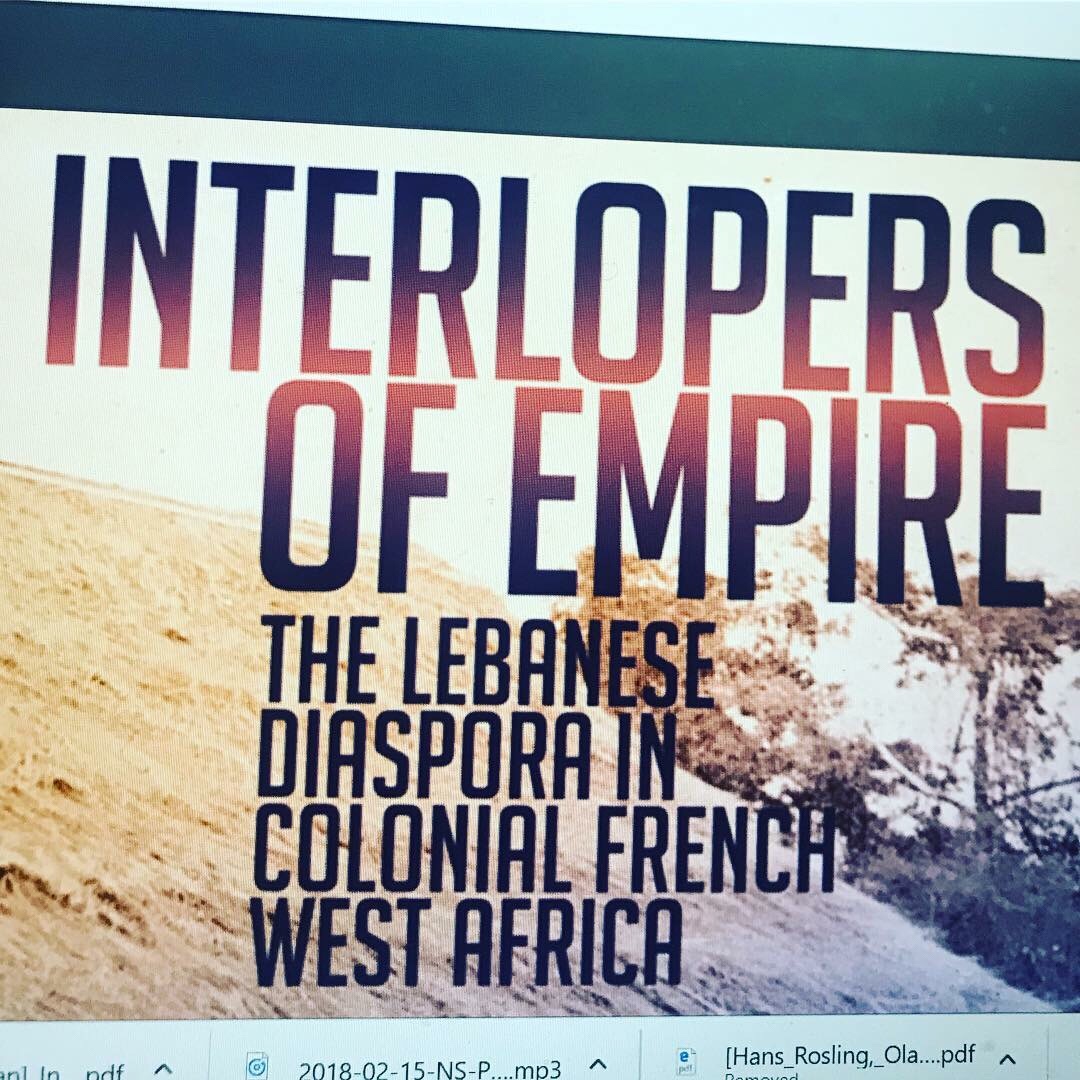
I came across this topic of the Lebanese diaspora in Senegal when the Late Anthony Bourdain had interviewed a Senegalese Citizen of Lebanese Descent on an episode on Dakar in this seminal TV series Parts Unknown. This book is something I stumbled across after it was cited in an Global Urban History article on Dakar as the cosmopolitan interwar city. The French colonial sphere always interests me from Pondicherry to Reunion to Dakar.

#weekendhistorian #migrantscholars

Afterlife

Why do we have to wait for death in order to shower respect often as a technicality

When we don’t remember them while they are ill or retired

Or read their works again

The artist gets a new life

Hagiography that are hollow

To fill up feeds or airtime

Remember them for their politics

Their art

The bad often more important

For society

2018 is a crowded place in the afterlife

Hell/Heaven

Let’s debate it at prime time

Kerala Gulf Relief

The real numbers are higher as donations by NRI are not being accounted for in the normal numbers, informal social networks are more Impacting than official channels as in the case of the Gulf; through the community association, the church and the masjid. The overall numbers will be much higher. I have seen many Indian owned companies do a wonderful job at mobilising resources in Muscat for relief efforts in Kerala. There are similar initiatives all over the gulf. Gulf Migrants can pull punches financially we contribute the most remittances unlike North America green card cousins. The reality in the Gulf is not a binary narrative and very incomplete to what is projected in the Indian English Media run from Lutyens.

Environmental Governance is Political Risk: Kerala Drowns

Environmental governance is a tick box measure in India and in the Global South. The ‘permit kahan hain’ mindset of the industry hinders proactive resilience building which essentially environmental compliance and justice is at its genesis. Yesterday it was Uttarakhand, today it is friends in Kerala and Mumbai suffers every year.

And yes, Sustainability spends are not a cost centre to be accounted for in the overall project cost. A flood risk assessment on your plot is a step in bracing for a climate change driven wet future. A well prepared EIA flags off those signals. Read in to them well. Consider them risk abatement. At the regional level get strategic environmental assessments done for your port or airport or the industrial zone, to understand the drivers behind enterprise level risk. The world is getting hotter and climate inequality is a reality. Combine these ESG risks with Geopolitical Risk and the risk levels for your investment amplify.

Development depends upon the environment and not the other way around. The dynamic minister of infrastructure Shri Nitin Gadkari ji just mentioned in the media a few days back the EIAs should not be mandatory for Road and Port projects. I would love to understand his rationale.

If the Gadgil report for the Western Ghats would have been considered, Kerala would be better prepared. A balanced reasoning for environmental governance with science and data at its heart should be the basis of a new paradigm in this alt facts era, good science saves lives in the long term. Environmental mess in terms of an algal bloom in Florida has entered the political realm. When Quality of Life gets impacted, trivial environmental issues become a political risk. Pragati and Parvayavaran goes together.

Foot prints rather than Foot notes

Footnotes and citations are not possible every time one writes anything as ‘the field’ is the basis of understanding of a phenomenon. I understand that the political economy of knowledge production is based on citations, but let’s not limit understanding to that particular framing.

Migration can’t be studied by literature review and secondary press articles. It is deeply understood by someone who has been a second generation migrant himself.

Intertwined Memories

Reading Prof Devika Charla’s book on Performance and Post Coloniality resonates with me as writing is deeply personal and performance. I started writing in the first year of engineering from a place of insecurity and a feeling of breaking out dominated my thoughts as I was an uncomfortable engineering student in Muscat weighed down by the burden of grades, and that Baba was breathing down my neck that he would send me back to Mumbai to a mediocre college if I failed in a subject. I rather did very well thanks to fear. A child of Gulf knowledge workers, with a Probashi Bangal Mum and a Bihari Father from Shantiniketan, stories of migration with it’s precarity dominated by existence. Thirty odd years of living in insecurity, with a shaky conception of home, does not make me a migration scholar with publications and a PhD scholarship, but as I document voices of migrants over the past few years, I have realised common fears. Such documentation becomes a performance as hardly anyone writes about the gulf workers, and it’s a small community of GCC centric scholars. Gulf migrants are too pre occupied my our immediate fears to write anything, leave alone food pictures on Instagram.

However the migrant story on the converse is a trap, as can be seen from the migrant worker culture scene in Singapore as reducing lives in to a caricature does not add to the story as well.

Unsearchable

Complicated yet incomplete,

Is sometimes the outcome it is

The incomplete corners

The reflected selves

The unvarnished post office brings

The one in the mirror

Authenticity Faked

And yet searching

The kernel of rawness

In the midst of the day

Connect with the lost self

Lost somewhere

Not searchable

History as Farce.

History first repeats as tragedy, then as farce. Before ‘acknowledging’ independence, from the Brit’s. India had to undergo a surgery to satisfy Nehru ji’s ego- millions killed, raped and injured and displaced so that demographics get inverted. Punjab and Bengal get slaughtered and the post colonial ramifications are felt in 2018 through the NRC debate, where votes will be won on poisoned societies. Inter generational trauma persists through stories of horror and hurt.

We are the same after seven glorious decades of survival inspite of the government. From space launches to malnutrition deaths in Delhi recently, Incredible India has seen it all.

BMKJ. Jai Maharashtra.