Conversation with an Entrepreneurial Autowallah in Pune/ January 2021

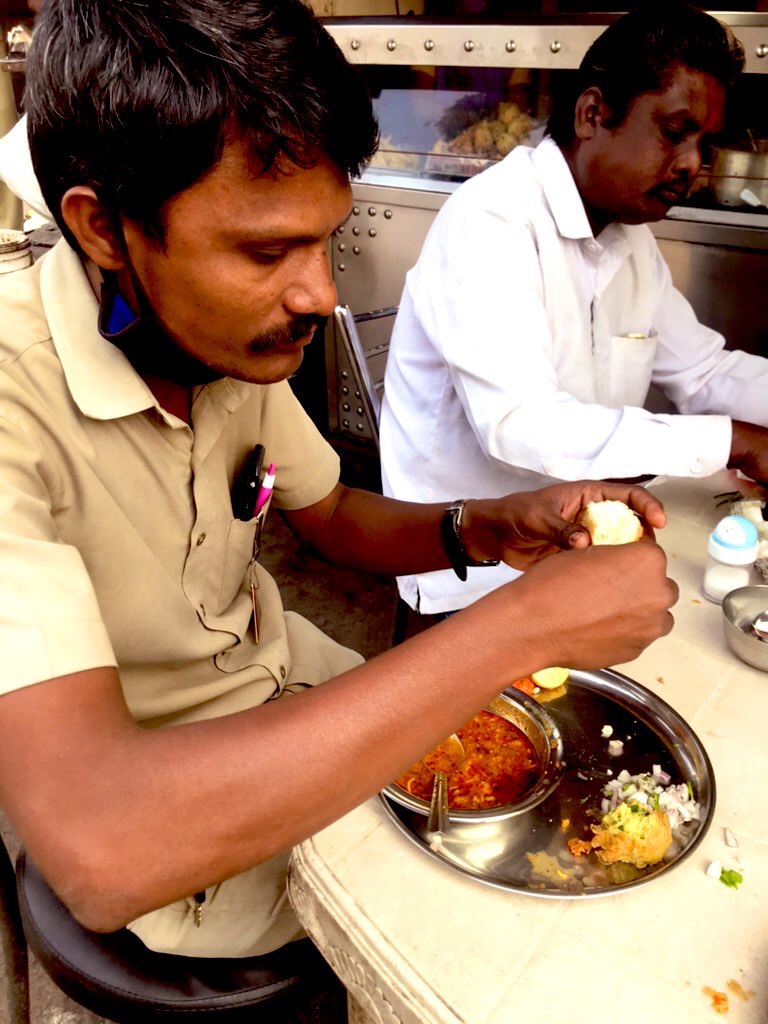
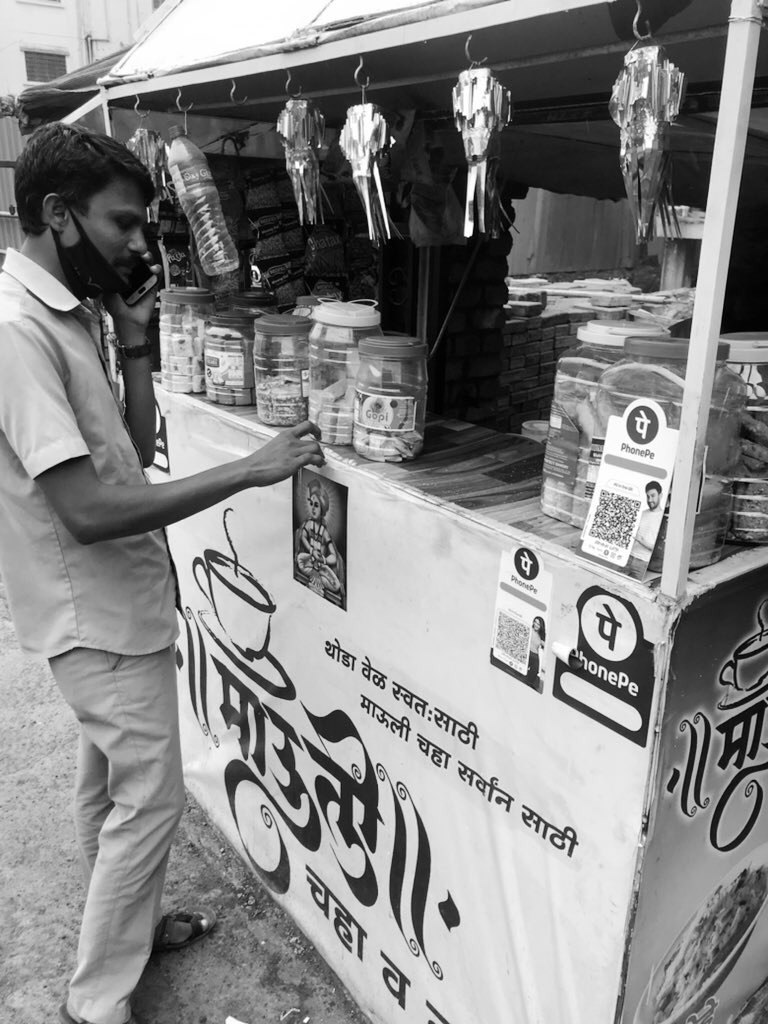
I have been writing this peculiar series with conversations with Autowallahs and Cabbies for a decade now across multiple cities. Whenever I feel fleeting, and desperately need a reality check (read a rap on the knuckles) I speak to self made people. I reach out to Autowallahs are an erudite bunch of people who know the value of every rupee they earn. In the course of my year long independent ethnographic research project with the digital subaltern, I have been understanding how Autowallahs talk back to the tech behemoths through the ‘Weapons of the Weak’ method channelising James C Scott’s ethic. My research interlocutor ‘S’, is a self made micro entrepreneur running multiple revenue streams via his auto business. He is in his early thirties, originally from Pandharpur in Maharashtra, moved to Pune in 2002 after college where he studied history. He joined the warehouse division of automotive gear manufacturer as a manual helper rising to the head of the warehouse in 15 years, a salary jump from 1800 rupees to 17000 rupees apart from benefits. He had a team of six staff which included fresh MBAs who were clueless.

He lost his job as the manufacturer moved to the north and ‘S’ wanted to live in Pune with his family.

He moved to the auto business a year and a half back spending about 2 lakh 40 thousand rupees including the auto permit. He had a hard time during the lockdown however he diversified to last mile delivery of parcels for local hardware shops. He tied up with hotels for drops to the airport/railway station. He has totally moved offline, deleting Uber and OLA, keeping Watsapp for sharing Google map locations.

We were having a chat today outside a veterinarians clinic, where he narrated his work philosophy. He considers work sacred, and utilises his avant grade communication skills to build relationships and repeat business. He earns about 1500-2000 rupees per work day, excluding fuel. Years of managerial experience have given him a business which experienced Autowallahs have not achieved after years. He had invested in a car which he had to sell as he was not able to manage both an Auto and Car.

‘S’ tells me that he hates paying rent as his previous employer paid his rent, and lives in the same urban village as me. He tells me that people are working 12 hour shifts at 7 thousand rupees in the clinic that we visited today. This objectivity is stunning as it shatters me in to clarity, and helps me to check my enormous privilege as a writer. Drive creates waves, and there is so much I learn every time I speak to an independent transport entrepreneur, the gig economy veteran called the Autowallah.

‘S’

Anthony Firingi Origin Conversations

For the Final Adda of Le Thinnai Kreyol Prof Ananya and Ari Anna discuss Biryani with White Wine to the origins of Anthony Firingi (as a Bong I grew up on the film songs) to introducing the stellar line up of intellectuals and artistes for Season 3. Looking forward!

The Nazrul Geet at the was the cherry on the cake! I especially liked the quip that one is not a Bengali girl if not forced with a harmonium. Ekdom Shotti!

The Blurring of focus

A large majority of India lives in Thanjavur, Kohima, Panaji, Reva, Kalimpong, Bastar, Gadchiroli where the K Issue and Jadhav’s abduction are disconnected with everyday living. Jobs, Farmer income, malignant urbanisation are issues which cripple lives. National security and identity politics are taking the focus away, as the new opium of the masses. The country’s security can get only stronger with an inclusive buy in. Look after better of your subaltern soldier class for a start. The beef of the matter lies elsewhere. BMKJ.

Family Homes or not, Singapore comes first

As a person who has been involved with Singapore over the past decade, through education and work at the two premier public sector universities; i would say that the FamiLEE matter is rather trivial, and surely makes for excellent banter over Teh Halia in a Kopitiam lah. Singapore is a postcolonial success story, and in this VUCA world, where strong leadership is vital, some real estate tussle should not take the focus away from creating the future. The PAP Leadership is World Class, with no parallel for it in Asia. #Majulah

The BMC Polls and DeMo : A short note

The Shiv Sena, retained its vote share. The local municipal polls are fought on extremely micro issues, and a lot of ex NCP chaps moved to BJP all over Maharashtra, and the NCP+Congress crumbled. There has been a transfer of votes from NCP+Congress to the BJP. This is not a vote for DeMo, as DeMo as a shock doctrine event has left its mark, and the situation is near normal after 3.5 months, the fake 2k notes is here too as per media reports. It is a definitive symptom of normalcy. A neighbor intent on economic destabilization, will not stop at DeMo to attack the financial spine. DeMo, is a step towards a global secular theology of neoliberal finance intertwined by tech capitalism, think the multilateral agency funded ‘Better Than Cash Alliance’. In India, it wraps itself in a shroud of cultural nationalism. India is a deeply religious Hindu nation within the home, and the secularism breaks at the seams and is transactional at best. The civilizational state is a living being.

The hierarchies of analysis for an election cannot be limited to binaries.

Writing about Written Art

If you pound the pavement, immerse oneself in a community, solidarity and stories flow, the digital pen suddenly takes up a form of authenticity. The entire mad rush for stories, to ‘build a portfolio’ mindset is the main reason for shallow writing. If there is a listicle site, you have a Caravan too. Written text is more than mere words, writing happens before the word is typed and after the word has been typed. Text is imagination, and takes up a life on its own once it is done as it is archived and is the realm of the scholar. The written work as visual art is quotidian politics. 140 characters or 5000 word long read, the art is there. Writer goes beyond the data, while the scholar is defined by it.

A critical reading of ‘Beyond Bollywood’: The Musical

It was a nippy cold morning in Gurugram, near to the IFFCO Chowk Metro Station is an artificial and odd structure modelled after a grand Indian Palace functional as an Amusement Park. It is Traditional Indian Culture (a broad category) meets Disneyland or Universal Studios on a far more moderate scale called as Kingdom of Dreams. The Shah Rukh Khan promoted venture, is better known for its as unreal it can get ‘Culture Gully’ or Culture Lane which is a mega food court with counters of traditional food from all corners of the country, pretty much like a Singaporean Hawker Center, only far more fancier (reminded me of the Chinatown food street after it was sanitised for the tourist crowd).

This commoditization of culture, packaged for the MNC working Global Indian, short of time to connect with one’s traditions, in a systematic manner with fresh natural jaggery infused tea (Gur wali chai) and piping hot Jalebis available at astronomical prices as the musical ticket prices. Blingy over the top, very Bollywoodish take on Indian traditions.

In this context, the musical ‘Beyond Bollywood’ is set; a very over the top performance. Excellent dance sequences especially the Kathak by Aditi Mukherjee (Jasvir Shergill), is a stand out. The engagement with the audience, is rather refreshing with performances from the trampoline and the dholak from the middle of the auditorium.

The storyline is quite scripted and squared; the tension between a NRI Dance artiste (Shergill Junior) looking to rediscover the traditional in India, and a folk dancer turned urdu spewing choreographer (Raghu) who takes the NRI Dancer on a cultural tour of India. She wants to learn the traditional to restore and pay homage to her mother’s legacy at the Indian Dance Theatre of Munich (an obvious lift from the Great Indian Circus of Chicago from Dhoom3).

Demonetisation jibes at a musical: Beyond Bollywood at the Kingdom of Dreams, Gurugram. Politics is culture and culture is politics. Modi ji has captured the cultural imagination.

There is the not so funny gay joke angle of the theatre owner and the the titillating dance sequences from ‘Baby Doll’ and ‘Tip Tip Barsa Paani’. But the stand out is the exposure to the Chaw Santal Dance of Bengal and Lavni of Maharashtra. An entertaining two hours of non stop energy and amazing dance talent. It is reducing these dance forms to an accessible manner for the mainstreet audience. The mode of cultural production is commercial but it is indeed encouraging to find dance artistes finding the correct platforms. Now, have to attend a Navdhara Dance Theater performance soon.

More Forbes Interview’s on Demonetisation

Its been lovely to speak with Forbes Contributor Wade Shepard, in his series on Demonetisation crisis in India. These are two more articles which came out earlier this month:

http://www.forbes.com/sites/wadeshepard/2016/12/14/inside-indias-cashless-revolution/#30de32e618c7

http://www.forbes.com/sites/wadeshepard/2016/12/12/one-month-in-whats-the-impact-of-indias-demonetization-fiasco/#1e6f7d3e62eb

Excerpts of my interview from the above article:

“The unbanked and informal economy is hard hit,” explained Monishankar Prasad, the New Delhi-based author and editor for Alochonaa, an Australian current events publication. “The poor do not have the access to structural and cultural resources to adapt to shock doctrine economics. The poor were taken totally off guard and the banking infrastructure in the hinterland is rather limited. The tech class has poor exposure to critical social theory in order to understand the impact on the ground. There is an empathy deficit.”

“A lot more retail outlets are accepting e-wallets, including my laundry provider and my dabbawala,” commented Prasad. “This is revolutionary, and survival of the fittest.”

“This is a public sector innovation unthought of in history. A cultural-economic revolution in the making!” exclaimed Monishankar Prasad, a New Delhi-based author and editor, about India’s demonetization initiative and subsequent drive towards developing a cashless economy.