Climate Entrepreneurship 101

Entrepreneurship is problem solving at scale while creating jobs along the way. Valuations are one metric to raise capital and motivate people. Climate Change Adaption and Net Positive Transition is one of the biggest challenges to solve that needs attention and patient capital.

The problem of climate change in a way is a problem of capital allocation. Solutions can be deployed as a collective of actors as each node, the academic, the consultant and the banker have differential incentive architecture. Wicked problems need new ways to solve problems, which can be configured by an entrepreneurial spirit.

Parotta as Resistance

Across cities of the Indian Ocean where i have lived namely Singapore, KL, Muscat, Mumbai, and Dubai migrants are a part of the mainstream though there is a concerted mainstream culture to erase the culture that have had built them. The Bhojpuri Bhaiyas in Mumbai to Malabaris in the Gelf to Machas in the Nusantara their lingos dominate archives of the everyday than the state Maktab.

The powerlessness of the dominant majority migrant communities saturates the quotidian. Yet the joy to survive stands out as a counter against the hegemonic one language, and anti-outsider policies.

The food places of the aloo puri or the parotta or the prata stand out.

Rekindle The Joy of Knowing

There is an element of excitement, wonder and a lightness of life which comes through the art of research and writing. Structures in academia drain the very essence of research into a rat race for citations that converts into trauma as toxic critique dominates. Free research and writing to an extent where problem solving, and solutions are the key and not the h-index temple run.

We write and express ourselves at each moment as text dominates in the realm of the hyperconnected digital. We read more than ever and write more than ever before.

#research#writing

The Epistemics of ESG

ESG as a domain needs to be powered by clarity that needs to dawn in with research that has financial numbers and a better sense of meaning making about integrated risk rather than viewing it as three separate blocks, as risk is unitary for an organization. ESG can be gauged as a combination of esg and ESG with the small letter and the capitalized letter interacting with each other in an environment that shapes the risk, the context and the nature of the sector and the industry.

The role of the evaluation and who does it also matters in the interpretive domain of ESG rankings, ratings, and impact assessments. The mental model of the evaluator will be different and dependent on the place, power dynamics and experience.

ESG impact ratings are not a monolith, it is important to read the offer details before investing. The methodology and the epistemics of it will lead to the tangible nature of risk. A decolonial or a non-Eurocentric approach is an opening into a global south understanding of ESG risk as diverse cultures frame risk differently.

#ESG

ResCon2022 Talk Notes

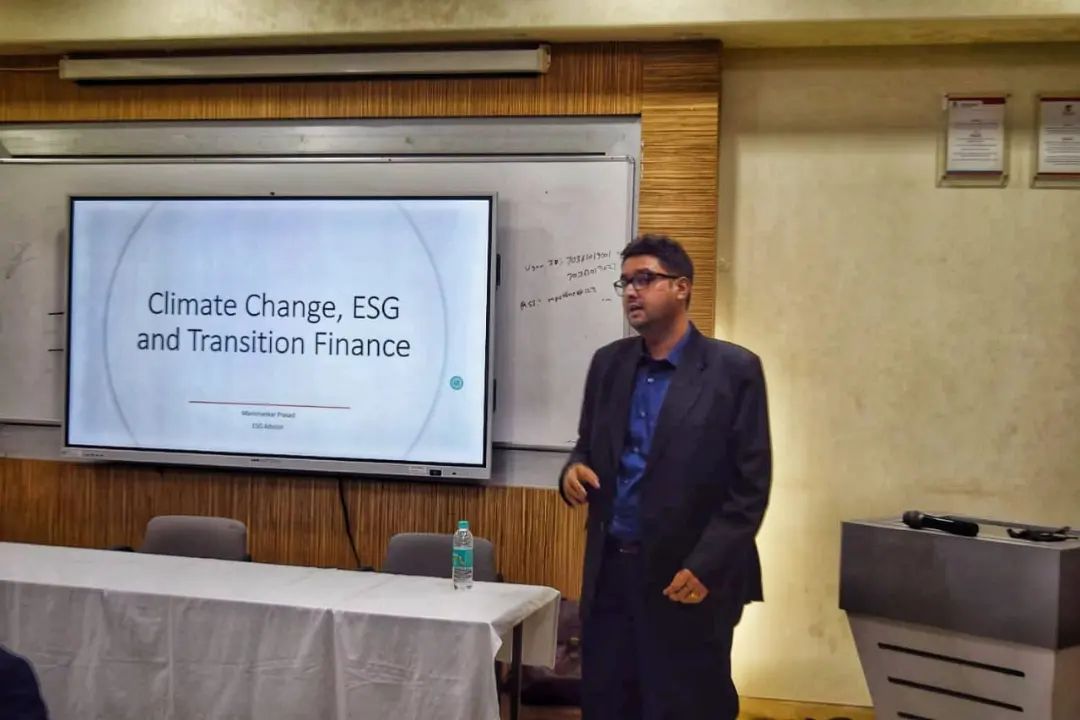
Yesterday evening at ResCon22 at Narsee Monjee’s Mukesh Parel School of Technology Management & Engineering there was a climate panel among sessions on Quantum Computing and Data Science, which is on par for a computing school. I was honored to share premium intellectual real estate with Prof Arnab Dutta of IITB who spoke on Carbon Storage and Dr Ashish Rana from Reliance who presented on Energy Innovation. I shared my two cents on ESG as the bridge between climate change and the energy transition.

It was a packed audience of computing students listening to an engaged panel on waste management, green cover and CSS.

Thank you to Virati and Roushan from the organising team for the invitation and the excellent hospitality.

#ESG#climatechange

Consultants as Platforms

Wicked problems such as Climate Change are multi scalar and multidisciplinary where context is paramount. The problem solving needs to be transdisciplinary, but the research community is tied by metrics that are narrow. Hence think tanks and consultants become the platform there as connectors and translators.

Tapri-nomics

After my usual evening run, I usually decompress by sipping chai. The Chai and Sandwich upgraded tapri which I have been frequenting for the past couple of months has been a window into the slice of life moments. The soundscape is chirpy, located next to a jogging area and a prominent hospital. It is a melting pot of people from various backgrounds from paramedics to families.

The tapri is run by an industrious local micro businessperson, employing staff to support his chai business. Today he quipped during our chat, he did not understand whether his sales are making sense after selling three hundred cups at INR 10 per cup. So, I asked him a few questions.

What are your input costs daily?

He said,

Milk -1280 for a 20-liter pack, Chai Masala- 45, Tea- 200, Paper Cups Packet for cups: 200

This is about 1800 per day

And other costs:

Electricity: 10, 000/month, Gas: 2000/month,

Average: 400/Day

Manpower costs: 300/Day

Total costs per day then are approximately 2500 per day only from three hundred cups a day at 10 rupees. The margin for the owner is five hundred rupees only from cutting chai revenues.

He makes coffee, and other snacks which are his main income then.

He also sells cutting chai in a bigger cup at 20 rupees, which I partake. As a good Samaritan I suggested that he should increase the 20-rupee cup sale, as input costs remain the same, doubling the margins referencing a case study that I had read on increasing the toothpaste opening leading to more purchases, and greater daily use.

A ten-minute chat was an insight into bottom-up businesses that focus on cash in the pocket rather than valuations.

#cuttingchai