Surveillance is normalised

This is the era of surveillance capitalism, and over the last couple of days there has been incriminating articles in the HuffPost India regarding the creation of an Orwellian state. There is nothing to create, we are in the age of Pegasus where Bezos’s phone can be compromised. There are retina scans at airports, finger prints everywhere and we are datafied. Where ever I have lived, each entry and exit, transactions and the granular details have been mapped. Indian academics carrying OCI cards have been very vocal, and the arguments have a point. The question however is, why are they not contesting bio politics in their adopted lands or is all their activism dedicated to South Asia, obviously most of them are poco scholars working with ‘marginalised communities’ here.

Data security and privacy is an imperative in the digital era, however most of us are simply oblivious or simply not even aware of the rights and redressal mechanisms. The effort should start with the education.
Sustainability Advisory in the COVID-19 era

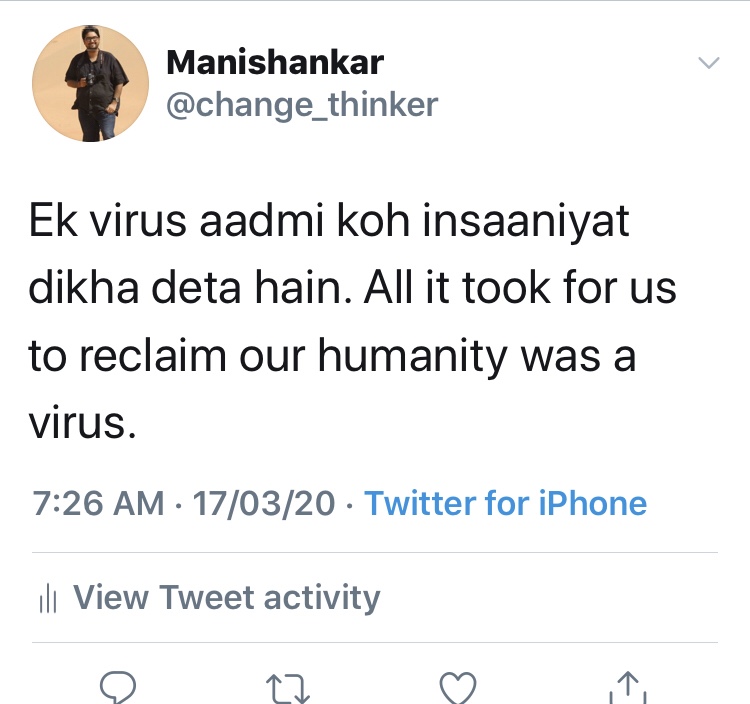
How will #sustainability and #stakeholderengagement professionals adapt to the move to the ‘cloud’ in the era of #COVID19 where site visits and meeting communities for public consultation is a part and parcel of the job. Let’s begin with our strengths, that is HSE. We advice on safety matters especially in remediation so we have our basics pretty sorted.

Client meetings can be zoomed, but how do we substitute meeting communities which are on the other side of the digital divide or open up new registers such as chat rooms where internet access is available or Skype, which is then transcribed.

Can site visit data for ESIAs and Audits be supported by drones and other spatial data? Can local academics and universities help in order to curtail travel? These are some of the questions which can lead to interesting openings for conversation.

How are amending our methods for the pandemic will help us create applicable knowledge for clients and the wider community of practice.

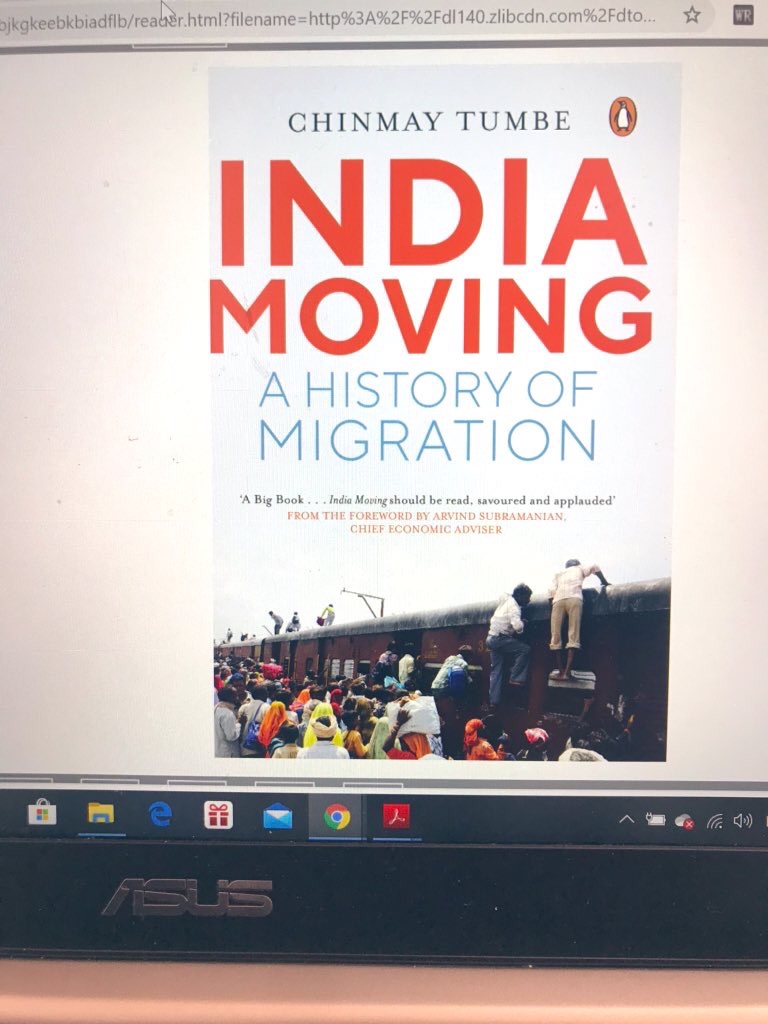
India is always on the move.

Amazing book by Prof Chinmay Tumbe of IIM A, an economist turned migration scholar and business historian. Eclectic research which mainstreams migration studies as labor and capital flows in a networked thinking approach in to the corpus and canon of business research. Insightful data and narratives light up the pages, and makes India as i always believe is a common economic market. Migration is a highly networked web of social capital. It is also about labor arbitrage and a story of aspirations and fears.

Voices from the margins in COVID era

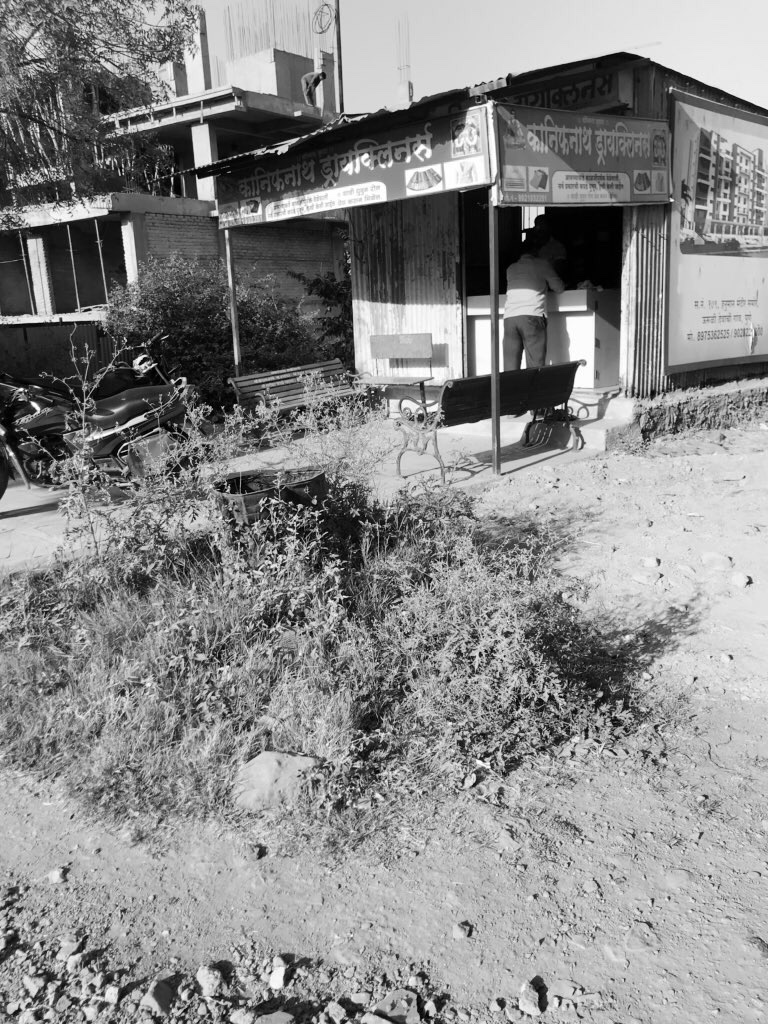
In an urban village of Devachi Uruli on the outskirts of Pune; the drycleaner has his business down by 90 percent from 100 pieces per day to hardly 10. The owner is not even making 500 rupees daily to meet ends as people are not coming out.

Money is power, literally.

It takes privilege to call out privilege. Earning money is often the only tangible way to empowerment, as it gives options. Empowerment will not come through radical postering. It comes by earning well, so that one can’t be easily bullied. Tenure track academics can afford their politics. When one cannot pay bills, politics seems hollow as the tenure track academic will get back to ones comfortable life. Think how to negotiate structures when does not have the resources to retire or an insurance. We live in a precarious era, where we have lost touch with the basics. Boring is good.

The New Normal in the Khaleej

Saudi petropolitics just nudged the Gulf into a post hydrocarbon future. Low oil prices, large employable populations and COVID-19 will make the next few months interesting for the world. The disruptive decade has started.

There are fundamental recalibrating pivots that are needed. The question is whether there is the political capital to expend ? Kuwait (a quasi democracy) and UAE (Abu Dhabi has enough for a rainy day) are safe as is Qatar (population is small) while Oman, Bahrain and KSA will need severe reforms to adjust to the new normal.

What is the role which Indians shall play? The Banias were there before oil and will be there after it as a dear friend quipped. It does not matter for us as Oman and UAE are maritime neighbours. 8 million Indian workers are there in the Gulf with 40 billion in remittances. Gulf in India and India in the Gulf both matter.