Reimagine Sustainability : moving beyond tick-box compliance

The only thing sustainable about the brutal reality of the  normative paradigm of sustainability is the ‘green’ colour of cash sadly rather than the altruism of this -ism. Not all that bad as monetary valuations are usually taken more seriously. The philosophical underpinning of sustainability is about inter-generational transferability as per the 1987 Bruntdland Report. The short-termism of financial markets and financial global capitalism does not render sustainability sustainable.

Sustainability ultimately is about better communities and liveability. Sustainability is triple headed : Ecological, Economic and Social are the three strands of the triple helix.  Sustainability has transformed from its normative origins in to a platform for communicating the corporate brand. Activist investors do ask for the Social Return on Investment on their impact bonds but these folks are a trickle in the avalanche of asset classes that global capital changes hands in. Sustainability Reports are prepared as per the GRI Framework to demonstrate sustainability performance to ecologically aware Gen Y retail investors. It is not for the displaced community in Lanjigarh, Odisha but for the analysts at Citi. The pull is from the masters of the market.

The latest flavour of the season in sustainability and corporate citizenship circles is the circular economy & sharing economy. Good old human sharing values and Cradle to Cradle thinking synced to create the latest cool intellectual fad.

Majority of sustainability related investment by private sector companies is to meet the local environmental, health & safety and social sector legislative requirements of the land. Sometimes, even voluntary best practice is beyond the ambit of the C Suite Level executive as the Randian view of shareholder value capture dominates. Green field industrial projects often require IFC funding or any form of Institutional Lender Support such as JICA or any Exim Bank. These financial institutions need the project proponent to adhere to Equator Principles and IFC Performance Standards throughout the Project Lifecycle to address environmental and social concerns. The decision making prowess for a change is with the environmental and social expert panel at IFC offices at Delhi and DC rather than the CFO. EHSS has to move beyond the tick box due diligence check-list to a move term governance led mechanism. The Finance Teams have to get the nuance of the Economics of Environmentalism for them to be truly invested in the process.

Sustainability can only take root if this ethical paradigm can be understood by the CFO over a casual water-cooler chat. Its time for Sustainability to move beyond green washing and be a profit centre SBU from a cost centre. Locking value from Sustainability Initiatives can take place if triple bottom-line thinking could dominate the thinking in strategic planning of SME’s.
Subaltern India: un-ideal urbanism


buddhist

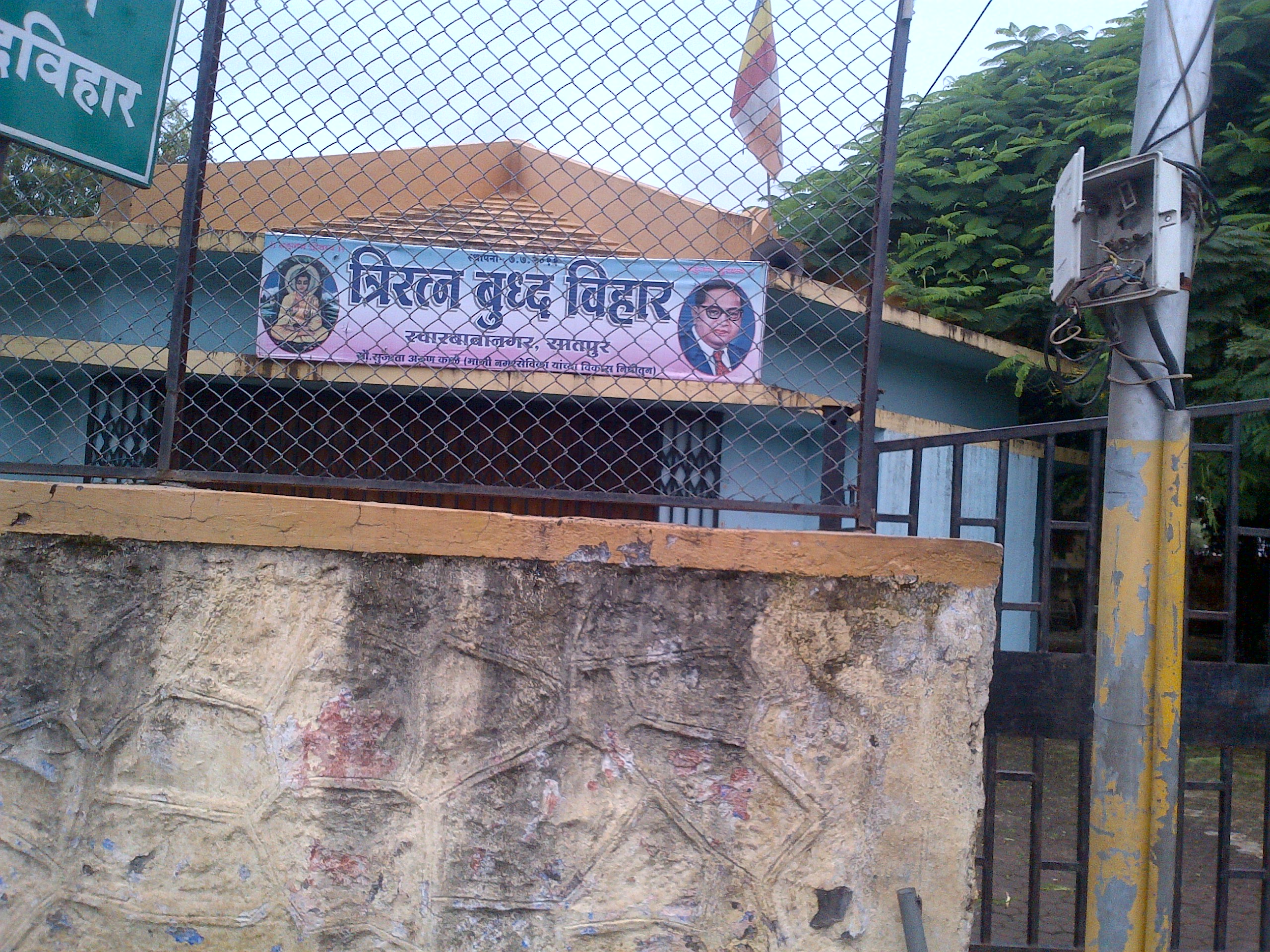
Pic : Neo-Buddhist Imagery in Satpur Village, Nashik District, Maharashtra

Urban spaces are melting pots. These places are objects of survival; an aspiration for the future is nuanced in everyday existence. The sights, sounds and the stark reality is surreal is every way, that one might confront the naked brutality of these interstial voids amongst lattices looking down on them.  Jean Braudillard’s ‘Simulacra and Simulation’ and its characterisation of the proverbial ‘Desert of The Real’ is the primary intellectual imagery which comes to my mind. The poverty and its depravation-destitution is numbing although there might be a satellite TV desktop box in the box. No clean water but a Dish TV, the reality of everyday living in subaltern urban India it’s paradoxical at best- aspiration and destitution co-exist on both sides of the page.

Bhimnagar-Bhatpada is urban slum areas in Mumbai; nested between Saki Naka and Ghatkoper East in Mumbai. On top of a hill, easily visible to the airplane landing at the international terminal via its characteristic blue tarpaulins.  These communities are characterised by its neo Buddhist symbolism- the shrine dedicated to Ambedkar and Buddha as differentiators from their marginalised history.  The motor-cycle is as much taken care of as the sacred cow. Capitalism is a great social leveller as caste melts away in the face of cash, as Dalit Scholar Chandrabhan would quip. Public Toilets are social intersecting areas for building social capital. The early morning loo call is a social event as much as an intimate one.  The mainstream political parties such as the Republican Party of India and the Bahujan Samaj Party; who claim to represent subaltern voices in the power structures of democracy have made their presence felt by the signages. I am not very sure if representation in democratic structures makes for real empowerment on the ground. It does on the other hand certainly present an opportunity as a social insurance against caste based discrimination. Often as the case in democracy it’s often the choice between the devil and the deep sea.

The Satpur Village adjacent to Satpur MIDC (an Industrial Zone) in the Nashik District of Maharashtra State in India is another example of the subaltern, social have-nots being collectivized and forging an alternate identity as a tool of resistance. Again out here Neo-Buddhist Imagery dominates the social mindscape. Subaltern communities are a crucial underbelly of urban capitalism as a manpower provider and a ‘Bottom of the Pyramid’ consumer base.  That is the salvation of the market as when the politics does not deliver, the invisible hand does.

Beyond ‘Growth-ism’ : unearthing a narrative beyond the bottom line

There is a world beyond the Shenton Way, Bandra-Kurla Complexes and DLF Cyber City’s of the world. There is a peri-urban India and a rural India that might be influenced by its urban cousins due to the dominant, hegemonic discourse crafted by the elite but their world is still rooted in tradition and Asian values.  As ‘Metros have been transformed in to financial products’ in the words the authors of the mightily influential treatise on development sociology in India: ‘Churning the Earth: The Making of Global India’, the role of the City as an overpowering entity is articulated as the village cedes control to the city and farmers lose agency in the process. A farmer with limited resources but most importantly dignity denigrates himself into a commodity in the market when the government or a private developer acquires his land hopefully for a fair compensation package.  The new land acquisition bill makes robust Relief & Rehabilitation provisions for the Project Affected Families. The farmer does not have any other skill set apart from farming and money management is not one of them. It might be a barely literate famer moving from his second hand motor-bike to an Audi the next day, it will not be far way that, he will be a security guard at a shopping mall built on his land holding that he sold off (remember the Bollywood Film Shanghai?).  This might be Jairam’s single largest contribution to the policy landscape of the country.  Might delay projects and escalate costs, but the farmer is at the heart of the story and not the developer. The vulnerable and the marginalised should be the ones protected by the legislative architecture of the State and not act as an agent of the Capitalist classes. The line is often blurred beyond recognition with Industrialists populating both houses of parliament and siting on JPC’s with severe conflicts of interest. Great in one way as they have the ability of project execution but in another fashion take away the essence of grassroots commoner.

The semantics of the rhetoric of Mint Street unfortunately influences corporatized media boardrooms and sometimes North Block.  Umair Haque, who writes a popular column in the HBS Blogs website recently wrote a hard hitting post on the ills of American Capitalism in what he captures as ‘Capitalist-Stan’. American Capitalism was known for its ability as a power social escalator for the mobility it used to provide for all irrespective of ones birth. Opportunity equality was the byword. In the present times, the cliques of the ‘Lords of Finance’ on Wall Street rule the finance arena, influencing public policy that a former Goldman Sachs CEO becomes the treasury secretary under Bush ’43.  No wonder they are the highest campaign contributors to Presidential/Senate contests in the USA. Obama is no exception too.  The decrease in social mobility in hyper charged globalised capitalism is not surprising as ‘only the folks with the correct connections and skill sets’ are able to crack the ivory towers oops the glass tinted buildings of Central Business Districts of Global Econohubs.  It’s the same situation in India, as only 20% of engineering graduates being potentially employable. Many of the younger engineers I know cannot compose a proper mail in business English. English is the Lingua Franca is the Modern World of commerce. This is a pre-requisite as problem solving is in engineering. If you cannot communicate, then you do not know your stuff, if you cannot express.

‘Market-ism’ being the central ideological construct of the bankers and the capitalist classes has led to ‘Growth-ism’. This Growth-ism has led to the culture of the bottom-line and ‘Quarter se Quarter Tak’ (from one quarterly results reporting to the other) ethos.

Take the long term view, because concrete value cannot be created overnight. Mohenjadaro as Rome was not built in a day. Capitalism includes economic growth, and market is a vehicle for channelize the ‘animal spirits’ to create wealth.  But capitalism is also about meritocracy and wealth creation. More importantly its about pursuing ones calling in the sentiments of Weber.

 Growth-ism stands for parochial wealth creation unfortunately now days. When wealth is created, it is distributed for welfare of the poor, so that they can a more playing field can be created. This element is sadly missing from the conversation. I was on an Al Jazeera International’s show – ‘The Stream’ on the 9th of October 2013, speaking on an esteemed panel on the Food Security Bill. I spoke in favour of the bill that a welfare legislation is a public policy innovation and is a start, might be flawed but is a start.  A policy pundit, a very knowledgeable Think Tank honcho and friend shouted me down espousing his beliefs in ‘Market-ism’.  Market is a great slave but a terrible master; my friends from Dalal Street should understand.