
Pav Bhaji, a Bombay Staple is a creole creation responding to the cultural currents of the maximum city where the Lusophone Goans made home with the Parsis.
The Aam Ras is an ode to the Gujarati presence in the city, a fixture of every thali.
Through the Highways of Globalization
Pav Bhaji, a Bombay Staple is a creole creation responding to the cultural currents of the maximum city where the Lusophone Goans made home with the Parsis.
The Aam Ras is an ode to the Gujarati presence in the city, a fixture of every thali.
Eid is my favorite festival, growing up in Muscat- after an austere month of a prayer filled Ramadan, the joy of Eid fills up faces in the streets, souqs and malls, which are an intrinsic part of the Gulf scape. Eid is a period of movement, eagerly waiting for the moon sighting so tickets can be booked back home or Tbilisi or Baku, where your Gulf residency can give you on arrival access on a travel challenged Indian Passport. The buzz on the streets is vibrant, and the thrill in the air of the most important festival of the year was eclectic.
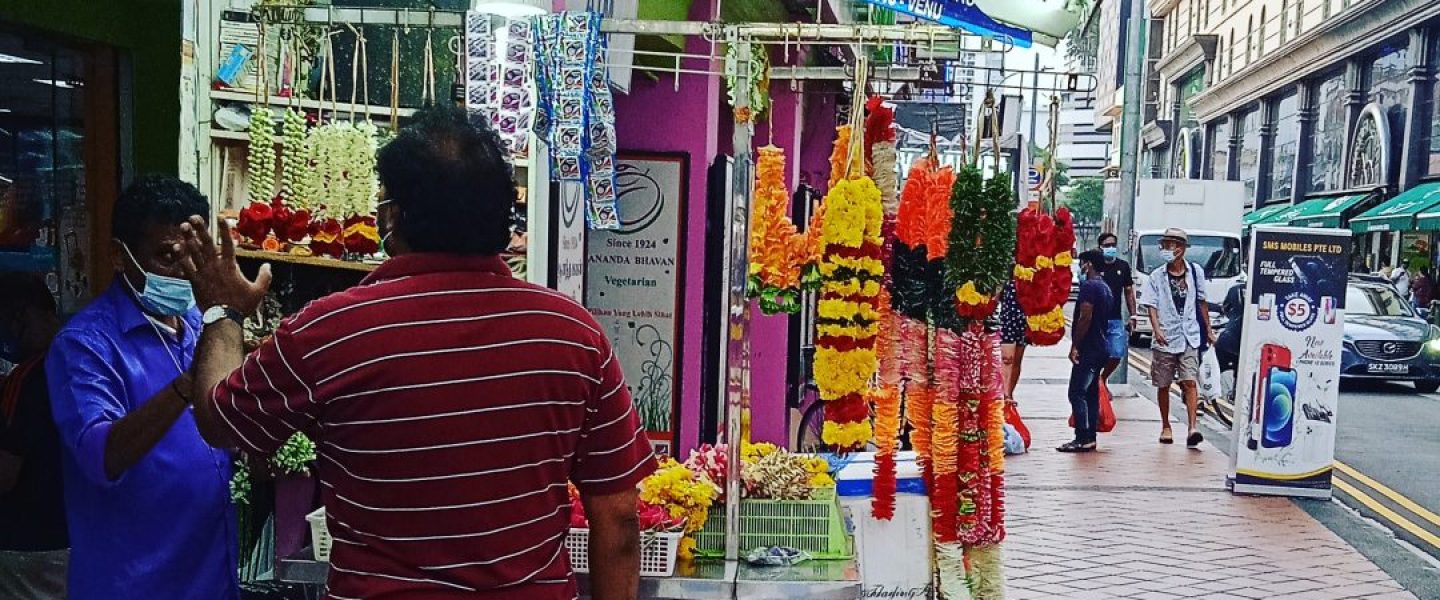
The same vibe could be felt in a Desker, Lembu or a Rowell Road of Little Dhaka in Singapore where Hari Raya felt more than ‘Bordered Securityscapes’ as (Loong 2018) mentions as migrant workers from the far-flung dormitories would be awake all night waiting for the Eid Solah at Anguilla Masjid. I recall having chai at Mustafa on the benches with Bangladeshi friends and then a bite at Usman on Eid Eve, a decade plus back in more innocent times. A fond memory of Eid eve last year at Kampung Glam was special as hearing the final Maghrib prayers of Ramadan was special. Having grown up hearing the Aazan next to a Masjid growing up in Muscat- the sonic Indian Ocean circulations are deeply personal. The building next door to me in Bastakiya in Dubai was next to an uncommon Shia Masjid.
These fragments of memory are auto ethnographic yet is a remainder to theorize a Migrant Indian Ocean which is beyond stereotypes.
There is always a market for solving hard problems, like climate action, waste management or forced labor. The journey is hard, but one does not have to worry about a career if one solves the issues through science, finance, entrepreneurship, anthropology, or law.
In the wee hours of the morning a stretch of eateries opens to cater to the Ramadan faithful in Asalfa and Sai Naka along the Metro line, which is a glimpse into commonalities of faith which stitch communities the Ummah over. Modernity is stopped in the tracks for a month when faith and family take over, temporalities and spatial configurations jostle for space within the mainstream imagination.
Very rarely one gets the opportunity to represent migrant workers and refugee communities in a room of twelve nonprofits from Cameroon to Argentina to Malaysia to discuss Equity in Evaluation Landscape towards a landmark report by Praxis and Global Change Center commissioned by the Ford Foundation. We were in Johannesburg a few months ago. Looking forward to the public report next month.
Thank you very much Adrian Pereira Sir Ann Beatrice Madam and the North South Initiative Team for the opportunity to bring muted voices to the funder community.

In Solidarity!
PS: I am a third-generation migrant who is perennially on the move from the Gulf to SE Asia unlike academics who theorize migration on the pathos of helpless workers and refugees.
One of the ways I think of the ways one writes about migration from the extraction oriented lens of academic theorising is the non appreciation of lived experiences of workers to publish in journals such as Geoforum. One scholar called Desker road or the migrant worker space on Lembu Road in Singapore as Bordered Security Scapes, where Bangladeshi migrants gather on a Sunday to gather, break Iftar and meet friends.
For me a second generation migrant and non scholar, the Lembu Road space is one of joy and celebration and of celebrating humanity. Every migrant knows that they are under the loving gaze of the cctv camera.
Privileged lens does impact how one writes about bachelor bodies in bordered security scapes (Loong 2018) (Ye 2014).
ESG and it’s meta framework, the good old sustainability has its biggest strengths in transparency and trust which is tied to being responsible in stakeholder capitalism. Businesses exist to deliver value to customers and returns to investors. Sustainability professionals often forget why businesses exist.
Only when we do a multiple number of gigs within the ecosystem we are aware of our zone of excellence. In the future of work, the nature of skills to deliver shall evolve as per the on demand characteristics.
We will map the traits of automation too. The hybrid future is here.
We always had historic automation, it was called serfdom, slavery, and migrant and gig work now a days.
The hardest job in any business, particularly in a start-up, is revenue generation, which is the real product market fit. Bringing the money to the table is the most challenging and those who can build profitable businesses are stars and will paradoxically never be out of a job.

