What is your ESG Story?

ESG is the sharp end of stakeholder/responsible capitalism, as metrics, although limited does drive performance. The imperative of quantification, the technology of global governance called indicators works well for carbon as instrumentation sensors and software do the trick. For social metrics, quantification is partial at best. The social indicators operationalize with dignity in the everyday, and ESG is about risk abatement for the investor community as the money makers coined it.

There is always the story behind the data, and real resilience is when professionals think with culture and the entanglements between the various indicators, which amplify/accentuate/attenuate the metrics regard risk.

ESG data looks below the bonnet of a car called the enterprise. But the mechanics of why the firm is not zooming on the growth highway, is in the story.

What is your ESG Story? Think about your social metrics to begin with.

Climate Pain Points

Sustainability Professionals, like every other subject matter expert, think that doing good is the purpose of a business, it is a priority, but the purpose of a business is to serve the customer in the best way so that the customer comes back.

The real bottom line is financial, the companies in the climate zeitgeist think about ESG as its better access to capital and markets. As Sustainability folks let us not delude ourselves, and in turn incapacitate us in helping organizations in the ‘responsible capitalism turn’.

Decolonizing Migration Studies

I have worked with migrants on the research and emergency welfare side of the spectrum for a decade plus in the Gulf and SE Asia and when I read migration studies literature, I see theorizing which hardly has any representative voices. A literature gap certainly there.

And the removal of the migrant as category separates from the mainstream where these migrants care for the families while parents earn, and build your cities is perpetuation of racial biases, and needs decolonizing. Can it be done with scholars who are western or white or both, while they have the confidence of parachuting in and harvesting data is another question altogether.

Onam is a Gelf Festival

Onam Ashamkal! Onam takes me back to Sadya lunches at my friend Nikhil’s place during engineering in Muscat and the mad rush at Kerala eateries in the Gulf, where the diaspora celebrates. The Gulf diaspora is the economic spine of the state where NRKs have led a different development model to the rest of the south to a varying degree.

Global as Transnational

Singapore needs a plural lens to think about its migrant spaces, as the temporary guest worker is not a transient ‘bachelor body’ in a ‘bordered security scape’ (Ye 2013) (Loong 2018). The structured invisibility in terms is being layered by an active digital subaltern social media presence via tik tok, and that most workers are grateful rather than activistic, as the remittance feeds mouths back home. But Singapore is also their home, visa categories are not that important as they will head back to their families in Thanjavur or Kakinada or Panchkula. Citizenship is not their primary purpose, but belonging is a lived experience reality- the chai at Mustafa Cafe or biryani at Fakruddin is transnational belonging, and the dormitories are transnational too next to Johor as the North Coast Lodge. The peripheral centres are transnational if not global, and are an element of the global city, a free port such as Dubai since 1905. The empire made ports as spaces of mobility, as ‘migration infrastructure’ on a city scale.

Conversation with an Uber Cabbie, 2023 Mumbai Edition

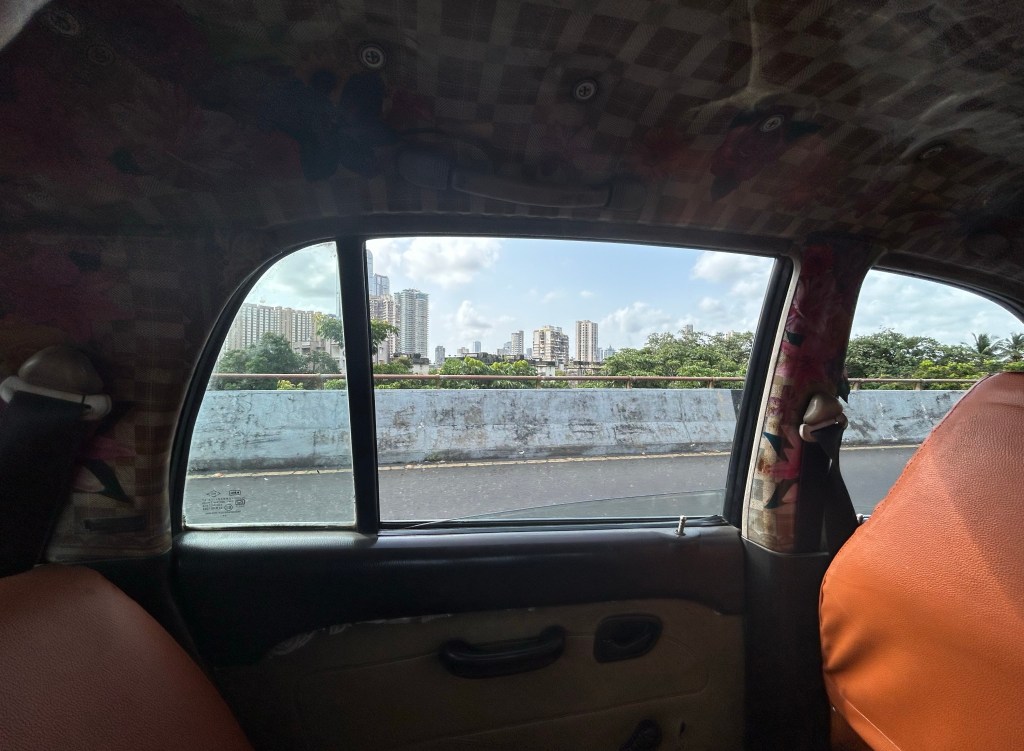
Conversations with Uber drivers are infrequent in Mumbai as the focus is on the road and the GPS Map. It was a rainy receding monsoon morning when I was watching a CNBC Arabia interview of a former colleague in Muscat on LinkedIn while the volume was turned up. An Uber Driver in a posh salwar and a skull cap, heard Arabic, and asked me in Hindi while smirking, do you understand Arabic, I answered Aiwa, Arabi Maloom? He answered, Zyada Maloom and that triggered an hour-long discursive conversation on Uber riding in Riyadh and Mumbai where he owns two cars in Mumbai investing Saudi Riyal Remittances in recurring income, while he is on a free visa in Riyadh, driving Uber where the Saudi Sovereign Wealth Fund, the PIF. He pays 1500 Saudi Riyals a month to his Kafeel, his sponsor for the Car and pays another three thousand riyals annually for the iqama.

Trained as an Urdu Teacher with a bachelor’s in education from Pune, the Urdu Teacher originally from Allahabad, went to teach in Riyadh a decade back to teach in a private school, and was comfortable until nationalization in Saudi Arabia forced him to become a driver entrepreneur with cars in Riyadh and Mumbai. He spoke about Muslim men looking to the Gulf as a source of employment even now when the economies are recalibrating for the post oil era. He spoke about life as a platform economy ride hailing entreprenuer, and how life is better for a middle-class man in the Gulf. He spoke about supporting his entire extended family with remittances, and that he plans to take his wife, who is also a teacher and his kid to Riyadh and spoke about the money needed for support a family. He spoke about the revolutionary reforms in the Saudi Arabia of Crown Prince MBS and the ‘Dubai-fication’ of Riyadh.

He spoke about his wife’s IPhone 14 being stolen from his car and being distraught with no help from law enforcement when he went to lodge a complaint.

The life of a Khaleeji migrant worker is transnational is feet in two nodes, the homeland, and the host land. The soul and the body are split as well with priorities to support the family and the paucity of economic opportunities for a certain socioeconomic strata and community.

Diasporas are formed when the home itself becomes alienating.

National Day Rally 2023

Singaporean Prime Minister Lee in his 2023 National Day Rally (the one hour English version) spoke much in detail about public housing ownership with its emphasis on being fair and maintaining the social mix. The clarity of reasoning behind the role of public housing in Singapore as a bedrock of the social contract was a master class in policy communication- GIS Maps, Framework level thinking and the economics of the HDB.

The rally speech brought me back to this book which articulates the origins of mass public housing.

An oral history lesson