Born and raised in Mumbai, India with an undergrad degree from Oman and a masters degree from the National University of Singapore. I am an Environmental Professional with a passion for Sustainability, Social Innovation and Governance related issues. A Change Agent in the making who believes that small is beautiful and that impact can be achieved -one soul at a time.
This Punjabi diasporic space was a space time compression with Punjabi tilted Hindi and Bollywood tracks from the early 90s to the nearly millennium; from Aashiqui to Mohabatein which took the feel to a different decade.
As a person who writes on food spaces in the Indian Diaspora, the connection of Indian restaurants to the desi imagination is palpable.
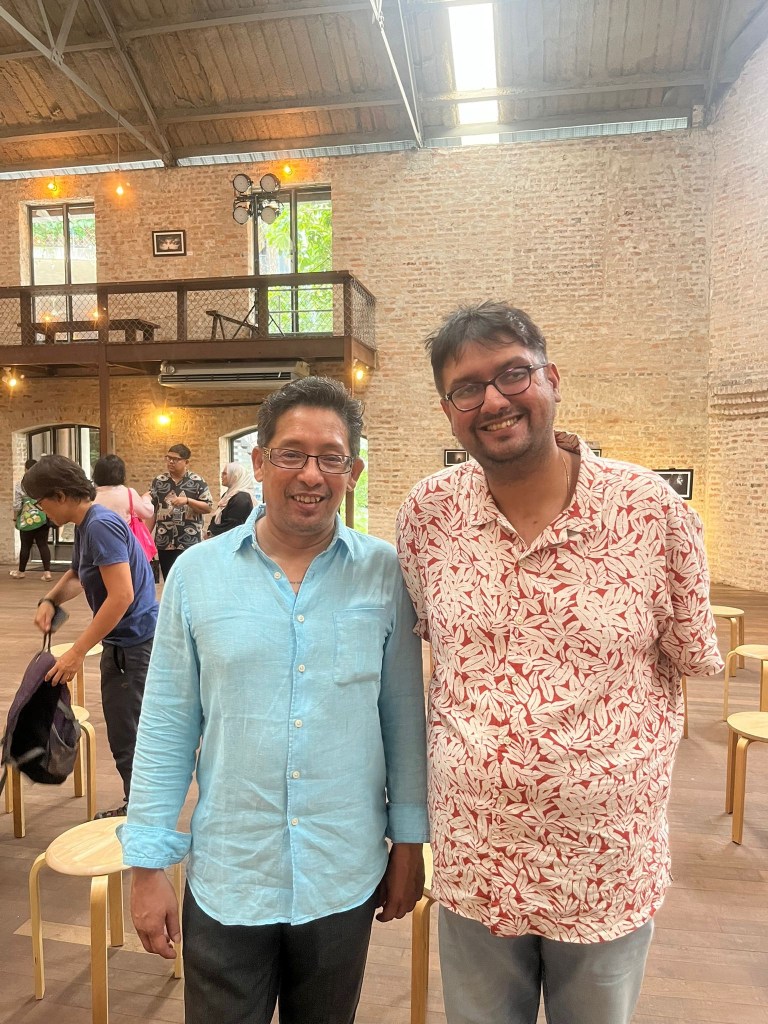
Met Mr. Eddin Khoo, the founder of the Malaysian Cultural Organisation, Pusaka at their enlightening Cultural Festival this weekend at the Godown Arts Centre in Kuala Lumpur today. Have been following the organisation’s work since 2015 and it’s such a delight to hear about a generation long initiative to support cultural initiatives across Malaysia, beyond the UN nomenclature of heritage and dying. His talk on the politics of heritage conservation and the power of ideology and ideas was a master class. As a person who is at best at the periphery of academia and is an intellectual flaneur such talks are an insight into subversive and inventive institution building.
The secular angle of the Kelantan Ramayana was a disruptive insight into the role of the transitional epic in SE Asia. The discussion on the evolution of the Malay Language was fascinating with words such as Puja being a part of the Malay vocabulary, albeit in an older iteration.
The beautiful festival has book stalls, a cafe, a Syrian woman selling Shwarma in a stall where her Husband is the chef was heart warming.
The takeaway from his talk was doing something authentic without thinking of the audience. The power of the work itself will speak in the long run.
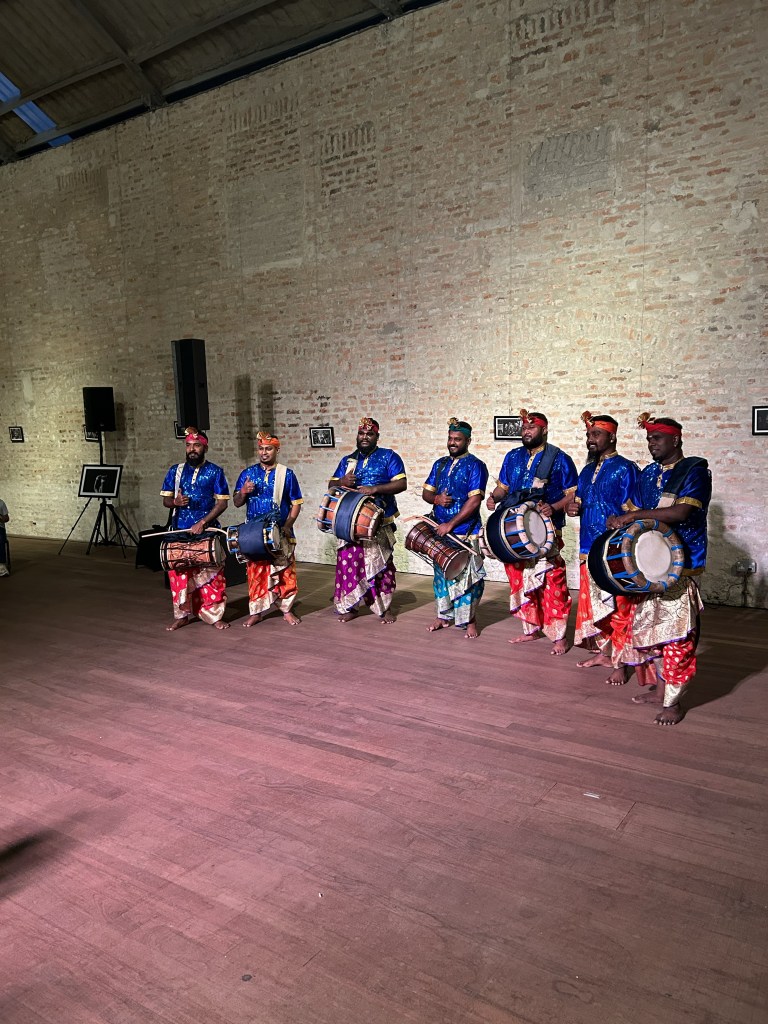
With the Pusaka Founder Profound talkThe event The Tamil DrummersThe Festival Panels
Brilliant talk by Prof Loong on the many histories of Burma, and the role of conflict and war as shaping society. Wonderful perspective to look at a fragile state.
My suave friend Anders @theqw90 and the Spring University team do a wonderful job in this discussion series, this being the third one.
The home resides in the diaspora when the home is unsettled.
Kopitiam’s in SE Asia are phenomenal ‘contact zones’ citing Louise Mary Pratt’s work for creolisation where it is a racial blender in a wok, and food is the LCM for exchange and quotidian celebration.
Many cups of teh or Karak are gulped by migrants across the Indian Ocean to power them through the heat and humidity of the day, often in plastic bags or in cups.
Chai is an index for Indian Ocean edible circulations, something which needs theorist attention from the elite ivory tower.
The best ways to understand a new place and it’s cultural milieu on the street is to walk it and eat in its hyper local spaces where the regular folk eat for lunch or dinner. As a professional intellectual flaneur who studied the culture of risk, food spaces are understudied in migration or global cities literature where the affective spaces of the global from below are at odds with the shiny citadels of urbanism from KLCC to Dubai Mall to the Fullerton.
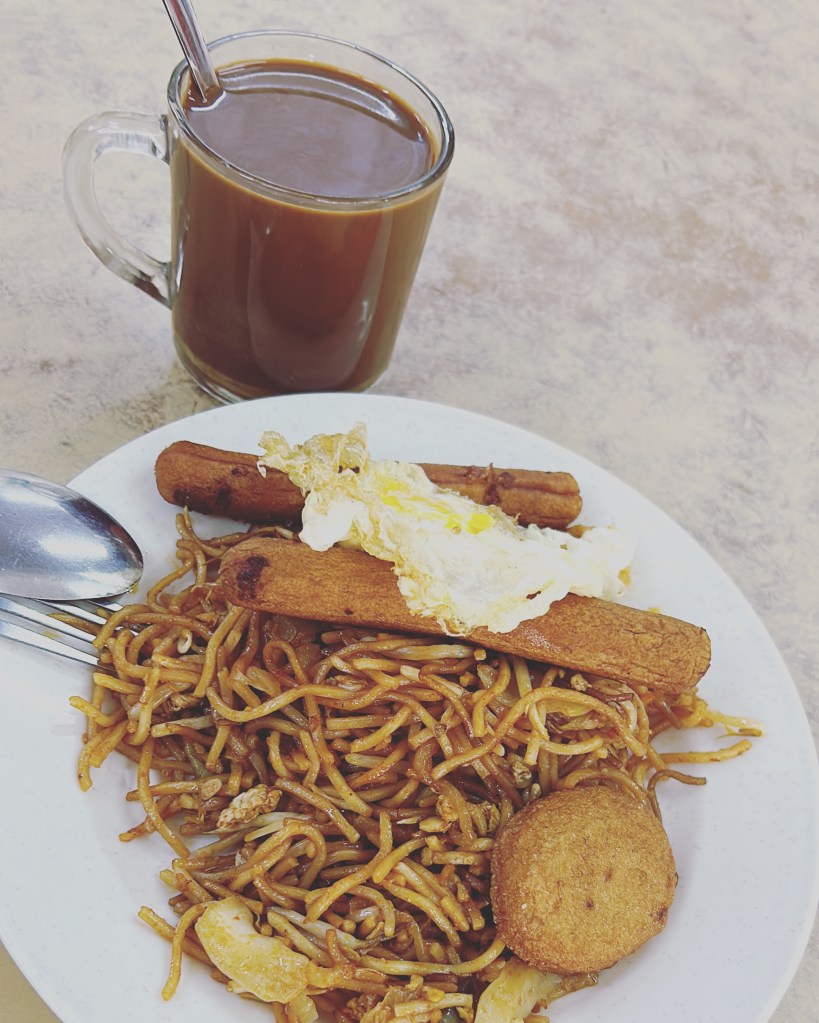
Here is a humble brunch in a Chinese coffee shop on the outskirts of Kuala Lumpur where the sound of the wok and the whiff in the air, are the symphony of the global from below city.
Academia offers me many lessons, including lessons in erasure, rejection and in core racial capitalism of knowledge production. Having worked in significant policy research think tanks in elite academic circles, as a non PhD researcher it taught me the raw value of power, as it shows one’s place. Including from theory building activist academia. Thank you for these lessons, as it has shaped my thinking on knowledge production which feeds into the global policy architecture.
It makes me a sharper ESG/Policy/Strategy consultant having had these punches below the belt. I am happy to be in the season of life that I am now, that I focus on impact through venture building in the ESG community.
Barber Shops in the diaspora are my favourite migrant spaces. Here both the barbers are from Delhi, and had a blast chatting up in Punjabi inflected Hindi.
The act of research is the epistemological foundation of contemporary knowledge work; finding gaps, finding opportunities, communicating value and detecting risk. In the ESG space, good research and writing skills are the starting point. Academic programs in the ESG need to teach the why and the how rather than cramming information which is evolving at the speed of light.
Write, speak and communicate well. ESG is the risk communication business.
A trip back home through delectable Iraqi fare at Samad Al Iraqi in KL, brought me back to Al Khuwair and Rigga in the Khaleej. Umm Khaltoum on the music, Bakhour and Arabic in the air, Bayt is a place in the past.







 Change Thinker