18k

18k hits on changethinker.com

I started this platform about 8 years or 72 months back precisely as i started to document my writings and generally capture fleeting thoughts, as a digital repository of ideas. A lot of positive developments have happened including TV panel discussion spots at BBC and Al Jazeera, multiple interviews/quotes in Forbes, Straits Times and The Today in Singapore. I have written for many independent platforms along the way. It is vital to have a voice in this rather contentious anti intellectual era.

I am overwhelmed by the support of friends who find time to read my utopian ideas and critiques. I am humbled and grateful.

Building a Reading Community in Oman: steps towards a knowledge economy

It was a windy evening in Muscat in a climate which can be depicted as significant; weather wise and symbolically . This weather is a sign of the times in Oman. The country is in the midst of a shift towards a post oil future. Reading is often considered the edifice of a innovation economy. Reading is often the first responder, in this era of fake news and alternative facts. There is no recourse away from the act of reading.

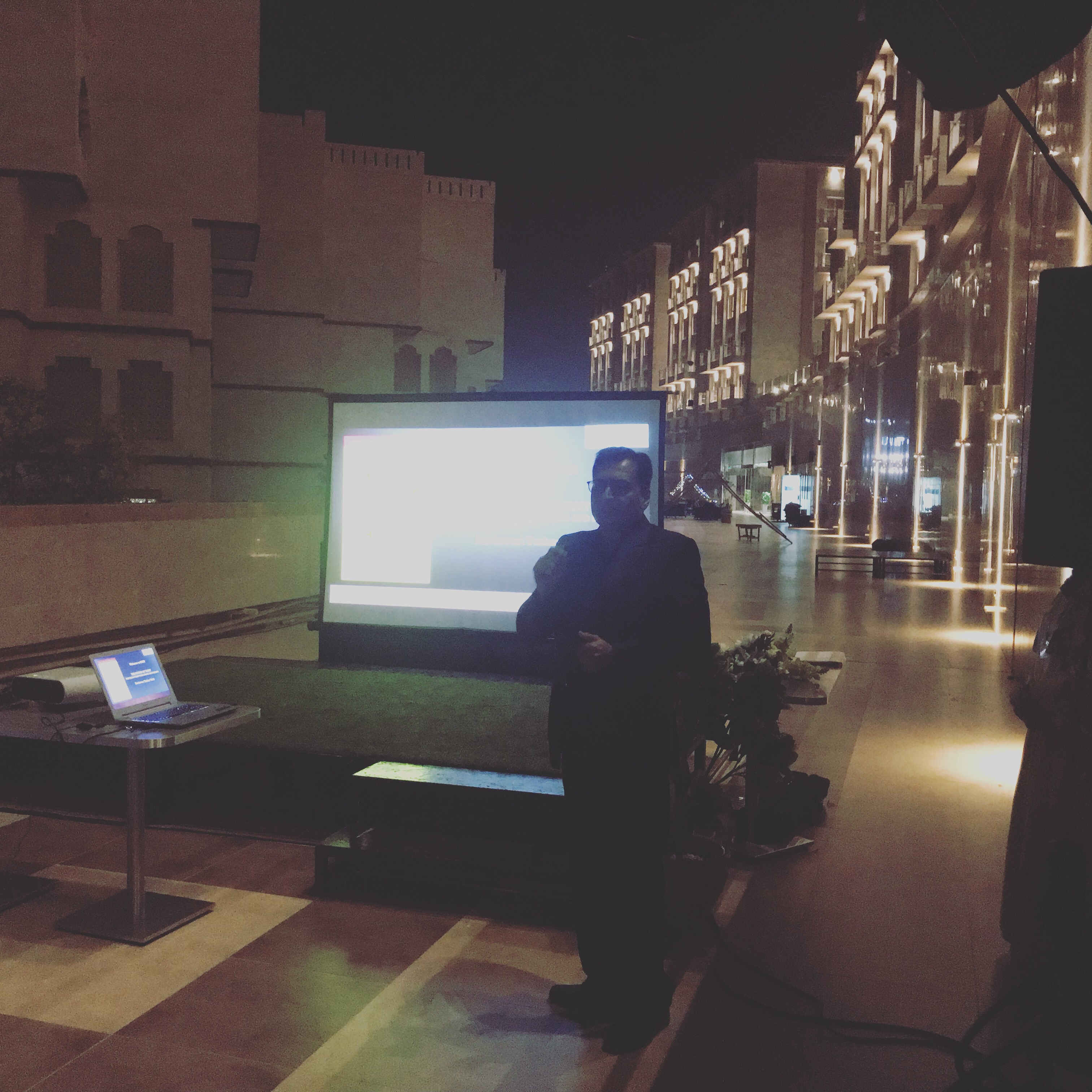
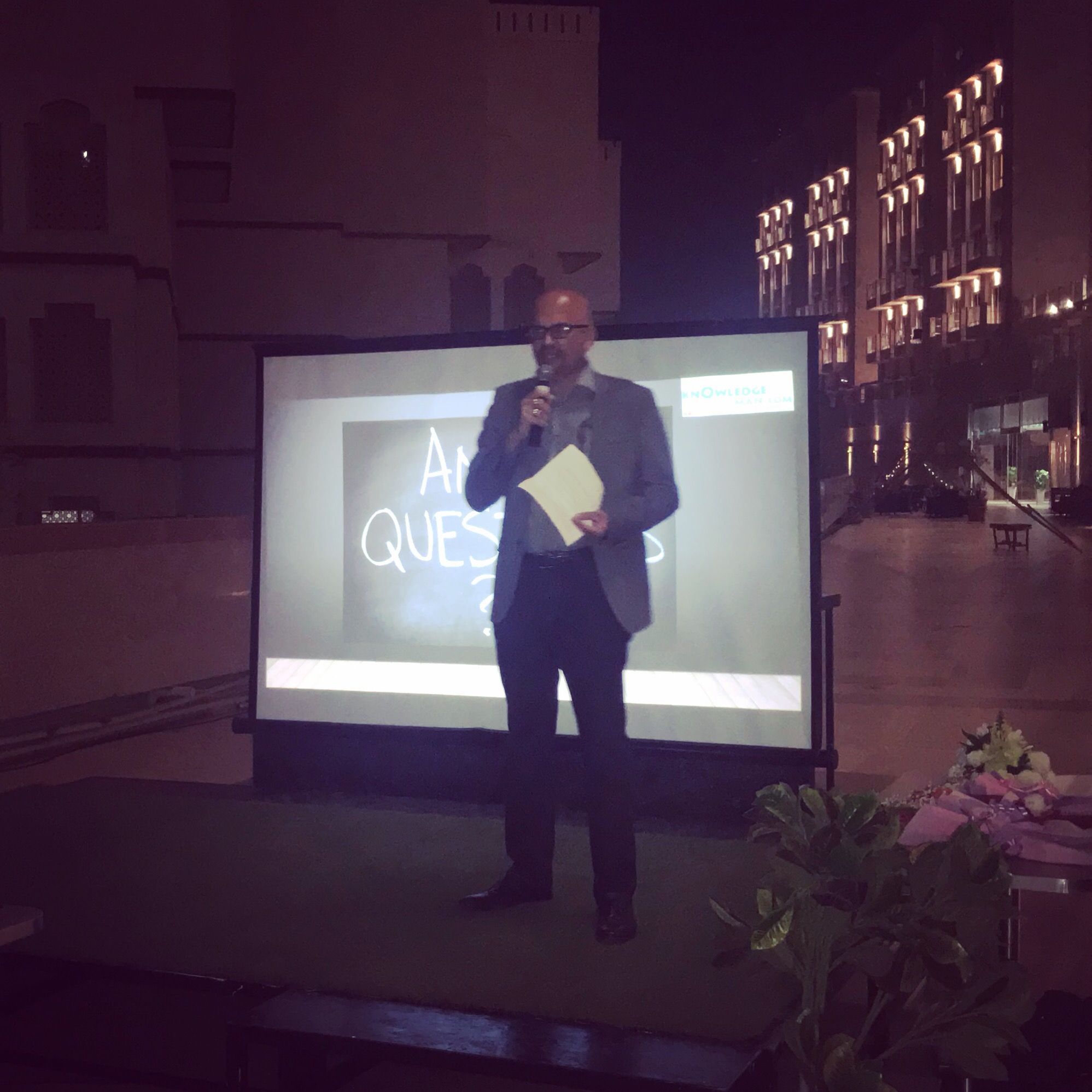
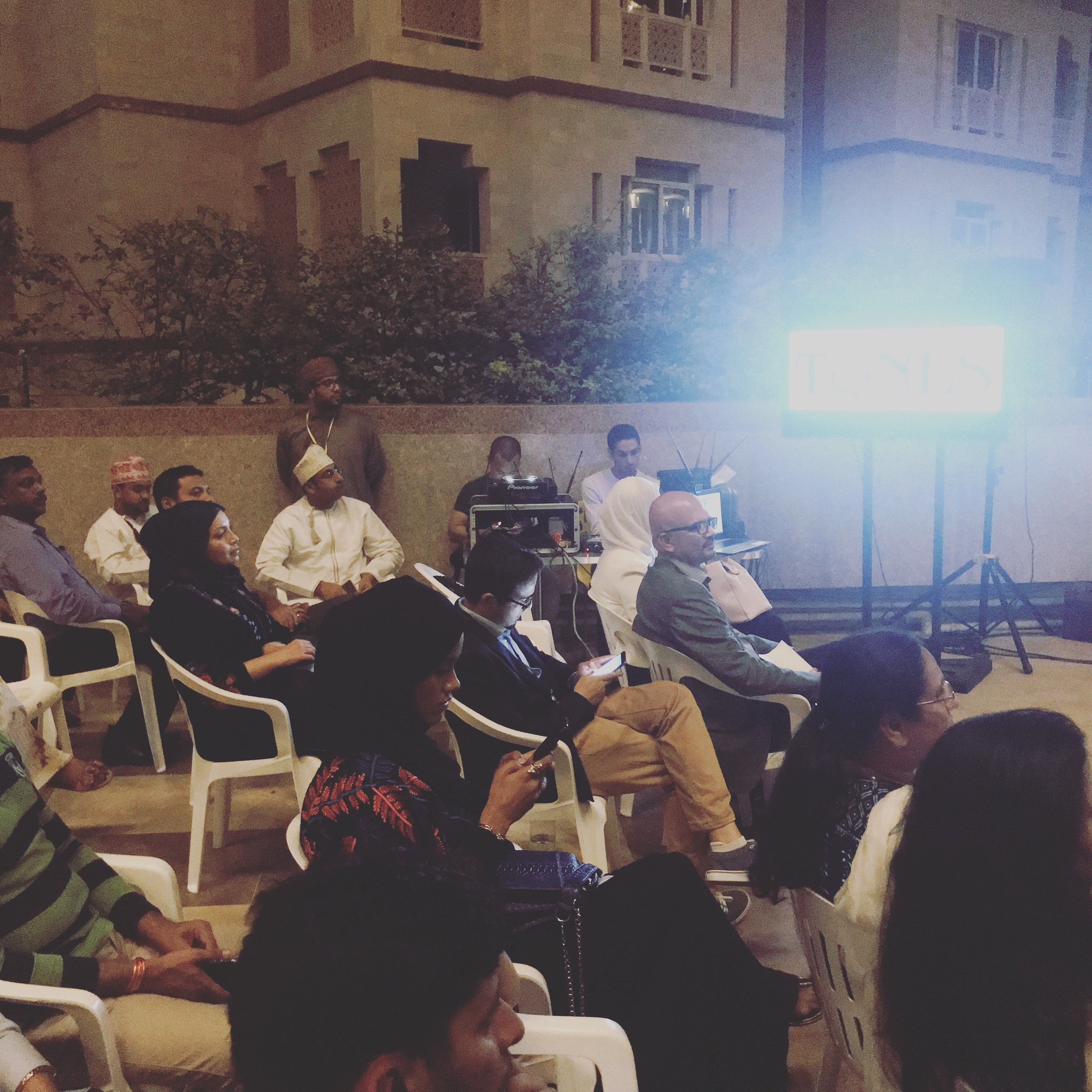
Knowledge Oman, a community organisation which is led by youth pioneer Mr. Tariq Al Barwani and a team of committed volunteers has a number of programs related to entrepreneurial ventures in the information economy. Knowledge Oman has embarked on the book review program to initiate a reading culture in Oman. The evening was held at a shopping mall, in an open space on the first floor. Taking reading from the seminar room to a shopping mall, is novel as it mainstreams reading and certainly refashions the shopping mall as a value added space and Panorama Mall in Muscat excels at this mixed use criteria.

The book review program leader is Mr. Tushar Vakil- a corporate trainer with a sharp demeanour of a banker in a black suit. His performance while reviewing the best seller ‘The Power of Habit’ by a Pulitzer Prize winning journalist was surgical, with the intended focus on the voice of the author of the book, rather the reviewers take on the book. The book presentation was liberally sprinkled with anecdotes and cases. I particularly loved the Pepsodent toothpaste case where, not brushing the teeth was considered a national security problem during the war! Behavioural Economics is at the forefront of public discourse with Richard Thaler’s Nobel Prize win for the economic sciences 2017. The book in that respect is current/contemporary and relatable.

The Habit Loop was interesting to learn off and I look forward to reading the book in detail. It was a full house and the audience post presentation asked questions which were important probes. The conversation regarding the book post event would continue on the web, with further engagements lined up to inspire more thoughts.

A program which was merely an idea about 60 odd days back, would be implemented successfully on a weekday evening mid week, is exemplary to say the least. Community catalysts like Knowledge Oman and it’s team of volunteers are certainly taking a small step towards a knowledge driven journey in Oman.

Secret Superstar: A Movie Review

Secret Superstar is a master stroke (favourite term in contemporary discourse) of genius. Zaira Wasim is authentic and the actor playing her mother is the star of the movie as the uneducated subtle, sacrificing mother who has fought domestic violence daily to raise her girl who plays the guitar since the age of six. This tenth standard girl is into song writing and singing rather than physics.

The girl creates a YouTube channel which makes her an instant viral phenomenon in a Burqa to hide her identity. She gets talent scouted for a song by a brash music composer played by Amir Khan, a cross between Himesh in physicality and Anu Malik in atrocious behaviour especially on reality shows. Amir Khan with a 15 minute cameo steals the show with such precise mechanisms to depict a music director.

Rather than the aspirational small town girl making it Big, the domestic violence angle is the biggest sub plot of the film. An abusive husband who trades his school going daughter’s life for a job in the gulf is rather real.

There is a cute love story too wrapped in the film. The last ten minutes of the movie steals the show as the mother fights back.

However on the flip side, the setting of a Muslim family in Vadodara in post 2002 Gujarat for a display of patriarchy in a Zee Studios production( Mr Chandra is a BJP supported lawmaker) is rather problematic in today’s India as it feeds in to too many mainstream narratives; Muslim, Male, Wife Beater, Giving daughter for child marriage is checking all the boxes for stereotypes. Make a film about the misogyny in Jatland.

A must watch nevertheless.

#SecretSuperstar

#changethinker

#moviereview

Question for the Post Oil Era

It will be a feat of intellectual production to reimagine the restructuring of the economies of the petroleum world from Moscow to Medan in the post oil era particularly when the world is staring at USD 10 per barrel prices in the upcoming decade as solar and wind, become mainstream with Electric Vehicles leading the caravan in the mobility and renewable revolution. Some real feat will be that report.

Migrant Literature in Singapore

It’s amazing that Migrants in Singapore with real talent such as MD Sharif and Amrakajona Zakir Bhai are getting a shot at publishing their experiences in text along with Mukul, who has become a micro celebrity of sorts. These are real authors with talent. Mohsin Malhar Gwee Li Sui Shivaji Das Theophi Kwek Cai Yinzhou and others who have heralded the ecosystem deserve a rich pat on the back. Richard Angus Whitehead too deserves a mention for academically studying this phenomenon.

Having been a co partner in this journey, this Singapore case study has carry over experiences for Hong Kong and the Gulf.

#MigrantLiterature

#Singapore

Cities: Books, Cinema and Representation

Cities are the engines of our global economic paradigm and the arts have not shied away from reflecting this material reality from the cultural mirrors. Art, reflects, refracts and deflects life from the living on to the rubric of text and visual art. Cities have a unique DNA on to itself but have something universal in this age of neoliberal capitalism where malls dot the landscape from Medan to Muscat where the Americano from Starbucks shall not fail you thanks to the tropes of quality driven by standard operating procedures, a way in which imperialism is recirculated.

Text and visual art, are tools of soft power, hence questions of representation are critical. Cities have been a powerful muse of writers and directors in India and around the world. A slice of the city in 300 pages or 120 minutes is often our introduction to our beloved cities. Bollywood or the Hindi Film Industry and Indian Writing in English have lent cities their reflections and it’s shape in popular discourse.

Mumbai is written about in Suketu Mehta’s Maximum City in the most accurate way for a tome which is seminal for exploring the darker underbelly of the megapolis. Mumbai similarly has found notoriety in gangster land flicks such as D, Company, Satya and most recently Haseena.

Kolkata on the other hand has been the muse for movies since the 1950’s such as Howrah Bridge and over the years, Kolkata has featured as the backdrop for many Bollywood films including more recently Teen, Yuva, Pinku, Kahani and Gunday which evoke Kolkata as a poignant backdrop to their screenplays with a Howrah Bridge and the Ghats almost visually over powering the narratives. Kolkata has a strong literary culture to say the least, being the fountainhead of Indian Writing in English. Prof Amit Chaudhuri’s Calcutta tells the stories of life lived in the city as does Kushnava Choudhury’s recent book ‘The Epic City’ on life in Calcutta.

The microscopic mechanics of what makes a book great versus a film wonderful to watch are distinctly different to each other. In this age of video, films have a catalytic impact on how cities are constructed in the popular imagination. This has an effect on tourism dollars and employment creation. Books are often the inspiration for films as the raw text.

Representation is a important anchor in books and films of how cities are framed. Is Mumbai, only gangster land, or the land of the dream factory? Is Kolkata only the Howrah Bridge, a totem of the past, where the past is the only texture worth portraying?

The politics of representation is a complex mine field. Cities are complex creatures and metabolic entities fusing, breaking apart everyday to create a new cartography of imagination. Are the books and films doing justice? Did Slumdog Millionaire do enough for Mumbai; I beg no.
Migrant/Conundrum

The South Asian migrant

a peculiar beast watching India TV on YouTube

eats sabzi roti and Biryani

discusses Nawaz or NaMo

Lauds the progress back home

But finds himself

Neither at home in Karama or Kanpur

His holidays are spent thinking about heading back

And his days overseas

Are spent thinking about the upcoming trip

Months away

The conundrum

For the opportunistic

Comfort loving soul