Modi ji gave Migrant Workers Half Day Leave, and it’s brilliant

Heard some folks complain and saw a meme on Facebook as well (the pettiness of diaspora politics) about migrant construction workers getting half day leave as was petitioned by the Indian Embassy here requesting leave as Modi was in town. Outside the country, we are all Indian citizens and Modi is our Prime Minister, irrespective of our politics within the country. I sat with migrant construction workers yesterday, and saw the event celebrating the Indian community in Oman. The migrant workers were thoroughly enjoying the freedom with snacks and entertainment, having a rare off weekday time away from work away from constrained lives in labor camps.

Migrant workers send back millions in remittances back home, lifting families out of poverty. They are not OCI’s and Indian Citizens with privileged Overseas Permanant Resident status, sipping Chardonnay on a Sunday. They build countries and families, so spare them your condescending politics. They were the most enthusiastic shouting their lungs out to Vande Mataram and clapping the hardest to their states cultural representation. They will head home after a few years to their towns and villages. Gulf migrants matter.

Positioning Oman: Modi’s Charm Offensive in Muscat

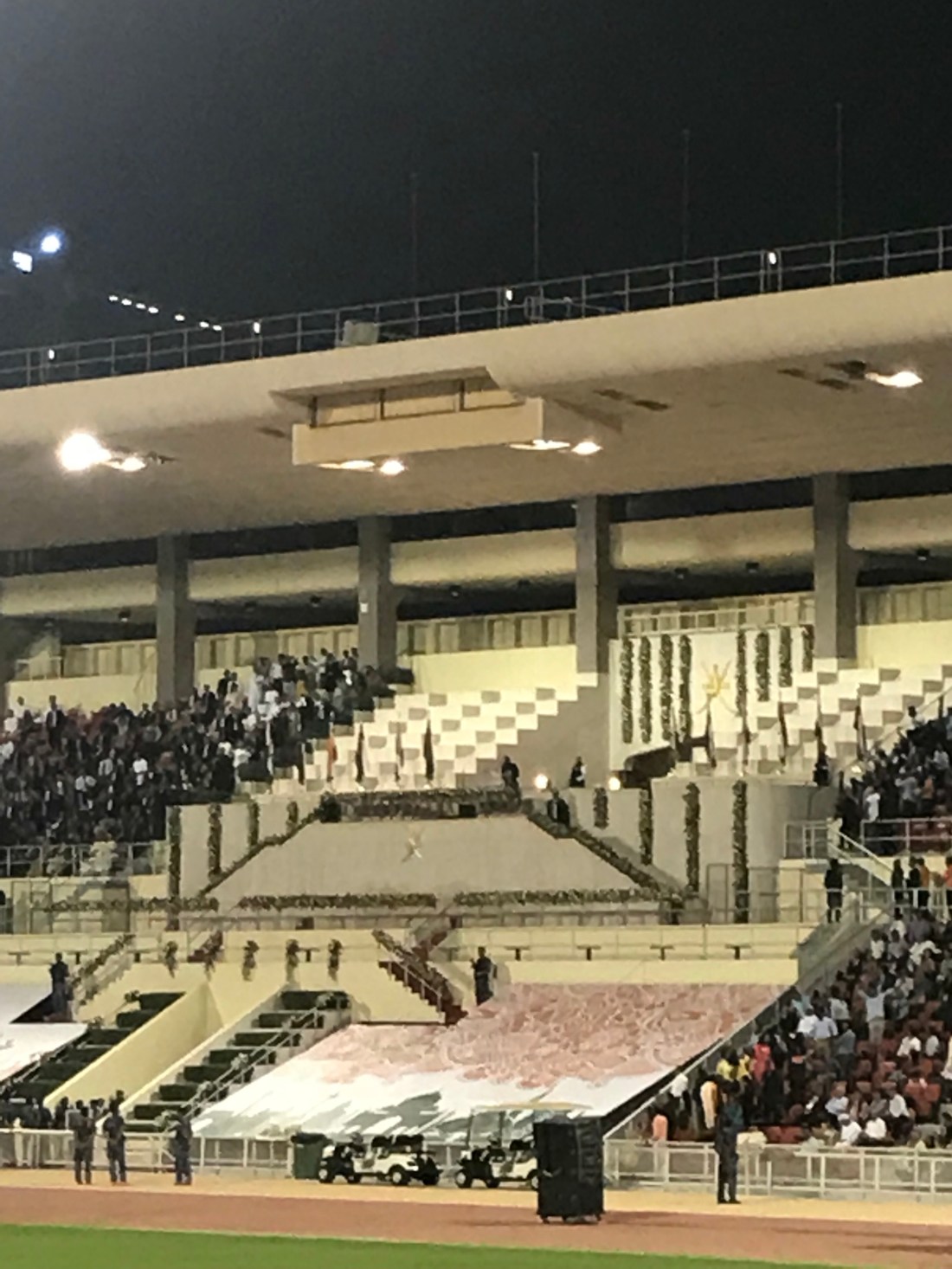
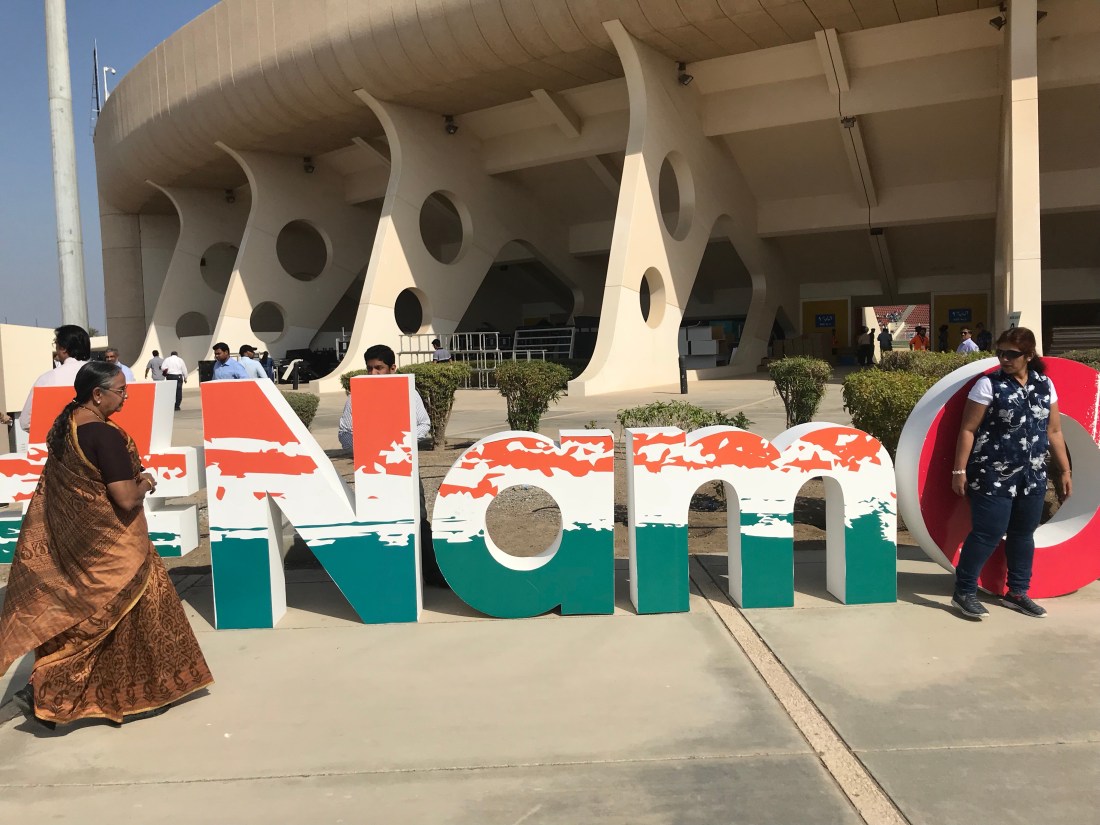
Prime Minister Modi has spoken to diaspora audiences from Madison Square Garden in NYC to the Singapore Expo, which I missed then. Fortunately, I was here today, to witness and document the address to the Indian Diaspora here in Muscat, all of whom are Indian Passport holders, including blue collar construction labor who were brought over in buses to Muscat as major construction companies were backing the event. The diaspora event was organised by the Embassy of India at Muscat and the Indian Social Club. The event was a half day affair with the cultural program starting at 3pm in the afternoon which lasted till 7pm. Modi ji took the podium after landing up from Dubai where he spoke at the World Government Summit. There were about 20, 000 people in the stadium by evening who were handed out Water, Fruit Juice and Snack packets. We Indians like a free takeaway.

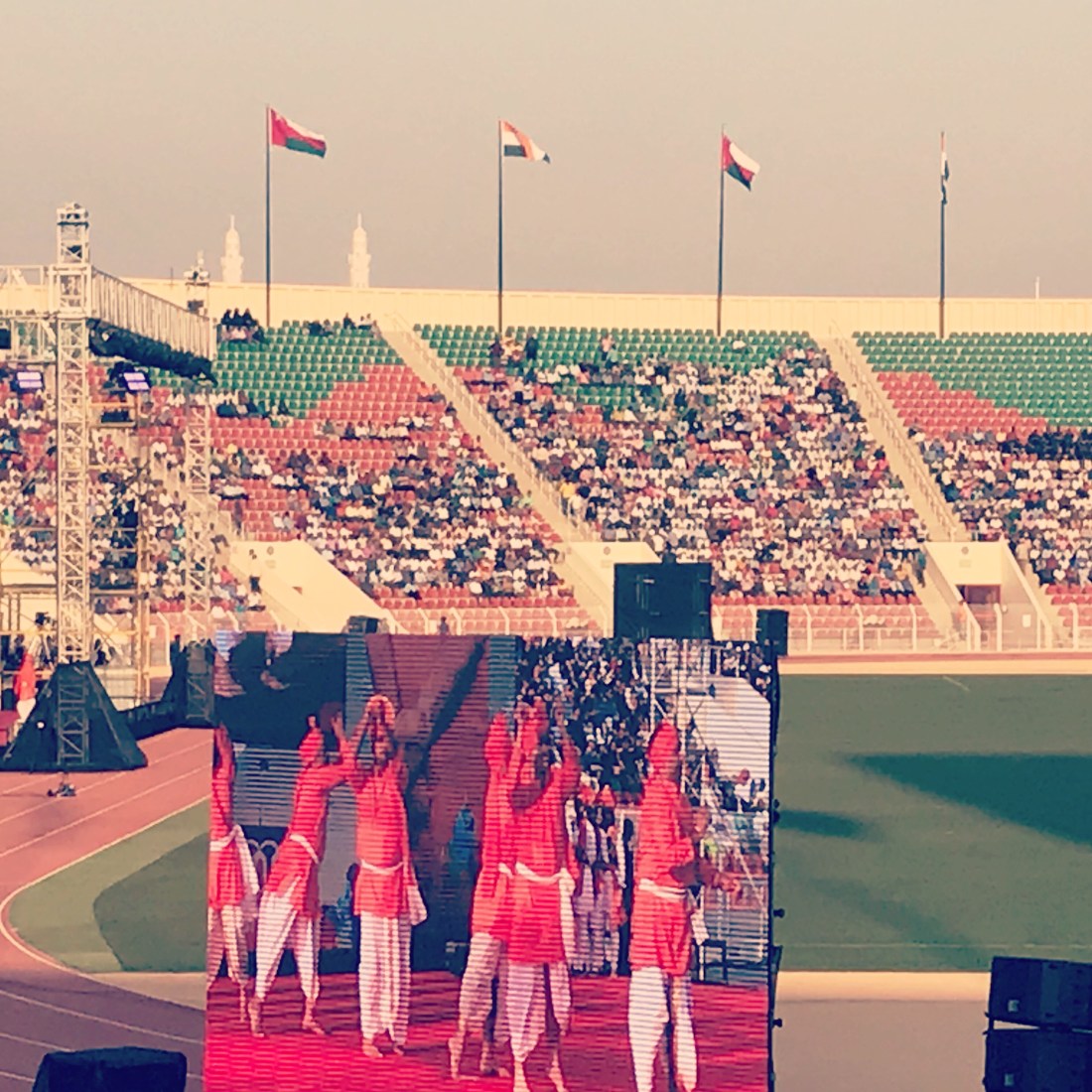
The Indian Diaspora is a reflection of the polity back home. The Indian Social Club is a meta organisation of various regional clubs. Prior to the cultural program, the Ministry of External Affairs videos, which ran on the projectors, where high on the usual tropes of Yoga, Food and Bollywood. The cultural program started with a dance performance by the Sanskrit Club, a classical language which is not a spoken language indicative of India’s current bias in cultural programming. The programs doubled down on Bollywood and film music in dance and singing, catering to a mixed audience. The Punjabi and the Kannada performances received the most applause. I was not aware that there are Sindhi, Uttaranchal and Telangana wings of the Indian Social Club. Sindh, is reflected in the Indian national anthem, but is geographically a part of post colonial Pakistan. The Gujarati and Bengali performance were professional and were locked in to the traditional.

Oman, has a historic association with Gujarati diaspora with a major trading presence in Mutrah, Ruwi and Darsait. However, the close trading and people to people contact was not represented in official GCC level diplomatic relations. Saudi Arabia and the UAE were always rendered precedence. Oman was not given its due in South Block. Modiji’s Muscat visit changes the narrative, as India’s maritime neighbour in the Arabian Sea.

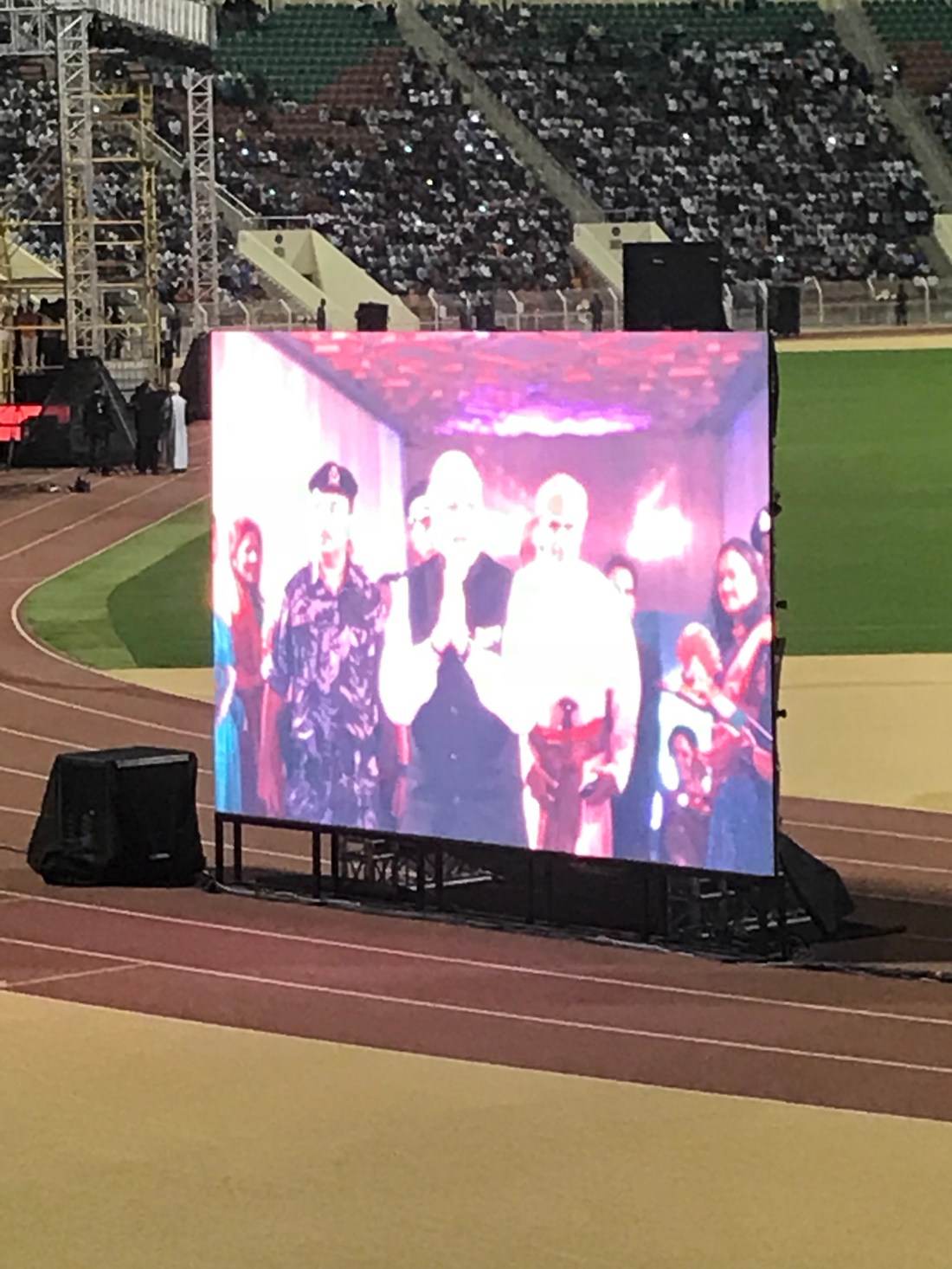
As Modiji pointed out in his address, a Refinery in Madhya Pradesh is running with Oman’s assistance. There is plenty of joint ventures too, including my undergraduate institution. Modiji’s Address started at 7pm after the customary national anthems. He started off on a good note recapping the historic nature of the Oman India relationship. He pointed out that 8 lakh Indians in Oman are ambassadors and partners. He humorously noted that Indians are like sugar in milk, we mix well effortlessly and add to the sweetness. But he also made an effort to add that the diplomatic establishment works behind the scenes to make sure all aspects are smoothened to make Oman, as favourable home for Indians. He also wished well on behalf on billion plus Indians for the long life of His Majesty.

Then, Modiji restarted on the same template as his campaigns in India during elections. The slogans of ‘Minimum Government, Maximum Governance’ and ‘Sabka Saath, Sabka Vikas’dominated the one hour Address, with black money crackdown. He is a charming orator, with the apt interjection with humour, this time about Modi Care, and all pro poor policies. It sounded like a sales pitch of his government rather than any specific measures for the diaspora, although he assured that no migrant in need will be left behind overseas with ‘e migrant’ and Madad portal.

A proactive foreign policy with the Modi-Sushma ji team, has been a feature of NDA2. The speech was full of energy and paisa vasool with loads of punch lines such as ‘Ek hawai chappal pehene wala bhi hawai jahaz main jaa sakta hain’.

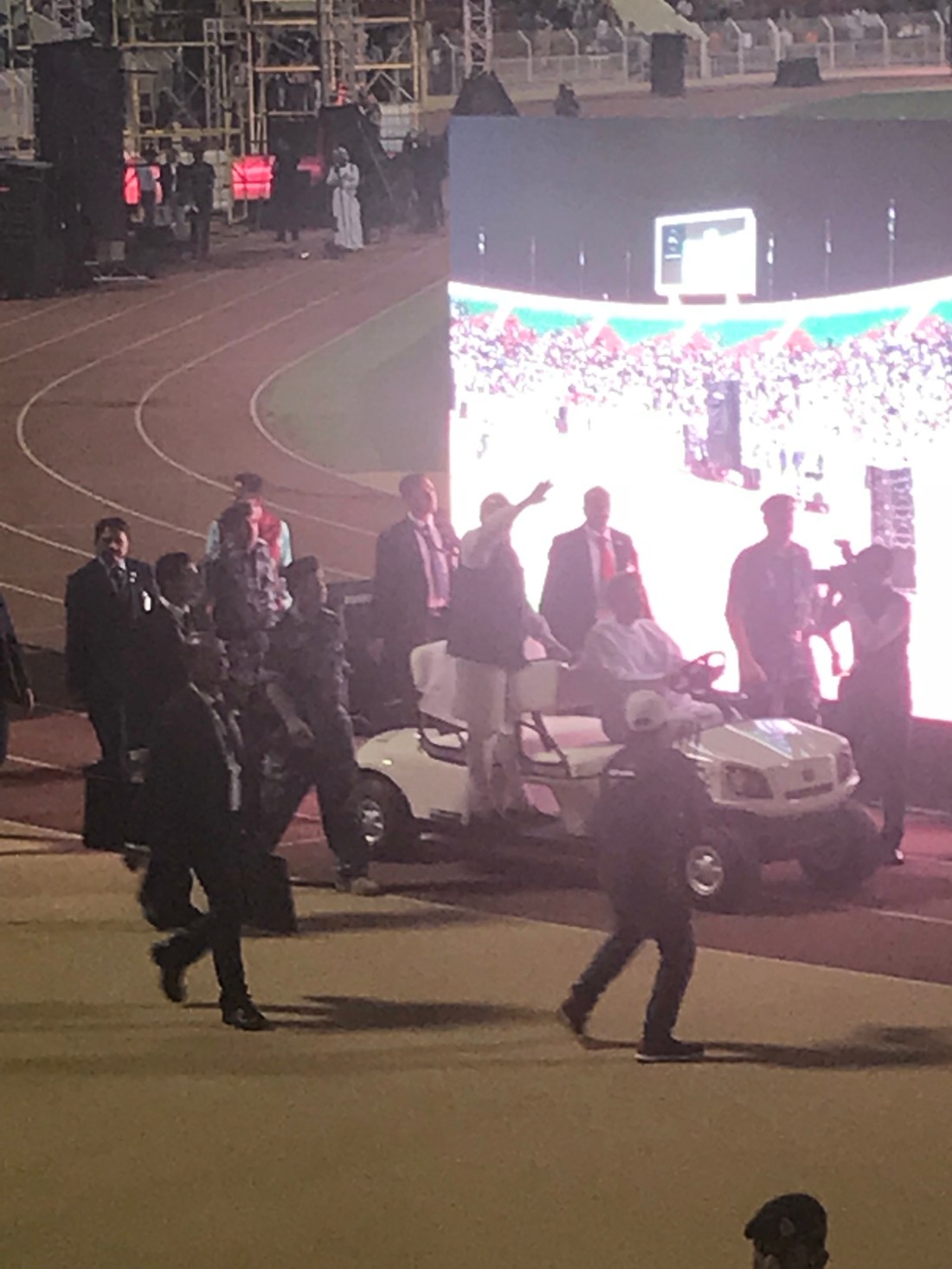
Finally, Modiji ended the evening with a golf cart tour around the stadium waving at his fans.

This was indeed the signature move. A very intelligent man, with keen engagement skills.

Positioning Oman: Modi’s Charm Offensive in Muscat

Prime Minister Modi has spoken to diaspora audiences from Madison Square Garden in NYC to the Singapore Expo, which I missed then. Fortunately, I was here today, to witness and document the address to the Indian Diaspora here in Muscat, all of whom are Indian Passport holders, including blue collar construction labor who were brought over in buses to Muscat as major construction companies were backing the event. The diaspora event was organised by the Embassy of India at Muscat and the Indian Social Club. The event was a half day affair with the cultural program starting at 3pm in the afternoon which lasted till 7pm. Modi ji took the podium after landing up from Dubai where he spoke at the World Government Summit. There were about 20, 000 people in the stadium by evening who were handed out Water, Fruit Juice and Snack packets. We Indians like a free takeaway.

The Indian Diaspora is a reflection of the polity back home. The Indian Social Club is a meta organisation of various regional clubs. Prior to the cultural program, the Ministry of External Affairs videos, which ran on the projectors, where high on the usual tropes of Yoga, Food and Bollywood. The cultural program started with a dance performance by the Sanskrit Club, a classical language which is not a spoken language indicative of India’s current bias in cultural programming. The programs doubled down on Bollywood and film music in dance and singing, catering to a mixed audience. The Punjabi and the Kannada performances received the most applause. I was not aware that there are Sindhi, Uttaranchal and Telangana wings of the Indian Social Club. Sindh, is reflected in the Indian national anthem, but is geographically a part of post colonial Pakistan. The Gujarati and Bengali performance were professional and were locked in to the traditional.

The whole stadium rose up to its feet to ‘Saare Jahaan Se Aacha’ and shouts of Jai Hind and Bharat Mata Ki Jai reverberating through the Air. Electric is the mood. Never seen Muscat like this in 25 years.

Oman, has a historic association with Gujarati diaspora with a major trading presence in Mutrah, Ruwi and Darsait. However, the close trading and people to people contact was not represented in official GCC level diplomatic relations. Saudi Arabia and the UAE were always rendered precedence. Oman was not given its due in South Block. Modiji’s Muscat visit changes the narrative, as India’s maritime neighbour in the Arabian Sea.

As Modiji pointed out in his address, a Refinery in Madhya Pradesh is running with Oman’s assistance. There is plenty of joint ventures too, including my undergraduate institution. Modiji’s Address started at 7pm after the customary national anthems. He started off on a good note recapping the historic nature of the Oman India relationship. He pointed out that 8 lakh Indians in Oman are ambassadors and partners. He humorously noted that Indians are like sugar in milk, we mix well effortlessly and add to the sweetness. But he also made an effort to add that the diplomatic establishment works behind the scenes to make sure all aspects are smoothened to make Oman, as favourable home for Indians. He also wished well on behalf on billion plus Indians for the long life of His Majesty.

Then, Modiji restarted on the same template as his campaigns in India during elections. The slogans of ‘Minimum Government, Maximum Governance’ and ‘Sabka Saath, Sabka Vikas’dominated the one hour Address, with black money crackdown. He is a charming orator, with the apt interjection with humour, this time about Modi Care, and all pro poor policies. It sounded like a sales pitch of his government rather than any specific measures for the diaspora, although he assured that no migrant in need will be left behind overseas with ‘e migrant’ and Madad portal.

A proactive foreign policy with the Modi-Sushma ji team, has been a feature of NDA2. The speech was full of energy and paisa vasool with loads of punch lines such as ‘Ek hawai chappal pehene wala bhi hawai jahaz main jaa sakta hain’.

Finally, Modiji ended the evening with a golf cart tour around the stadium waving at his fans.

This was indeed the signature move. A very intelligent man, with keen engagement skills.

placeholder://

Pravasi Stories

I am really piqued by the imperial routes of forced/economic migration during the heydays. Tamils in Reunion to Morocco Soldiers in Vietnam in the 1940’s during the world war to Bhojpuri speaking Guyanese to Hindi Speaking Fijians. Fascinating stories, not captured, not known, and not disseminated. How many of us know of the Gujarati traders in present day GCC or East Africa? The History behind the pravasi should be known as Prime Minister Modi visits the Khaleej.

Voices of Migrant Labor: Bengali in a Wadi

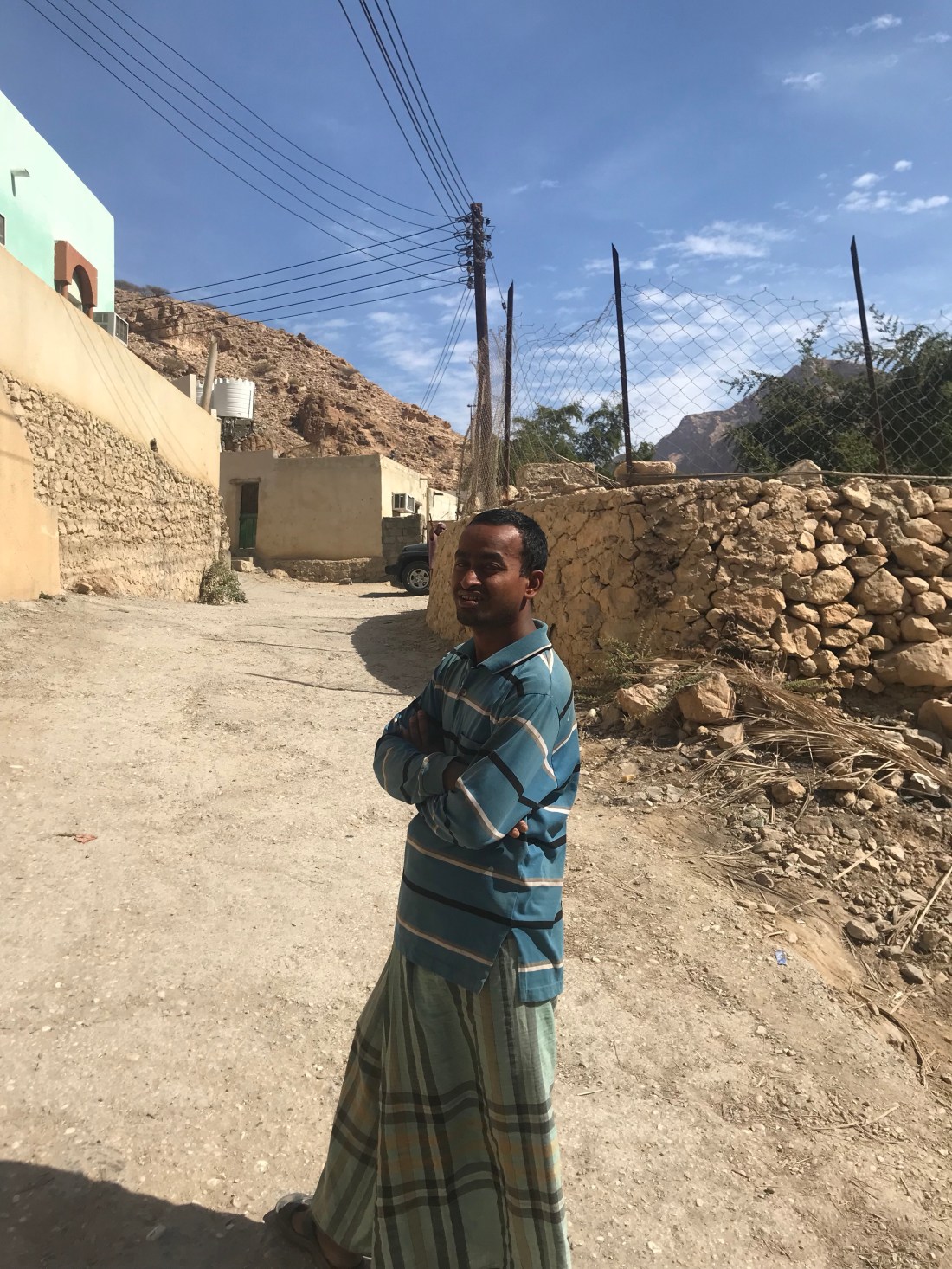
Hossain and his friends are from Chittagong, Bangladesh working on date farms and gardens in Wadi Tiwi, Wilayat of Sur. They work for OMR 60 per month which is 12000 Taka per month. This place is 130 kilometres from Muscat, the capital of Oman. Wadi Tiwi is fairly inaccessible through the mountains and 30 odd kilometres from the Town of Sur. These guys supplement their income by playing your guide through the rocky terrain from the main road to the Wadi Tiwi springs. Hossain has been in Wadi Tiwi for six years and he and all of his friends wear the lungi, a draped garment for men, popular as a home attire in Bangladesh and India. This is unusual in the Gulf, and they wear the lungi only on the farm rather than in the Town area of Sur.
They were very keen to chat up with me in Bangla, especially in their dialect which is not very clear to me. But nevertheless it was informative to speak to them and understand that the blue collar migrant manpower in the governorates of the country, the non capital areas are manned by brothers from Chittagong and Dhaka, where the good Malayali from Kannur used to rule. But cost dynamics have slowly overshadowed Indians, and Bangladeshis have taken the lead to make my mother tongue, a dominant language of conversation in Oman and the wider Gulf.

#migranttales #latergram

The Importance of Being Rupi Kaur

Canadian Poet Rupi Kaur, is a marvellous communicator. The visuals are as important as the words. The Protest to Project mode as an artist is common. She is certainly disrupting literary structures of English Literature Academia. I seen a Chetan Bhagat in Her. Insta Poets matter as I write spoken word poetry too and I have has criticised by folks who are professional English walas. Emotions are important and we connect and narrate.

Writing The City: The Tour Bus As The Lens

The city tour is the mantle piece of any tourism experience. In this age of Instagram filters and stylised aesthetics, the tourist imagination is framed by them. In my creative practice, responding to the themes and times we reside in is the core value as a writer. So, today thanks to a couple of good friends visited Muscat, on their way back to Kuala Lumpur. They were in town for less than 12 hours, hence how does one pack the drift of the city, in such a short time?

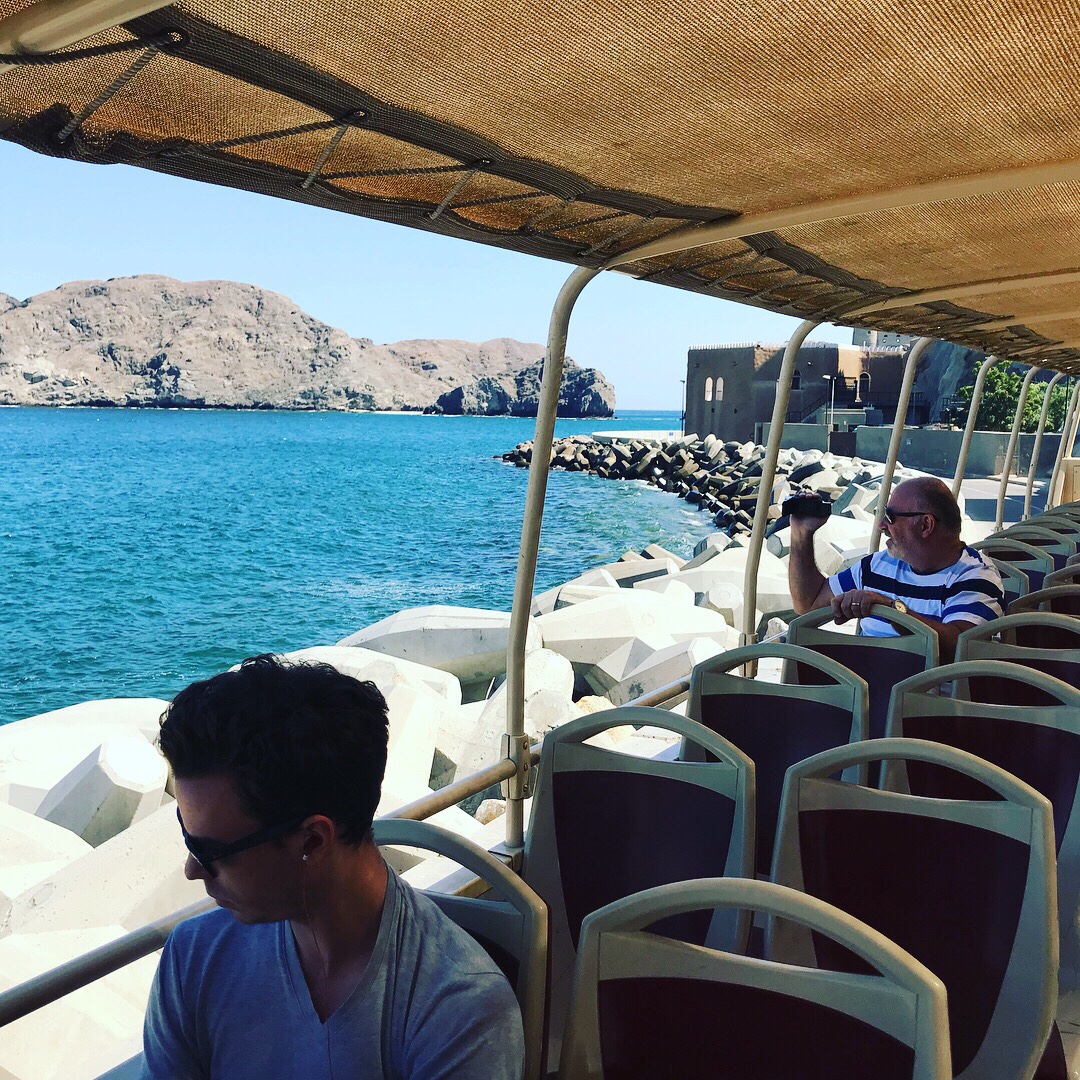
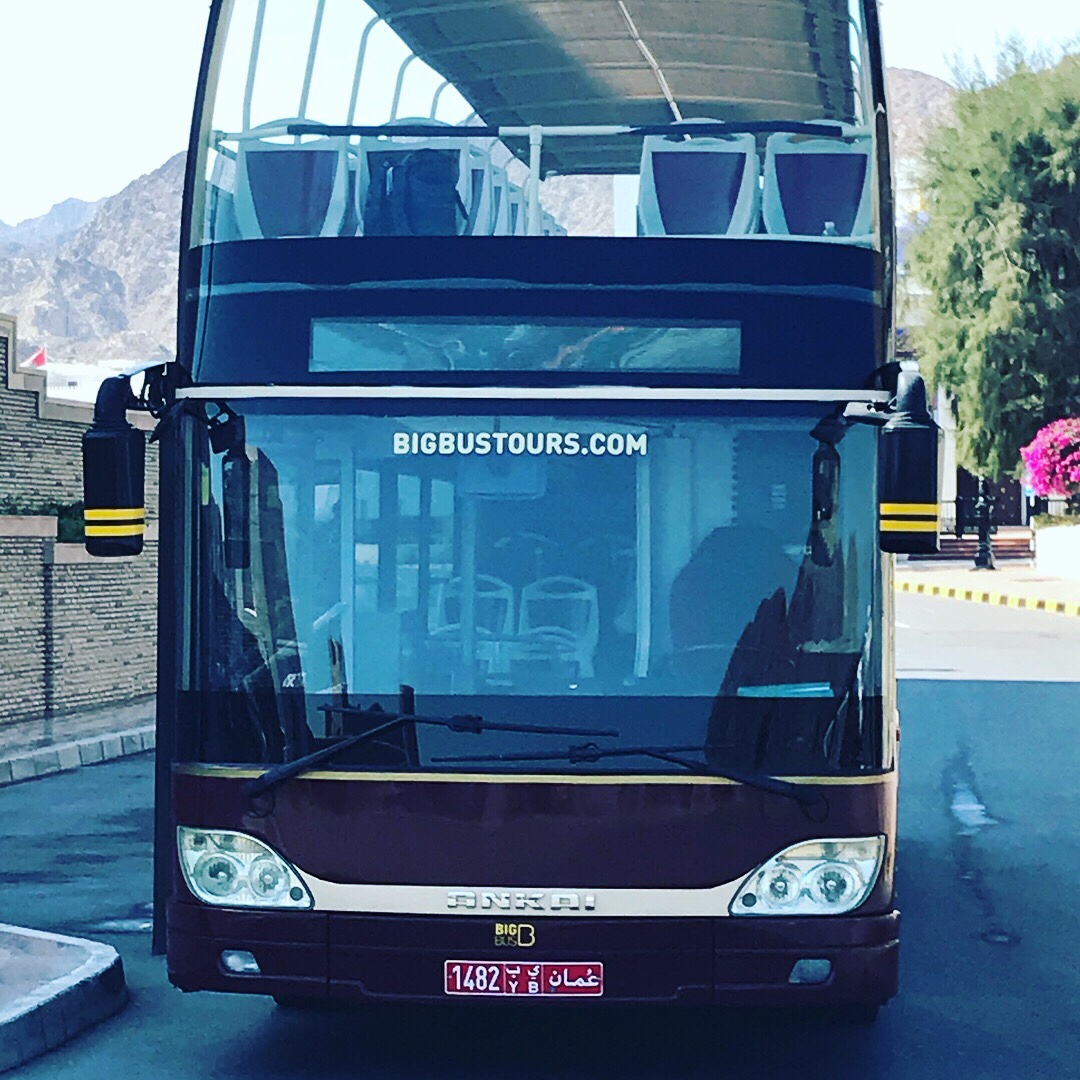
Well, the Big Bus Muscat Tour Bus came to the rescue. An international franchise, they are professional and have all the luxuries on board; wifi, water and availability of multilingual commentary. This ofcourse comes at a steep premium. The bus started at Mutrah Souq went around the city, in a crisp overview of the city. Marina Bandar Vantage Point snd the Royal Palace were popular draws for photography feeds. I went to parts of the city which I had not been in the last twenty years. This was special. It also prompted me to question our notions of the places we have lived in. The tour bus is a disruptive lens. It problematises the notion of the home town. Do we really know our cities? Or do we know the city as a sequential array of places constituting our daily lives? I have taken city bus tours in Singapore, Kuala Lumpur and Mumbai. All of these tours were small starters of all these three cities, out of which Singapore and Mumbai have been cities that I know well. The first time I took a tour bus was in 1994, as a kid where Baba and me took the Mumbai Darshan tour from Vashi in Navi Mumbai. Baba took the bus as wanted to show me Hanging Gardens and Juhu Beach.

It was also a way to show Mumbai to our relatives wanting to see the city upon visiting us; absolving us of this serious moral responsibility.

The tour bus gave me an opportunity to revisit my hometown and understand it from the vantage point of the visitor. My friends found Muscat to be clean to a fault, beautiful and inadequately marketed. Some major pluses for an Oman keen to promote tourism, as an alternative to the hydrocarbon economy. These are authentic voices that are paying tourists.

Today the tour, made me recognise my blind spots. It ruptures the routine of everyday life. Although the tour bus route is a familiar drill; the experience reboots the vision of the location.

Muscat is a marvellous city with tremendous natural endowments. These should be leveraged to promote a tourism based economy, as Muscat is just a trailer for Oman!

#ExperienceOman is more than a hashtag, rather it is a call for the world traveller to experience a special place, many of us call home.

From Muscat to Mindanao: The Politics of the Filipino Diaspora

Just spoke to a Filipina Muslim in a mall in Muscat who is here for 6 years from Mindanao, who is a die hard supporter of President Dueterte, as he is from the south as well and that most of his administration is from Davao City instead of Visayas or Luzon; she said emphatically ‘in the History of the Philippines’. She loves Oman for the quiet and lack of opportunities to spend money, so she could save more. She spoke very good English, with a clear tonality, and must be having a college degree.