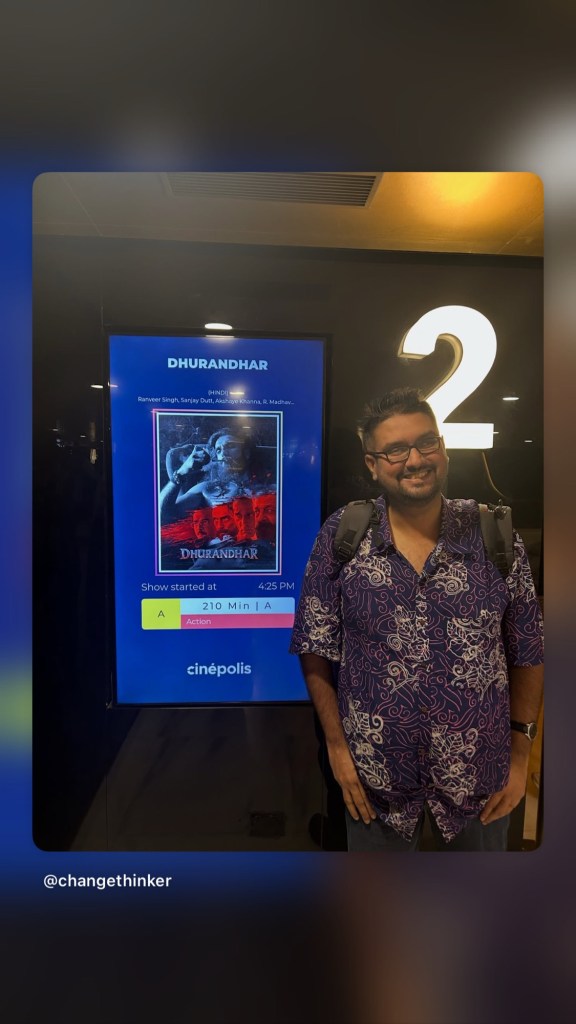
There has been an avalanche of commentary on Dhurandhar, the film and well on its way towards being a cult classic as the music and the dialogues have seeped into meme culture.
The movie is right up the alley as far as cinematic geopolitics is concerned, as does the Bond franchise among others. The movie has a distinct political tilt, yet has struck a a raw nerve as real characters and plots have been referenced with archival footage such as 26/11 and the parliament attack.
The movie has a feel of a web series, which is why it works so well given its length. But great casting, and the movie is unapologetic about its politics to be fair.
I hope instead of only investing billions in AI which will remove jobs and create precarity apart from the octopus class, we create better avenues for social protection including safety and affordable healthcare. The billions only last as valuations if a certain strata of society keep working, add to the tax bracket and there is a hope for a better future. For now, jobs are merely a subscription and we are past heading back to a pre industrial order.
The flux is here, but there are communities who can’t take the assault of technological flux without social protection.
There is more to life than AI, there are people who still depend on jobs for a dignified life, they they vote
This year has been a true inflection year, which all the risk forecast’s were made redundant as the year passed by. The risk registers were on overdrive, as a disruption in the geopolitics ensured that risk with a capital R, was the dominant lexicon. Climate Risk took a backseat, with the EU CSDDD and EUDR being diluted, as the world was worried over active hot wars in Gaza, Sudan, Ukraine and a limited war in South Asia. Disclosures and Reporting intricacies are for a status quo-ist paradigm not where guidebooks are being ripped apart real time, COP 30 was a procedural matter at best as jobs became the theme of the World Bank. The variegated geographies of transition will be at play with some parts of the world such as the EU, linking climate action to resilience.
Tariffs threw the play book out of the window as Power with a capital P made a sharp return, it seems the end of history was premature as a new Cold War between China and the USA is the new theatre in town, with shocks and surprises galore. AI is the new kid on the block for an arms race, with chips and small modular nuclear reactors powering data centre cities. All the decarbonisation progress, is reversed with a new power arms race.
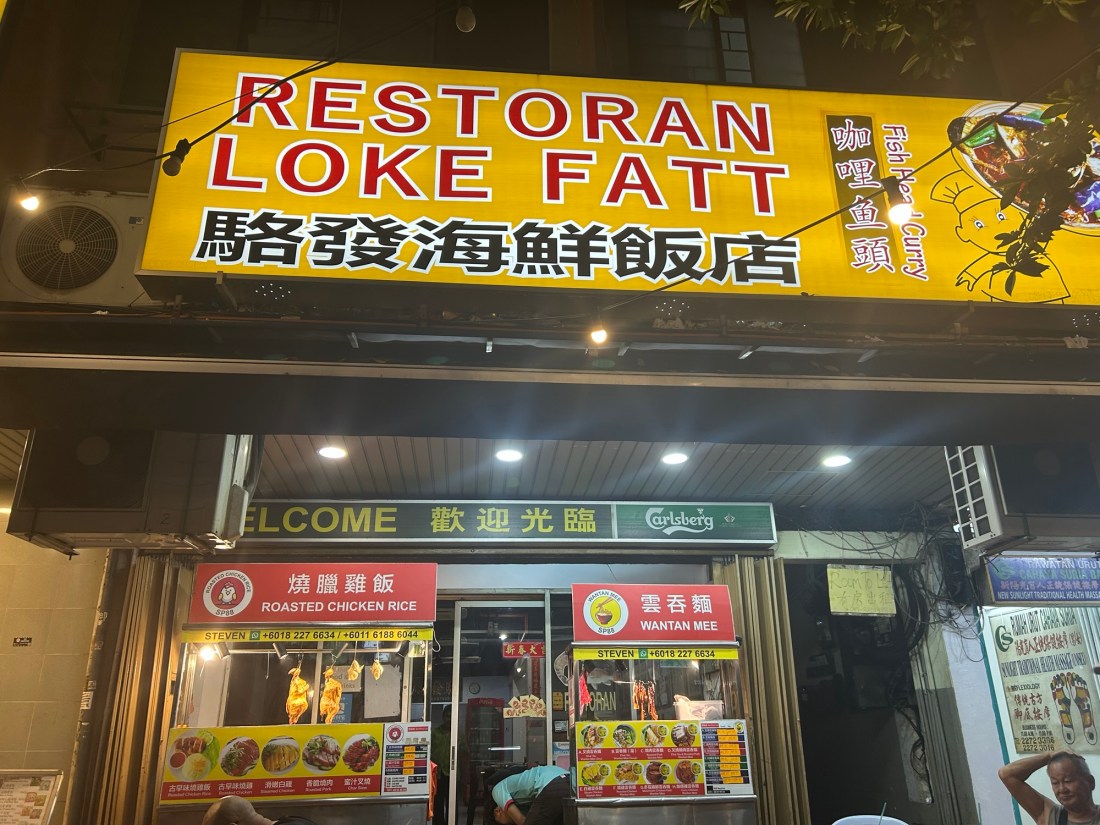
There were youth revolutions across the globe, South Asia has a couple of jolts as did Africa, indicating jobs as the new risk locus for governments. Since the youth revolts in Kathmandu and Dhaka, outward migration across corridors has spiked as per insights gathered from manpower agencies in Malaysia.
The Worlds of Work for the IT professional in India has evolved with large scale shifts to the mass recruitment back office model. In the Zoom era, offices are in sync across the world.
All that is solid melts into air, is true decades after this famous line was written. As many things change, people will find an anchor in their beliefs as the old gives way to the new as if in a portal, as Arundhati Roy had written in a FT article during the pandemic. The pandemic it seems was simply a shock towards a new, unknown world, where risks need to be thought afresh, for investors who do due diligence need a new frame to assess risks to their investment portfolios.
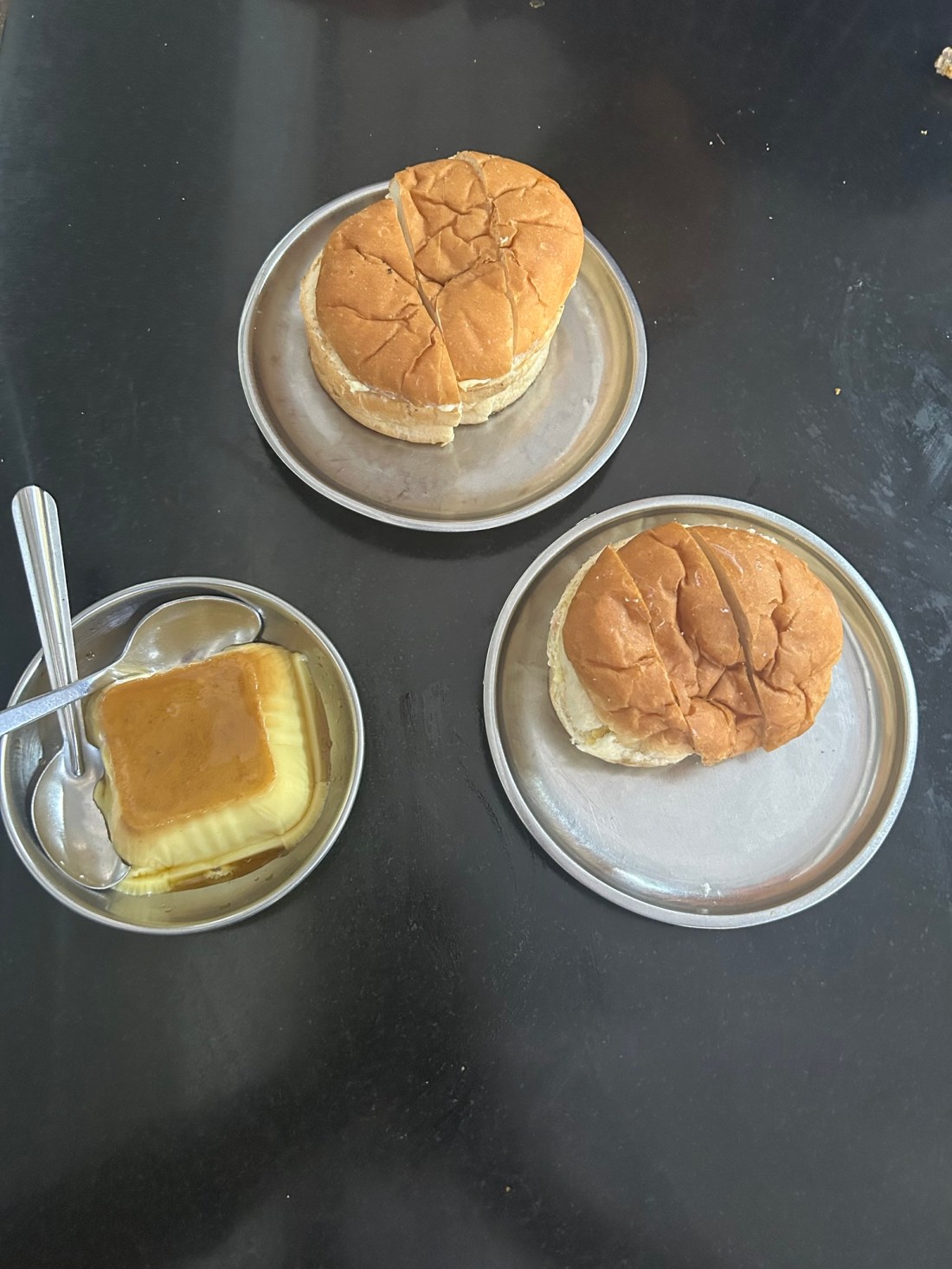
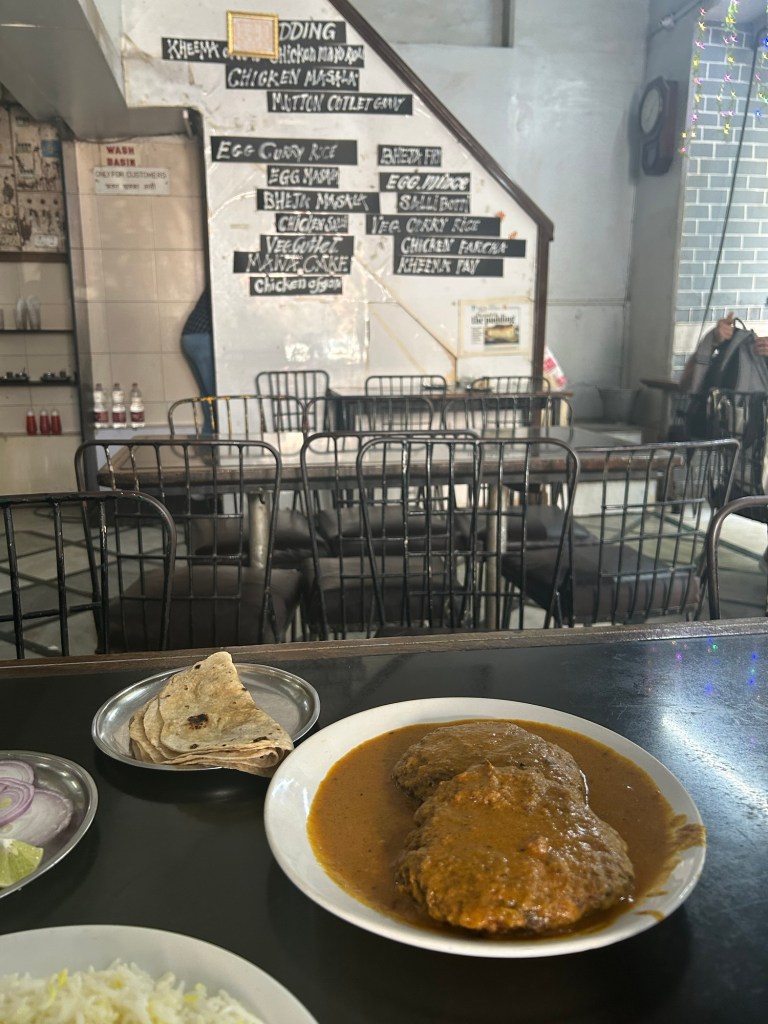
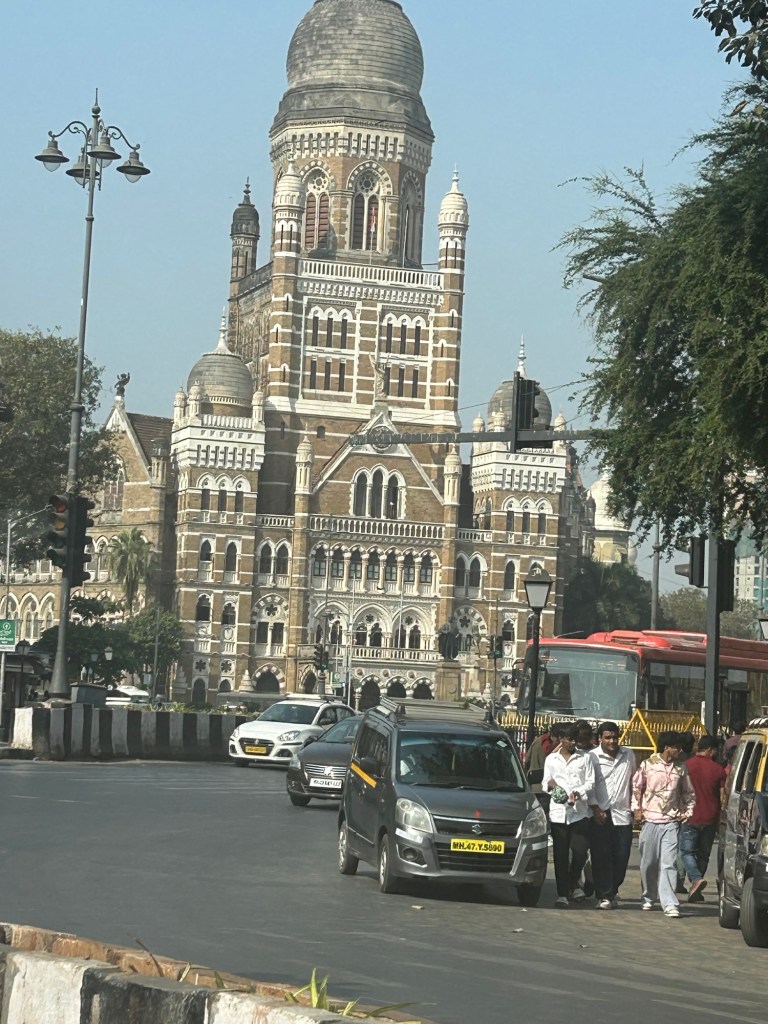
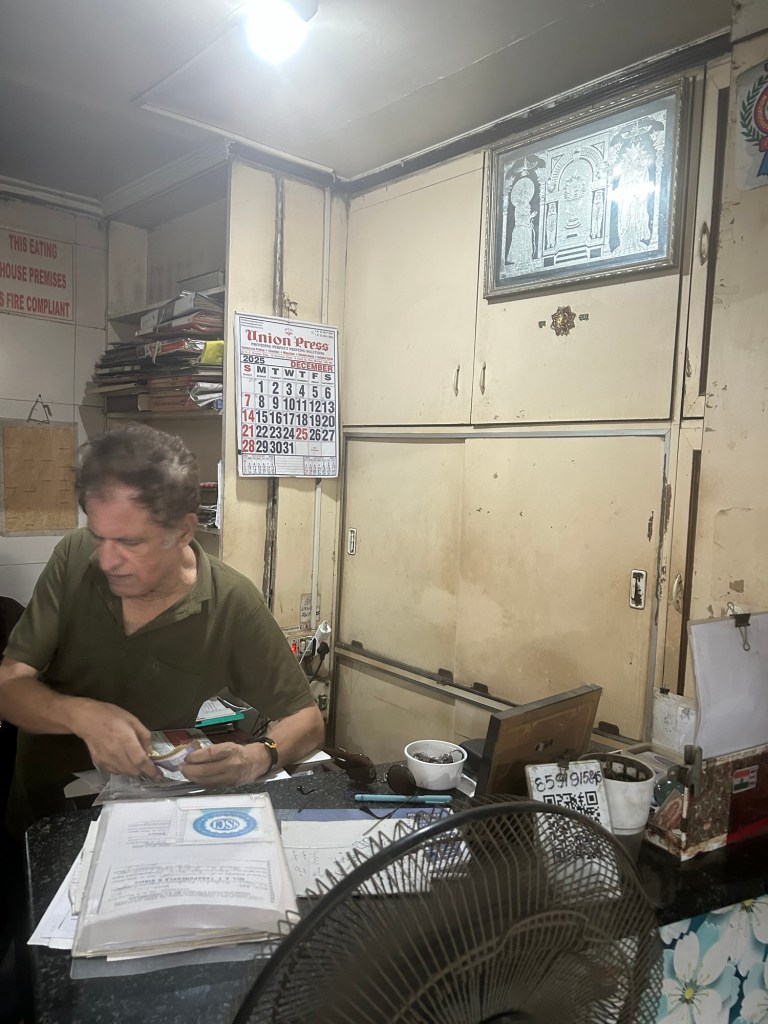
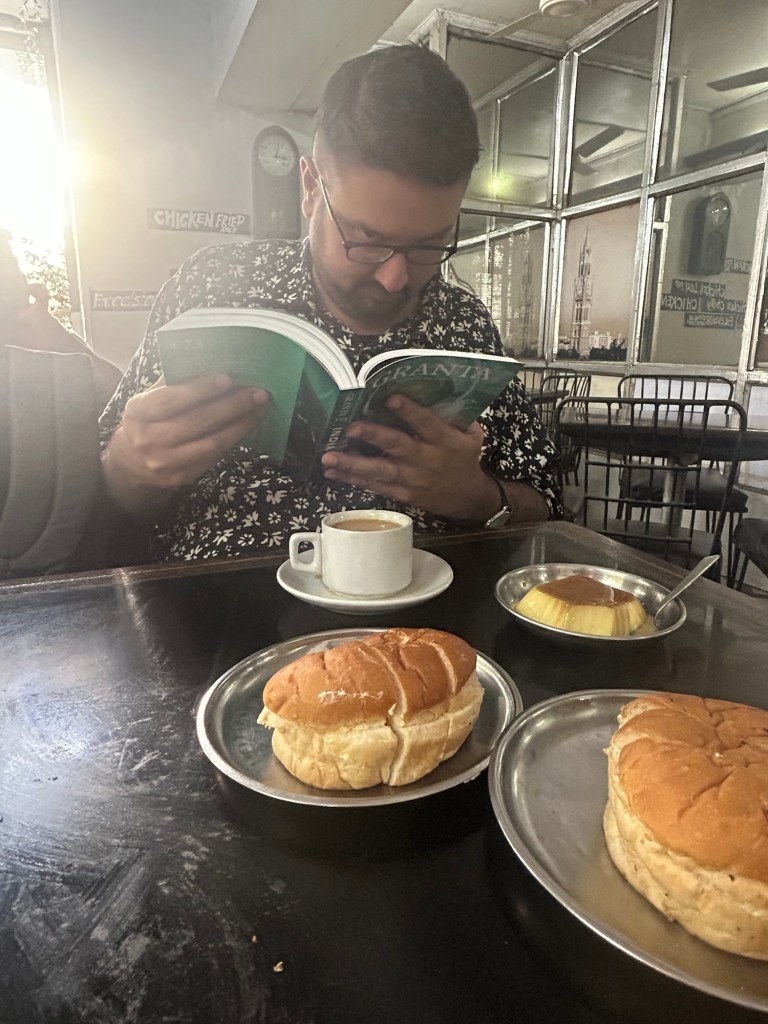
Parsi Irani Cafés in Mumbai are a dying tribe, and are edible archives of the Indian Ocean such as Cafe Excelsior which was a sleepy low key place with exceptional pocket friendly fare. A Bombay institution in a heritage district fast gentrifying with decaying buildings. Every meal hence is an act of archiving as recently other Parsi eateries have closed down such as my other favourite, Jimmy’s. I like the normalcy of Cafe Excelsior compared to a Britannia which on it’s on merit is solid, yet a tourist magnate in Ballard Estate.
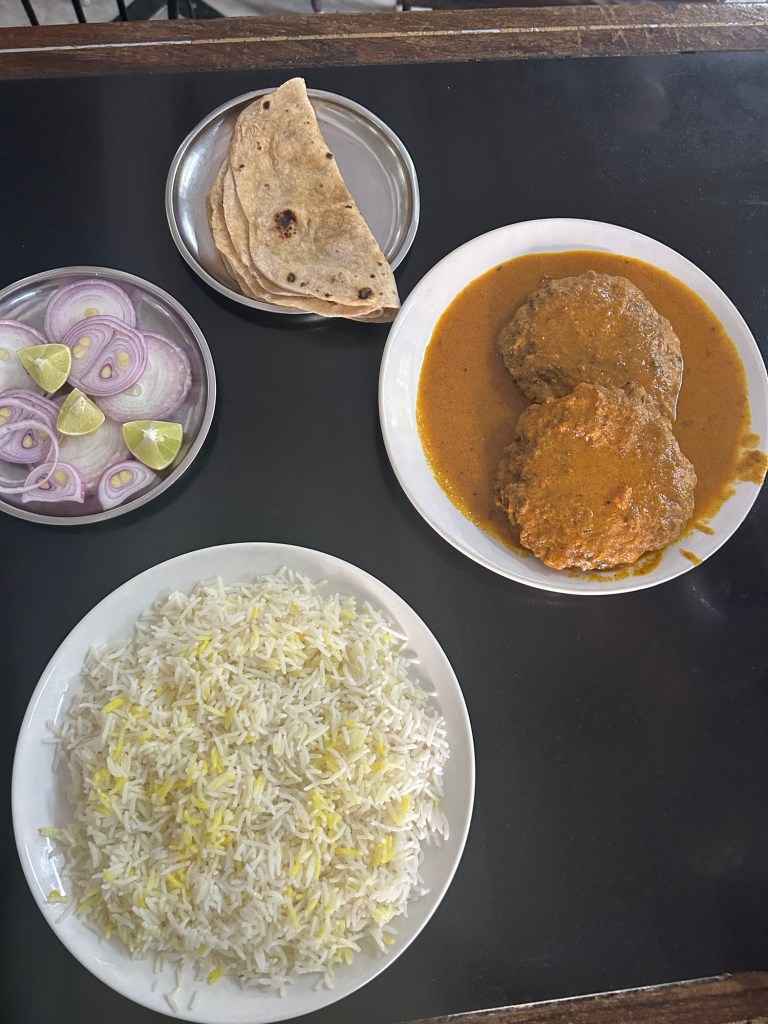
The chai and bun maska was on point. As a non vegetarian, the mutton cutlet curry was unique with butter rice.
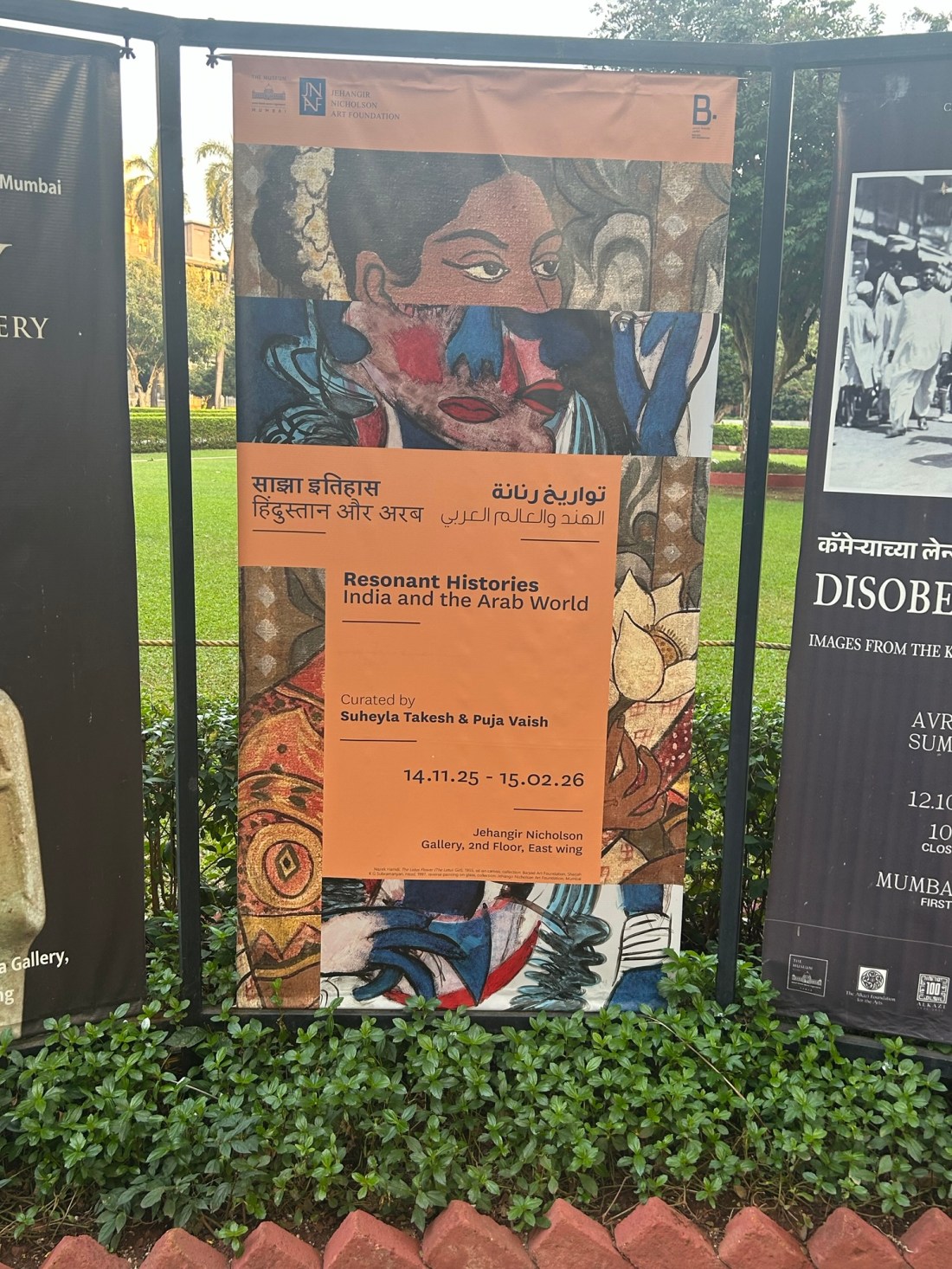
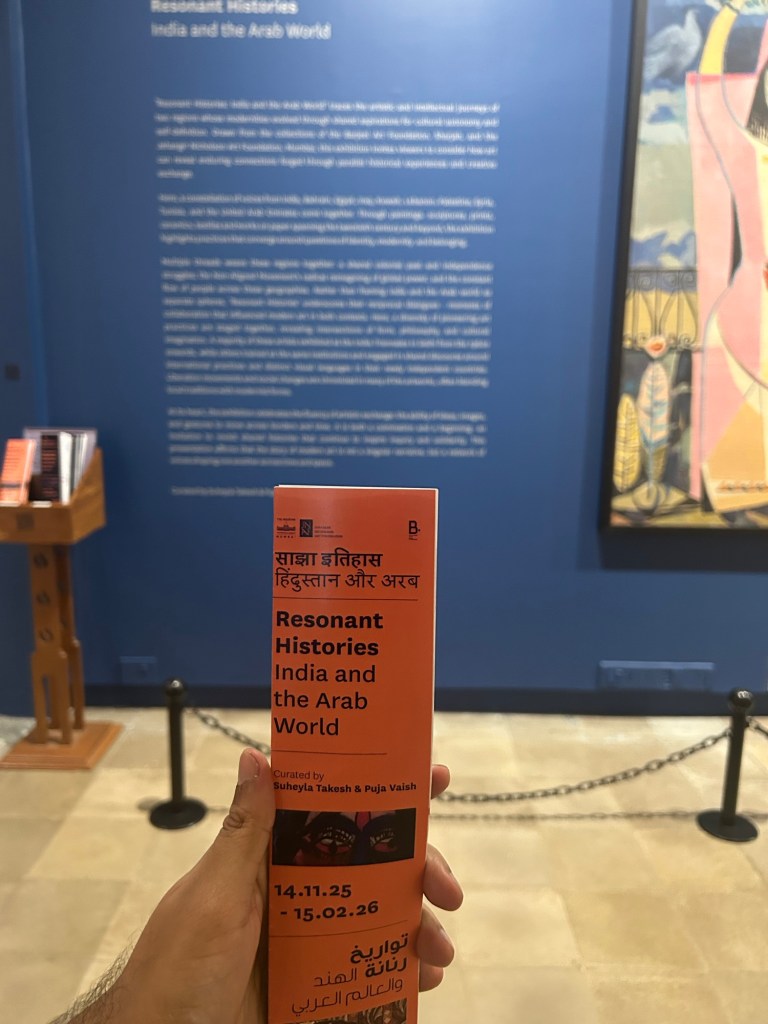
I had the honor to experience the ‘Resonant Histories’ Exhibition on Indian and Arab Art at the Nicholson Jahangir Art Gallery at the CSVSS Museum, Kala Ghoda, Bombay by Barjeel Art Foundation in Sharjah. Had all the masters in place and the framing was decolonial and enthused by the spirit of Bandung. The art work by a Shantiniketan trained Egyptian artist was special as both my parents are Visvabharti alumni.
I grew up in Oman and call Masqat, Bayt hence the art had a special resonance especially the painting on President Nasser. Art is a register of history of modernity, which in the digital era is often lost. Art is cultural anchoring, and is a space of taste and aesthetics.
The Barjeel Foundation team did a splendid job, with the local curators. Getting a Ganesh Payne to a Gaitonde to a Jamini Roy under one roof, and juxtaposing it with Arab masters especially Emirati artists is no mean feat.
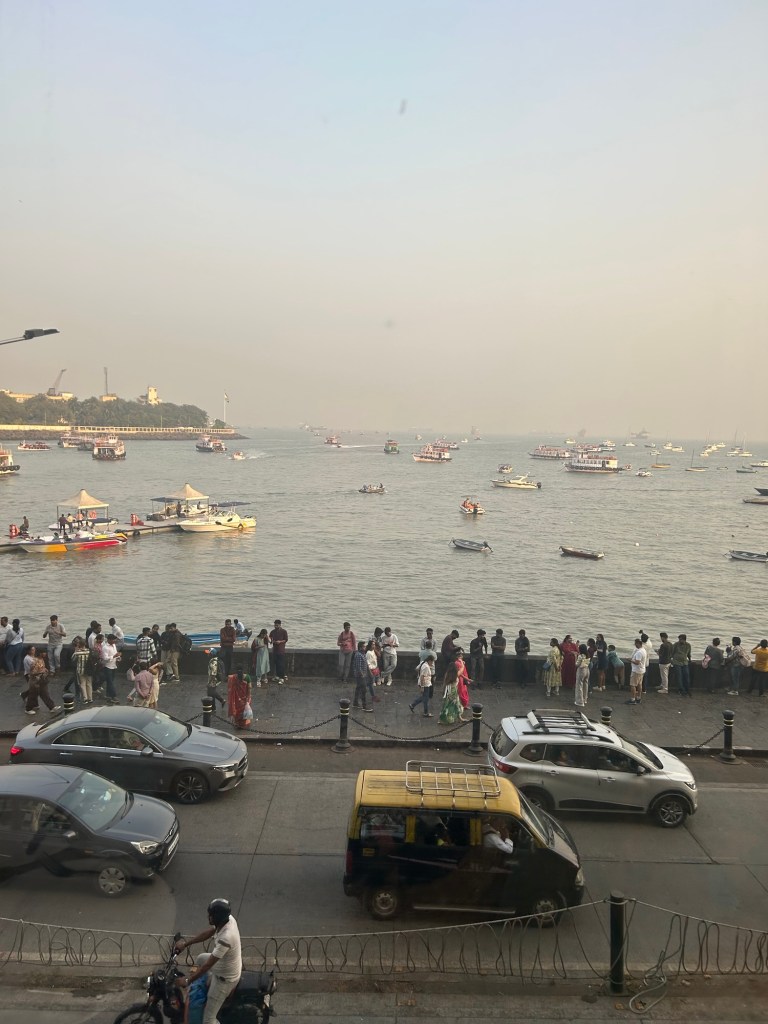
The museum is near to the Gateway of India where the Dhows were anchored in British India, when Bombay, Karachi, Aden, Masqat, Kuwait and Basra were a part of the Western Indian Ocean Grid, a Bombay Islam as the title of the book by Historian Nile Green says.
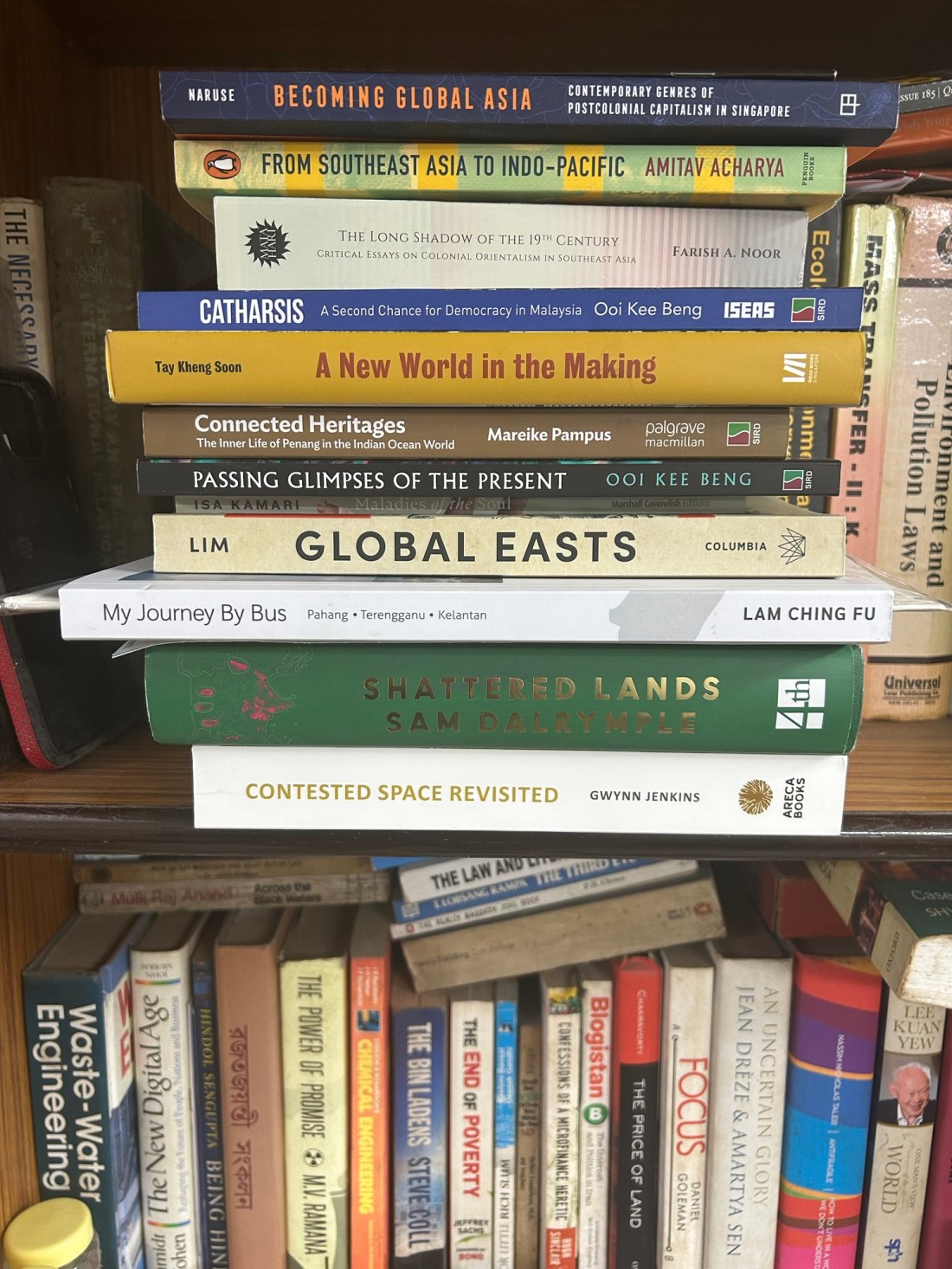
Excellent references world be Monsoon Voyagers by Professor Fahad Bishara and Sam Dalrymple’s book, on multiple partitions of South Asia, Shattered Lands.
This International Migrants Day, there is a hardly any attention to the ways that migrant reach their destinations, hence this reflection below:
The flutter of the non place in Auge’s words are a contradiction to what I notice as a second generation migrant every time i fly in any airport in SE Asia which are part of migration corridors. Countries which are both migrant receiving and sending countries as Malaysia has plenty of workers in Singapore and Australia, while it receives workers from Bangladesh, Nepal and Indonesia.
The chatter in the long corridor before the boarding security check in Singapore or KL or within the aircraft is a cacophony of tongues, a babel on the go where expectations of a better life, and the disappointments of a failed migration attempt linger heavily in the air.
These migrant Aeromobilities don’t make it to the literature, as it is not fancy enough, may be something to do with friction or platform works better.
This year is probably defined by the enjoyable but steep learning curve that I have gone through, as I have lived most of the year in Malaysia and travelled throughout the peninsula. I realised that Malaysia is more than the Klang Valley urban agglomeration, and it is so diverse and varied. Truly blessed to have researched and written academically in the second half of the year on a project scholarship.
Got the privilege to be at the UNDP+BHR Conference in Bangkok this year, which, as a BHR+Impact Professional, is a surreal experience. Very kind mentors made this possible, along with other workshop participations in a powerful thematic area of Due Diligence. I did very limited consulting this year, but each assignment was one where I could add value.
I had a publication in a prestigious Indian Ocean Journal on ‘Subaltern Migrant Foodscapes’, which was under work for a while, and it was deeply satisfying to say the least.
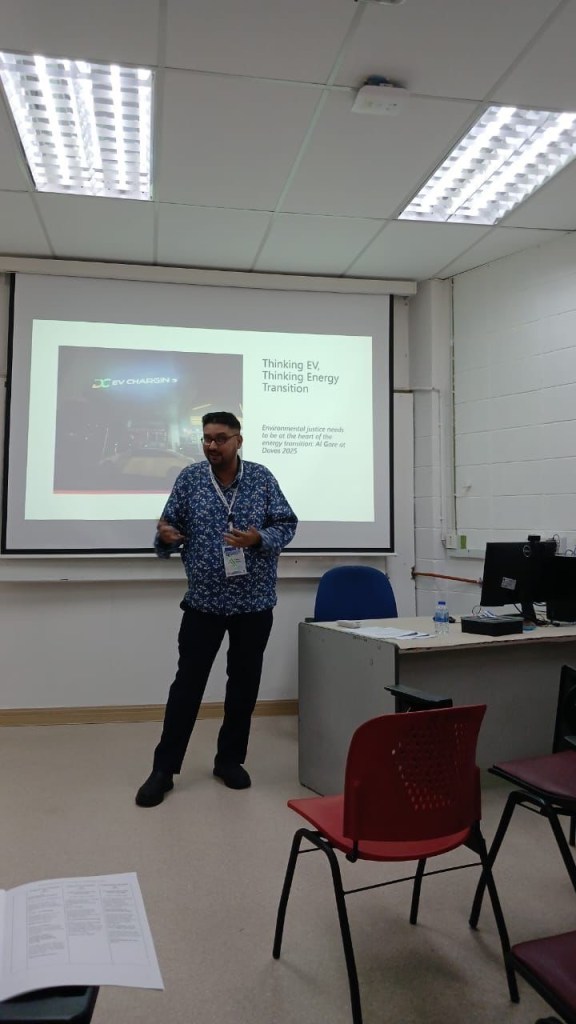
Presenting my PhD work at ICONSEA 11 was an academic milestone of the year, along with the FinGeo Workshop and Conference at NUS in February. I also moderated a panel at Regen Asia at NUS in July, which was an incredible intellectual experience.
Hoping for 2026 to be one where the poly-crisis veers towards an equilibrium.
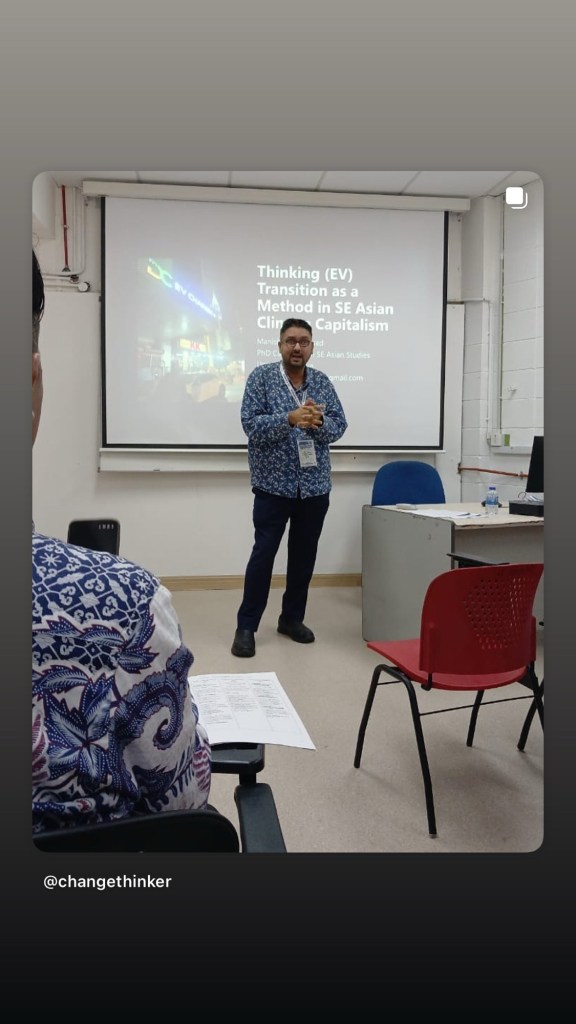
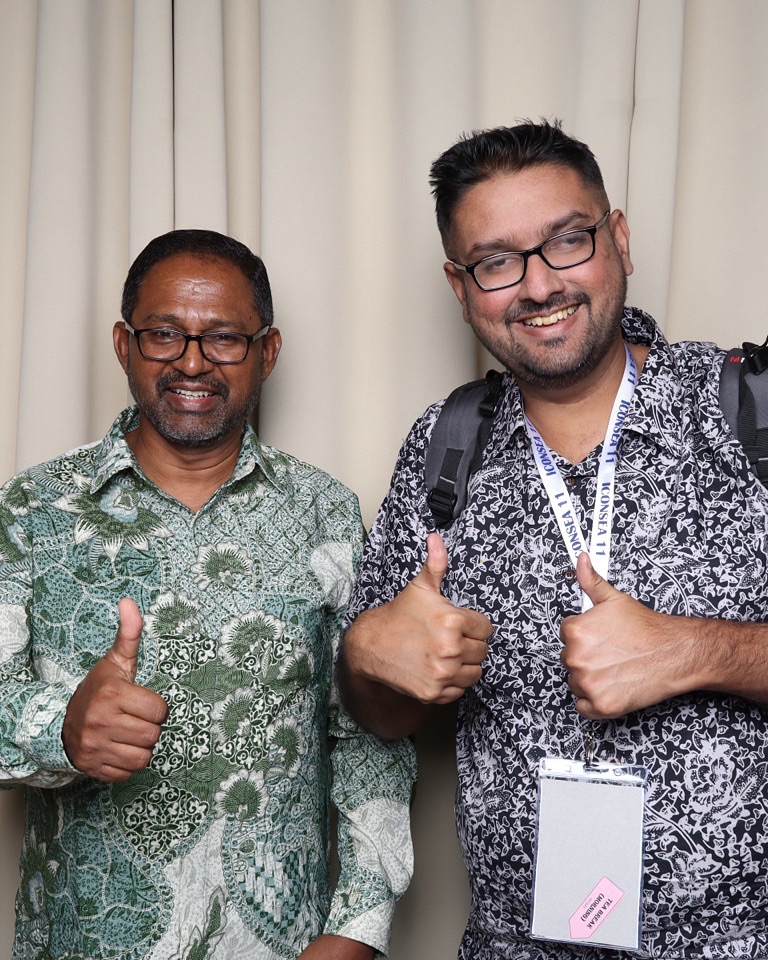
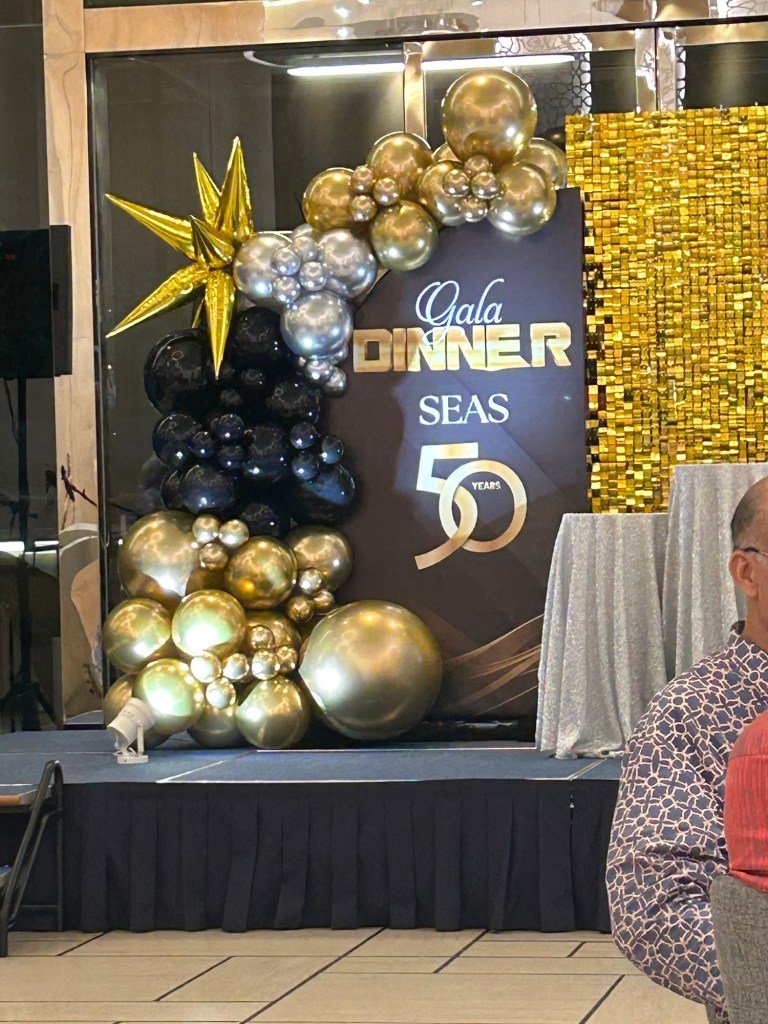
Presenting a paper based on my WIP PhD Thesis at the most prestigious SE Asian Studies Conference at Universiti Malaya is site of intellectual pilgrimage every two years, where South east Asia comes together to chart the future of the field, the key notes by legendary scholars to young scholars who will drive the field in the future. ICONSEA 11 was a tour de force, and the department turns 50, one of the oldest South East Asian Studies Departments in the globe, where the field is undergoing a shift given the funding shifts globally.
This was my second ICONSEA, and this time around i found myself in an intellectual space that felt like home.
As a second generation peripheral academic, i take this honor to write and engage as an enormous honor, which i do not take lightly. I presented on the transition in Malaysia, and am grateful for the support i have – my supervisor, my PI of the research program i chip in and my academic parents.
Many thanks to Dr Mala and the team for the prestigious opportunity to engage with debates in this festival of ideas.
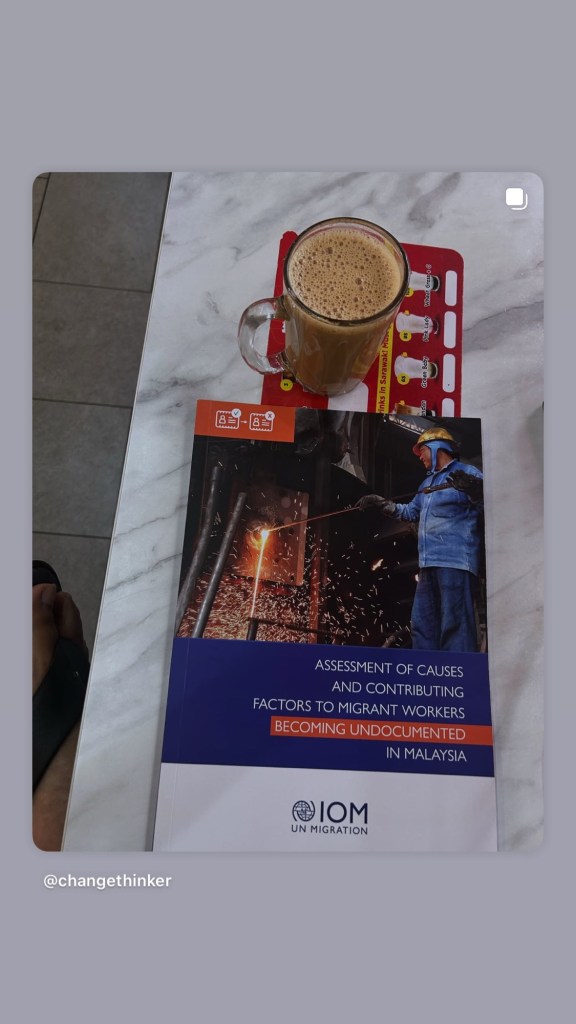
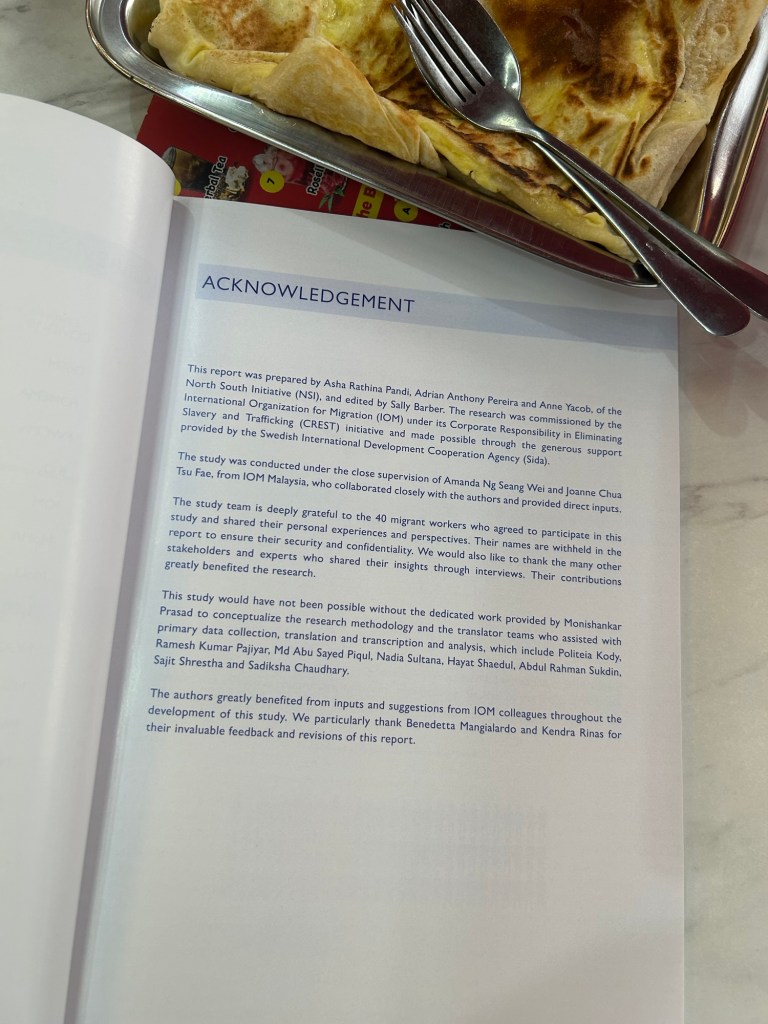
Sometimes a hard copy of an IOM report, in which I played a minor part with a brave research team of migrant community researchers and activists is a reminder of policy evidence to push inconvenient questions.
The research was carried out during the pandemic, the worst of times and these serendipitous encounters with a past body of work is just the antidote one needs in these challenging times.
A tremendous thank you to Adrian Pereira ji and North South Initiative for the spaces to work and think through issues of migration in SE Asia.











 Change Thinker