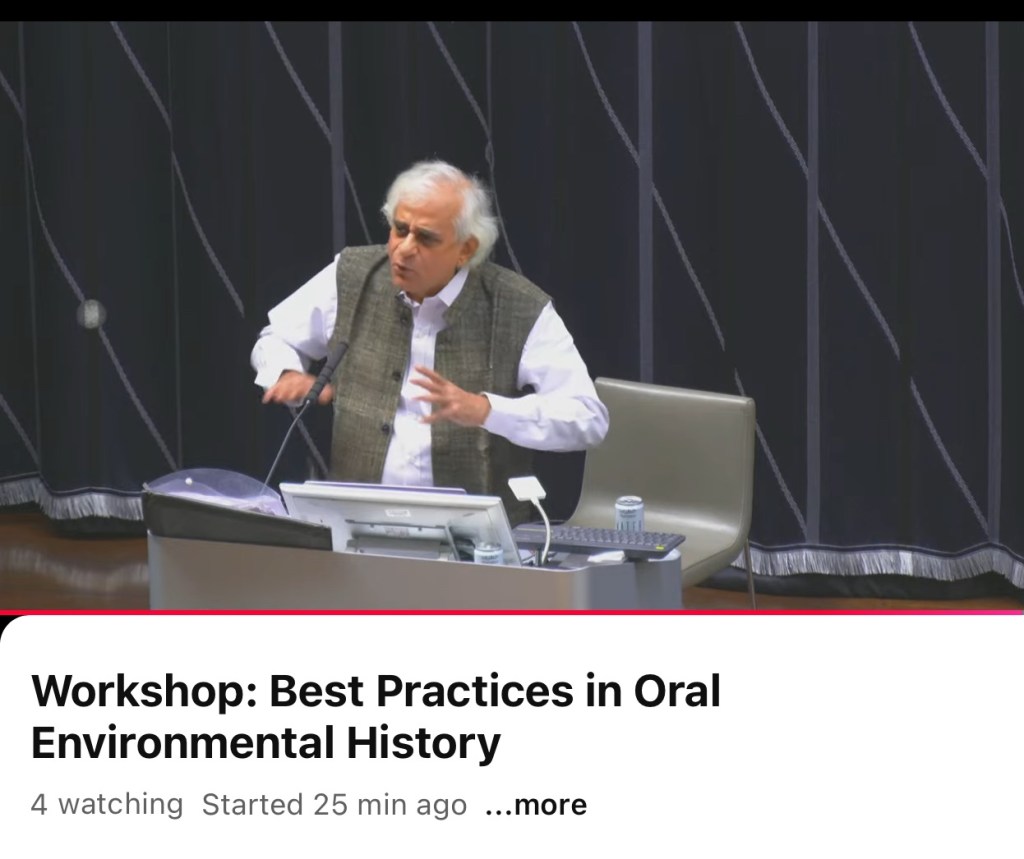
A P Sainath Masterclass on environmental oral history organised by the Qatar National Library live-streamed on YouTube is gold for researchers in climate change and environmental history as well as journalism.
A special shout out to Dr Sayeed from QNL for organising the workshop.
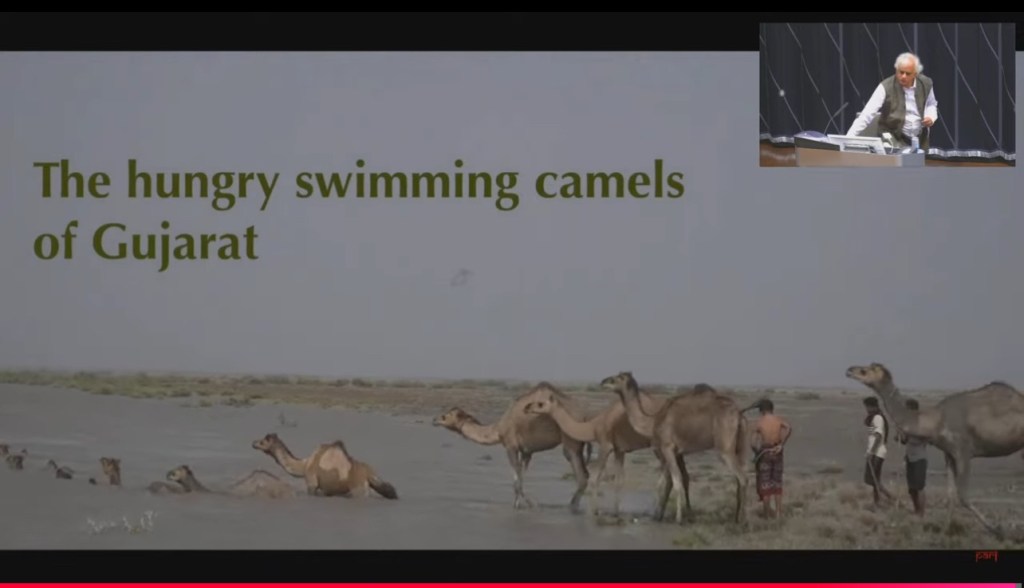
The whole day workshop touched upon archiving, decolonizing environmental histories as well as thinking of community research from below. Peppered with rich vignettes all through from swimming camels in Kutch to Seaweed farmers in Tamil Nadu the work of PARI, was shown.
P Sainath spoke on the value of looking at oral histories of migrants and the way climate change is really global warming, which opens itself to questions while climate change forecloses the potential to ask questions as there are four seasons a year, which normalises climate change instead of contesting the basis.
The various kinds of droughts was interesting to learn, meteorological, hydrological as well as a bureaucratic drought. The politics of data collection in the Indian bureaucratic system was an important reminder in to reading the basis of the data carefully.
The story of the Irish soldiers from Cork fighting the British alongside Indian soldiers in the 1857 mutiny, and how there were common colonial solidarities was simply mind blowing as an account. Mr. Sainath does not like the term best practices as well, as experts have caused a lot of damage in the realm of agriculture.
Oral histories matter as much as textual or architectural histories, especially in rural contexts where subaltern histories need to be recorded.


 Change Thinker