Carbon markets are networks of financing for capital to find environmental assets for protection. Usually conservation is the goal, and the embedded community an afterthought. They operate at a global scale for planetary ends, while capital is exchanged for offsets.
It is a good asset class for patient capital and philanthropic projects. It is only one type of instrument in the climate finance bucket.
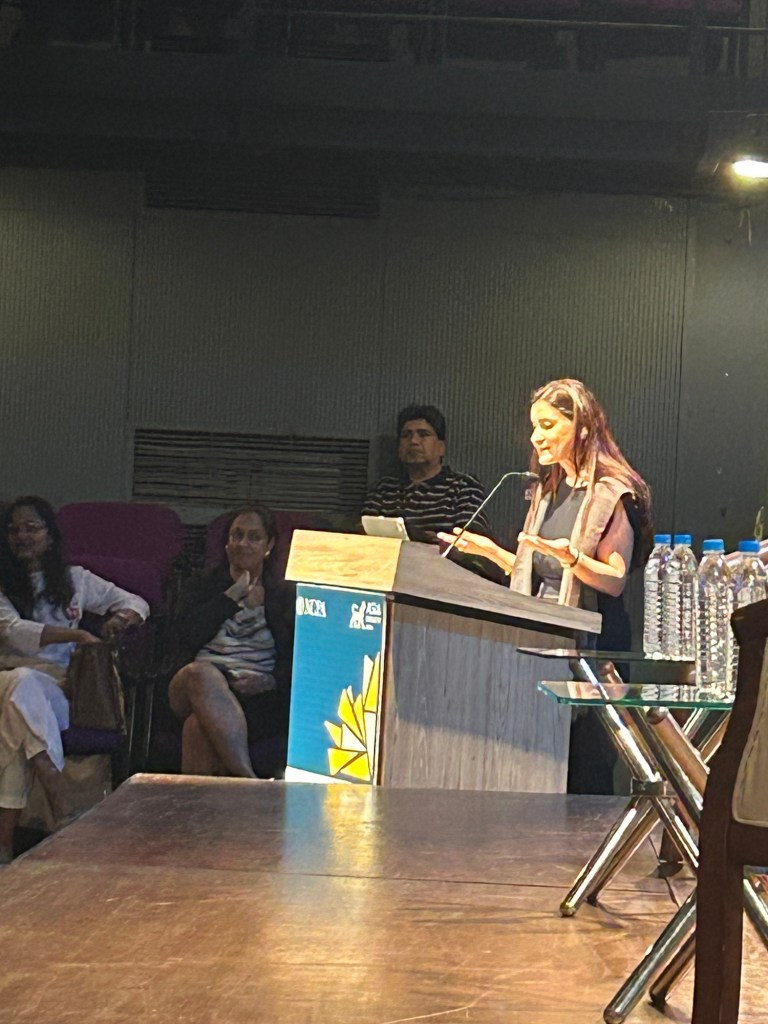
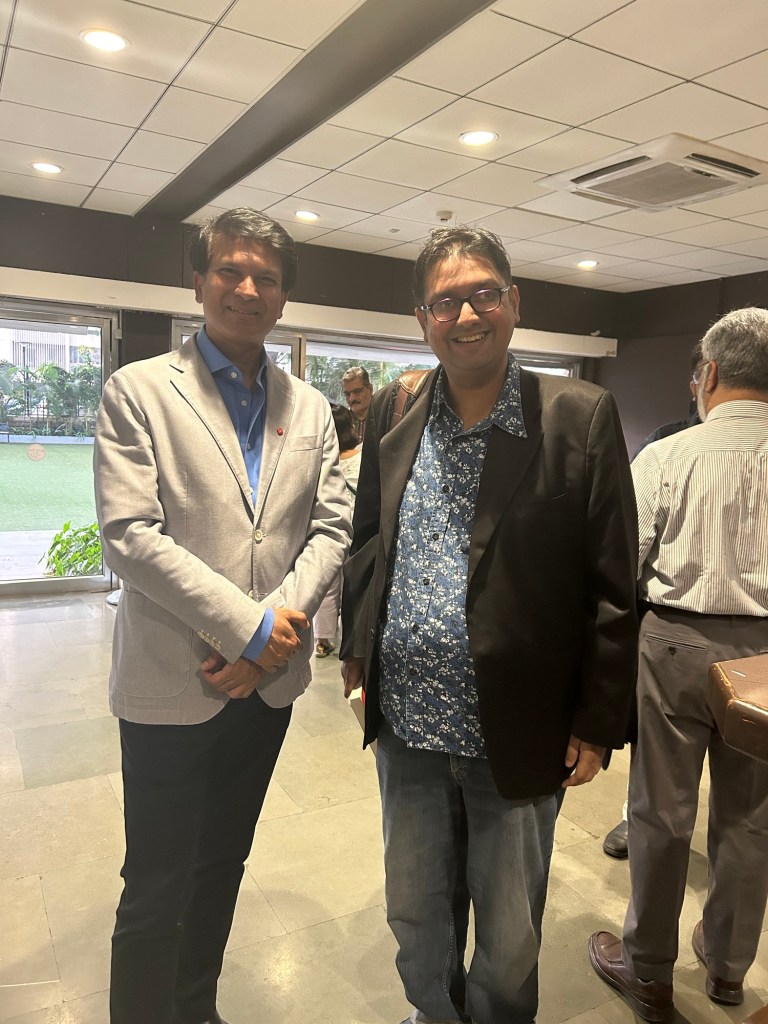
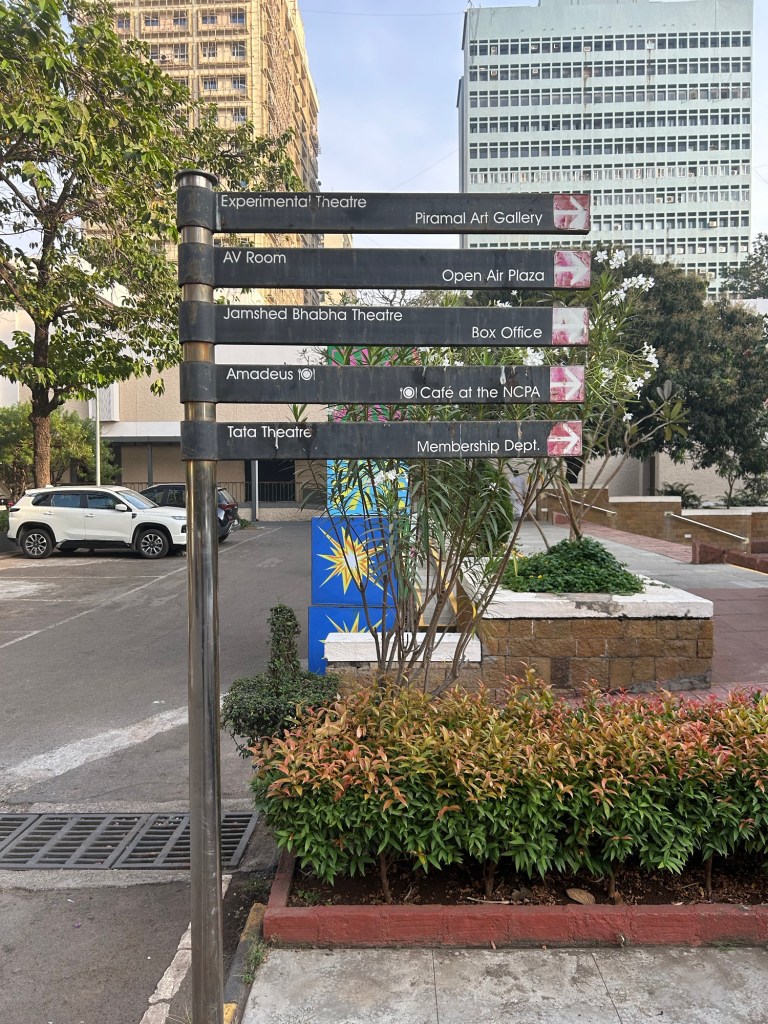
Dean Kishore, Dr Raja Mohan, Taimur Baig and Suhasini Haidar speaking at the Asia Society India Panel at the Bombay coastal cultural nerve centre NCPA on the current turbulence. As Professor Kishore says we are in the midst of major changes. The notion of the west needs to be fragmented between a declining Europe and a dynamic US. Markets will temper President Trump’s actions. Trump can out bully Bibi, and achieve a ceasefire in a day.
Dr Raja Mohan spoke about the dismantling of the WTO order.
Taimur Baig draws historical parallels regarding tariffs between now and the 1890s especially the McKinley era. The Dream of Trump draws on it.
Europe aces on healthcare welfare and scientific innovation. ASML and Carl Zeiss is at the heart of semiconductor technology. World has an amazing ability to absorb shocks.
The larger questions regarding risk are beyond reporting templates.
The spaces of policy dialogue are not in the classroom, but in an experimental theatre. A truly Singapore in Mumbai evening 🇸🇬🇮🇳
A lot of talk regarding the USAID funding pause as good people, projects and communities will face a hit. Having worked on an USAID project for a year, the people who work on these projects are on a regional scale and some of the cutting edge action research is performed.
As we reflect on alternatives to the grant based approach, this is a revealing nugget on the western imperatives of aid from Amitav Ghosh’s stunning work, Wild Fictions.
The architecture of climate action is biased towards the global, while impact of climate change is rooted in the local context. The way the architecture is configured, determines whether the local deserves to be on the priority of climate action.
Carbon offsets are useful as commodification is a precursor to modular architecture, which are traded as stocks in a bourse. Low friction is imperative for scale. Carbon markets work well at high volumes, thus national and regional scale architectures will thrive. Carbon offset projects such as NbS which have scale will attract large capital investments rather than a cook stove project.
For local impact, we need a different offset type, which social impact bonds need to meet carbon offsets. There is scope for financial inclusion there.
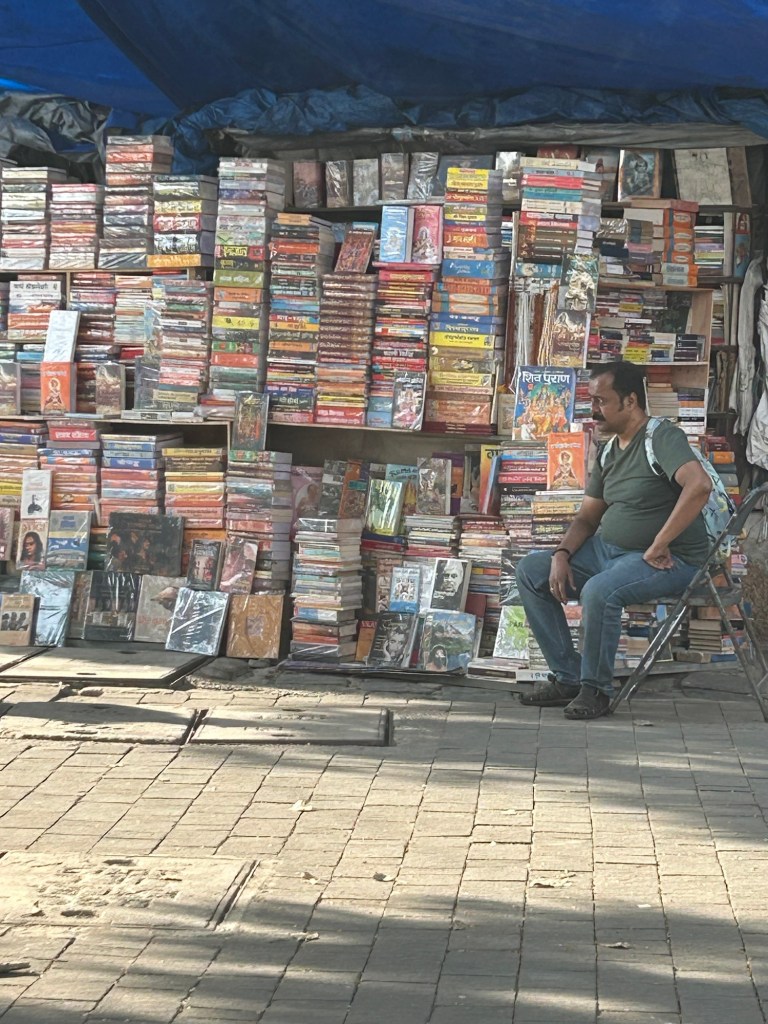
As a Southeast Asianist, it gives me great joy and hope to see Bapak Prabowo at Bahari Sons, the iconic bookstore in Khan Market in Delhi, which is the best of the best. The Indonesian President is visiting India.
The era of defragmentation of the responsible/sustainable/impact/category is here. Solar and Wind are back to being energy access rather than ‘climate’, as net zero was part fiction pedaled as climate aspiration. Nuclear and coal provide the base load power for AI and Data centers, and with increasing energy demand, we will see more of these including American Oil enter the market.
As we return to oil exploration and coal-based power again, there needs to be better ways to ensure the communities have equity in the new (or old?) era of energy. And the sustainability that we have come to recognize since the Paris Accord requires a broader understanding of the issues of the global majority.
Notes from the speech – ‘Drill Baby Drill’ is the message from President Trump’s opening address after inauguration.
Big Oil is back, and the Inflation Reduction Act is dead, and the EV mandate is killed. This is the tectonic shift in climate policy from today. A lot of thinking needed to pivot the climate geographies in the Trump Era.
For the sustainability folks, DEI is dead. EVs also get a jolt as ICEV manufacturing makes a comeback in the United States for jobs. Migration is big on the agenda, as Mexico and Panama were at the receiving end of some harsh words.
The Gulf states have the most to cheer, and petroleum jobs will be back on the market again. Decarbonisation is headed for a screeching halt.
US as a superpower is clear with ambitions for Mars. The 27 minutes were clean, a statement of strength and signals a return to great power politics. These are times of a great pivot especially for sustainability professionals who only thought in frameworks. The real ESG, now officially dead where the G was geopolitics. Raw, brute power has no parallels.
The carbon frameworks’ data mapping impulse is reminiscent of the colonial origins of knowledge extraction. ESG and sustainability data at the organizational scale are blood tests equivalent to the organization’s human health. The stress on climate action is on building a baseline rather than immediate attention on the frontlines of extreme events such as the Kelantan Flooding. The key facet of the post-Paris Climate Action dispensation has been the decoupling of local and regional public health imperatives with climate measures. It has curiously been about risk in the financial sense, and how it impacts corporate value creation. The community element needs to be reinfused and brought back to the conversation. There is an inherent Eurocentric politics that is embedded in the way frameworks are written. The climate frameworks are cleverly wrapped up as politically neutral. Which they are not.





























 Change Thinker