The Malaise of the Instant Coffee Policy Wonk

In this age of Web 2.0 and democratized information on the smart phone, everyone is a citizen journalist. Take a pic, tweet an event and you are contributing to the discourse, a position previously mandated to the career journalist and the academic. The 140 character brevity does not help all the time as the messy, complex reality of our existence needs nuanced understanding of issues which are often tangled and inter-twined beyond any recourse. Facebook is more of an intimate platform with a Billion plus users, bringing out the narcissistic side in us. I must admit, Selfies are fun 🙂

 Some friends on Social Media seem to voice opinion on every single data point from dog food to drones.  The essence of research and writing of essays seems to a lost art, exclusive to the academic community and obscure journals which are seldom read.  Culture Journals such as The New Yorker, Paris Review or The Caravan are rare breeds. We have limited attention spans, and a 2500 word essay written by Pankaj Mishra may render aesthetic pleasure but it is honestly cumbersome to read such art-pieces on a sub-way side.The audience is niche, not suited to social media blabbering.   The 24×7 information machine makes it impossible for a thought leader or a public intellectual to remain consistent, Fareed Zakaria can surely attest.

In depth understanding of a policy matter is mandatory to make an informed call. TV Punditry is sexy and I have been on international TV personally but experts are experts. Hard Work has no substitute.

Let us pass a statement when one knows something substantial.  Democratising information is one aspect but information pollution overload is another.  
Culture Wars: Goa Style

Last week, I had traveled to Goa and Belgaum in northern Karnataka for work. Well, my day job takes me to interesting places. The hilly drive to Belgaum and back to Goa in a day was simply enriching. Goa is very interesting place for an ad-hoc sociologist such as me who is fascinated by the evolution of culture and its associated norms and values. Goa is 65 percent Hindu, although its Portuguese Catholic Colonial Cultural Legacy is over-powering. North Goa along the Maharashtra Border is scattered with Hindu Shrines and Temples plus a few statues of Shivaji Maharaj- the great Maratha Hindu King dotted the landscape making its symbolic power very poignant. Northern Goa is very Maharashtra-wadi or Maharashtra Centric as the Konkan Culture pre-dominates the region. The Panaji bridge divides Goa geographically and metaphorically in many ways. Christian and significantly Muslim South Goa has the best touristy locales- beaches, churches and the casinos by the river like Deltin Royale. Economically prosperous yes, but it has been also at the receiving end of an exodus due to reverse migration to its former colonial master- Portugal and recently to Canada as a lot of Catholic Goans work in the Persian Gulf and they prefer to migrate to Toronto rather than return to sleepy Goa. The declining birth-rates in Portugal are to contribute for migration from former Lusophone colonies such as Macau and Goa. Globalization shows up another shade.

The BJP government lead by IIT educated technocrat politico Manohar Parrikar has emphasized the importance of improving road infrastructure but then been conservative in its approach in making it tourism friendly which is the economic staple of the Goan People. Upholding the Maharashtrian Konkanasta Sanskruti, is more vital than bringing in tourism dollars for Mr. Parrikar and his cabinet colleagues as our friend Mr. Rajesh who took us around Goa and Belgaum reiterated many a time the importance of the political economy of livelihood rather than the Sociology of Religion. No one including the author of this post is disputing the Hindu Fabric of this Nation and to not exclude Goa taking in to account its unique political history since 1961 when it ceded to the Indian Union, but to make Hindu Identity as the bedrock of governance is a bit far-fetched as about 1/3rd of Goa’s demography is Catholic. During the last Parrikar administration, Good Friday was made a restricted Public Holiday! No wonder Parrikar lost; this time thankfully he has been more accommodating as the Catholics of South Goa voted for him. This is incredibly surprising as Mr. Parrikar has cousins in Angola!

Dona Paula with its Singham memorabilia was noteworthy although Miramar Beach could be improved a bit. The commodification of Goan Cultural Symbols seems complete whenever one I met was out to over-sell Goa in which manner possible, although paradoxically, the place did not seem that way.

Goa as a theatre of Culture War is real, as two distinct cultures are vying for centrality in an area of pan Maharashtrian Regionalism. May the Best of the genteelness and gregarious character of Goan Ethos prevail?

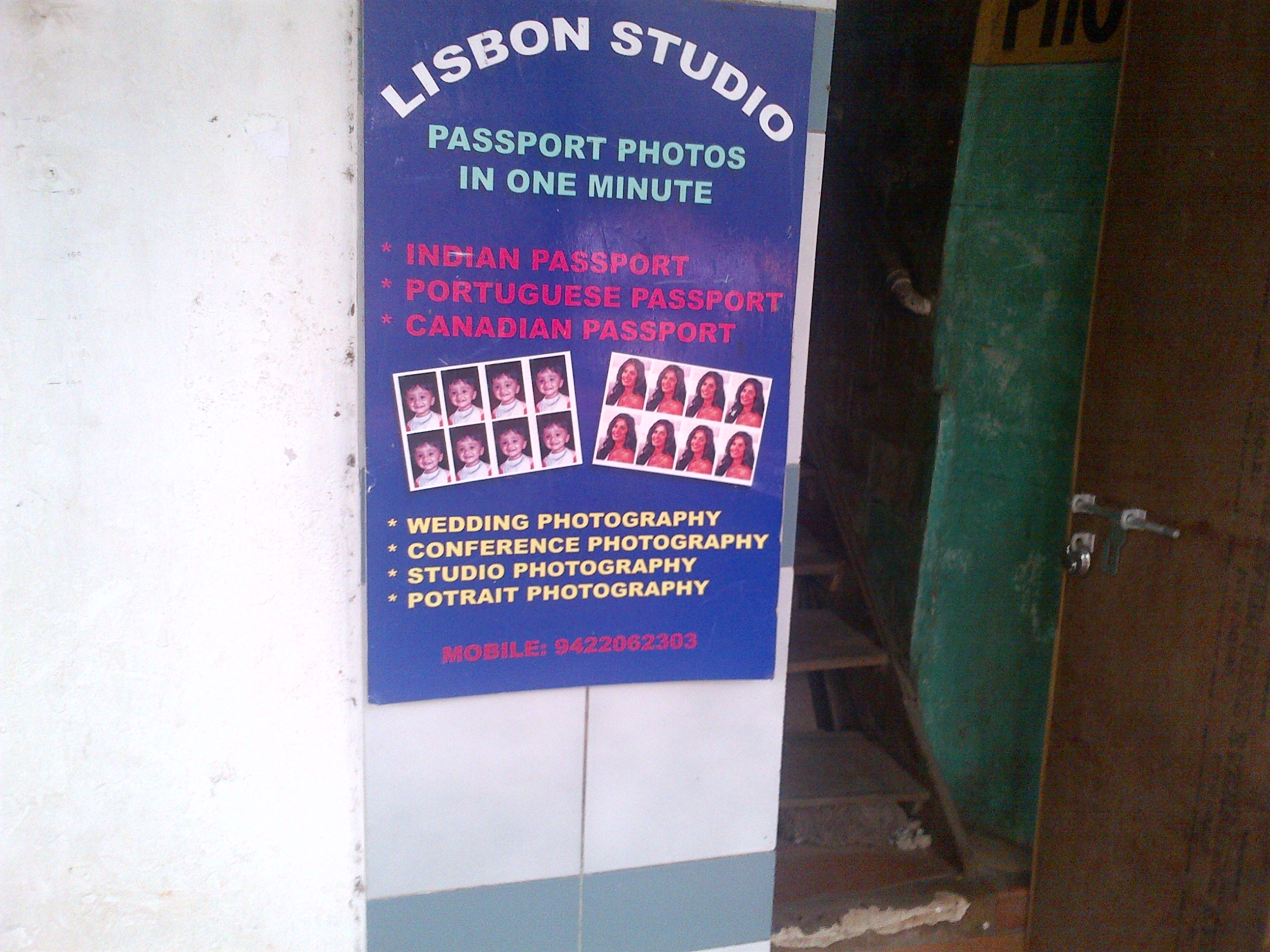
A poster of a passport photo studio in central Panjim said it all about the post-colonial redux in present day Goa.

Post-Colonial Redux in Goa